
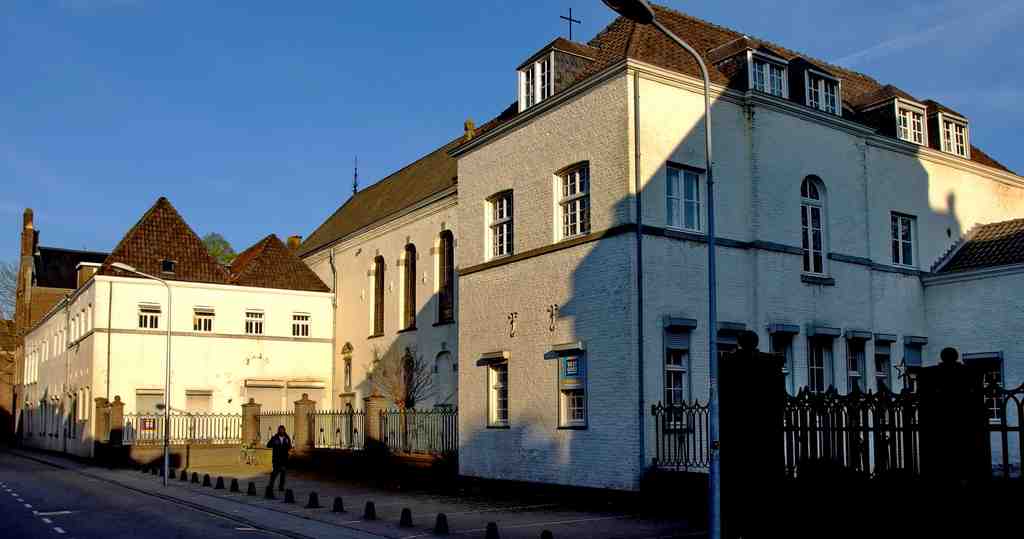
To spot the Calvary Monastery, just look for a cluster of pale brick buildings with steep, pointy roofs and tall windows, sitting beside a classic black iron fence at the corner of Abtstraat and Calvariestraat.
Now, as you stand here, let me bring this place to life for you. Imagine the quiet of a cool Maastricht morning almost four hundred years ago, the streets far emptier than today, the air thick with the scent of woodsmoke and possibility. Here at this very spot, a determined shoemaker’s daughter named Elisabeth Strouven and five equally brave women set up home in what was little more than a simple farmhouse. But oh, what a team they were! Picture six women, three of them named Elisabeth-perhaps making roll call very confusing-all fueled by faith, compassion, and a stubborn refusal to lock themselves away from the world.
It was Good Friday, 1628, and this budding sisterhood transformed a barn into a chapel, welcoming the sick and the needy when others shied away. These streets echoed with the footsteps and laughter of people in need, and sometimes with the moans of the sick they nursed during plagues and wars. In a place initially called “Calvariënberg” after the gloomy hill of Calvary, there was soon hope and bustling charity. The old mayor’s daughter had joined the trio, and by 1630, the community was surrounded by a sturdy wall-no fortress, but a sanctuary.
But don’t be fooled-this wasn’t always a gentle, serene place. Over the decades, drama unfolded within these walls! Elisabeth herself wrote the rules after Rome rejected their proposals, and it took years of persistence for this to finally become a proper Franciscan convent. The sisters soon ran not just the convent, but a guesthouse, and later even managed a branch in a distant castle in Hoeselt. When their founder died in 1661, they tried to continue her mission, and in time, these buildings sprouted new wings and new residents, growing into a grand U-shape around a sunny courtyard. On the weathered wall inside, you might still spot the iron anchors that form the numbers 1671-a silent reminder of those early expansion days.
Come the 18th century, things were flourishing, though admittedly, charity work faded into contemplation. The nuns were more likely to be found in prayer than in the infirmary. In 1710, they built the chapel you see today-straight ahead, with its simple whitewashed walls, two tidy rows of windows, and a gable topped by a stone cross that seems to hold up the sky. Its façade once belonged to a noble canon who watched over the convent, and relics still whisper secrets from centuries past.
But history had more curves in store for Calvariënberg. The French Revolution swept across Maastricht, and by 1796, the sisters were thrown out, protesting all the way. For a time, these walls housed cotton-mills and lantern factories-imagine noisy machines clanking where prayers once rose. Then, as the city modernized, it became a hospital for those most in need: the poor, the elderly, and, notably, people considered “mad” by 19th-century standards.
Through the years, the buildings were patched, propped, and repurposed by architects, city workers, and charity boards. Metal gates replaced high stone walls, rooms divided and reunited, old chapels and convent corridors echoing with the busy footsteps of caregivers and, oddly enough, city social workers.
Today, you can almost sense those layers-the hands that washed the sick, the feet that marched in protest, the laughter of students who later found the place home. In this quiet corner, with the pale, timeless walls before you, you’re not just standing at a monument-you’re at the heart of centuries of hope, hard work, heartbreak, and, yes, maybe a little holy stubbornness. Not bad for a building that started with a couple of shoe-leathered friends, right?


