
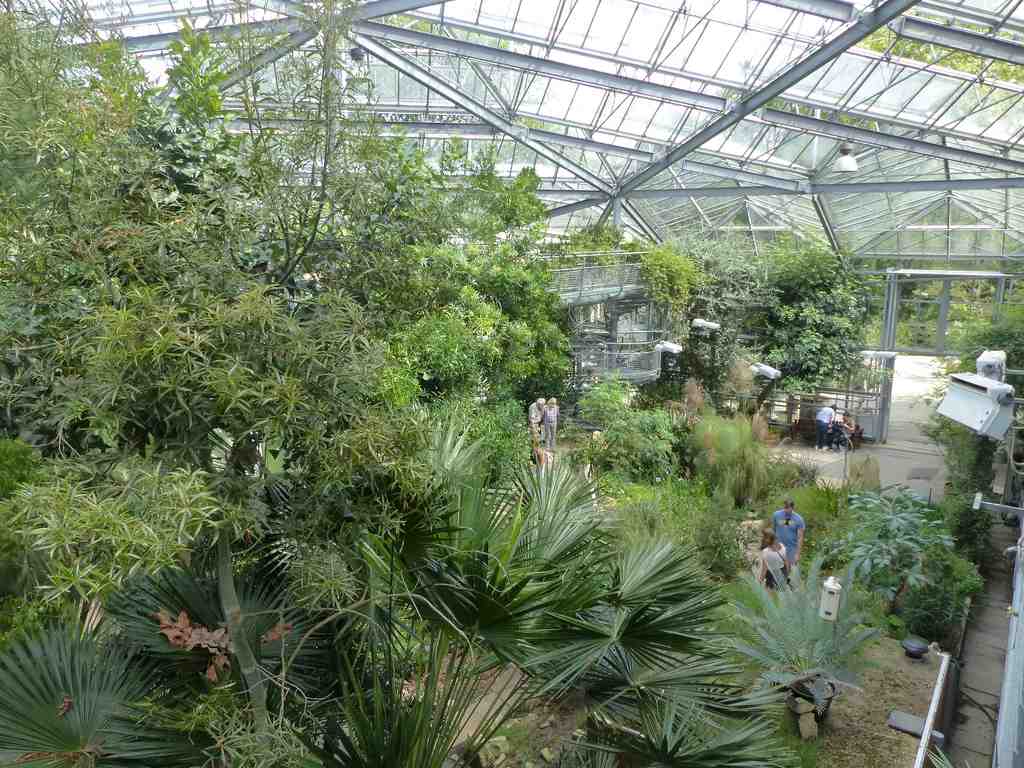
To spot the Hortus Botanicus, look for a large glass greenhouse structure just ahead of you, where tall palms and leafy green plants almost seem to press right up against the transparent walls and roof.
You’ve just arrived at one of Amsterdam’s true green treasures! Imagine stepping into a time machine-not one that whirs and beeps, but one that smells like fresh earth, medicinal herbs, and tropical flowers. That’s Hortus Botanicus, right in front of you, inviting you to travel through centuries of botanical adventure without ever leaving the garden.
Back in 1638, when most of Amsterdam’s buildings barely creaked above the canals, the city founded this garden, but it wasn’t just for show. No, the first version-called Hortus Medicus-was created with a serious mission: to help doctors and apothecaries battle the illnesses of the day. At a time when the common cold could ruin an entire week (and who knows what a sneeze might unleash), people came here to sniff, snip, and learn about mysterious plants from around the world. Picture herbalists with wide-brimmed hats, hunched over odd-smelling roots, whispering Latin names like they were magic words.
But Hortus was also caught up in the wild world of the Dutch East India Company. Sailors and traders returned from far-flung places, their ships packed with seeds and seedlings-imagine the excitement when a single coffee plant arrived here, and later became the parent of every coffee tree in Central and South America. Talk about a morning miracle! And those oil palms from Mauritius? Just tiny twigs at first, but after they took root here, they grew up to become a jackpot crop for all of Southeast Asia.
By the mid-1600s, director Johannes Snippendaal counted nearly 800 plants-most had healing powers. You can still find the Snippendaal Garden here today, bursting with green memory and centuries-old stories. Over the years, Hortus Botanicus has kept growing-literally. Look for the hexagonal pavilion, the grand entrance gate, and the orangery: each one has its own piece of the story. Even the Palm House and Hugo de Vries Laboratory hide behind glass and brick, changed forever by scientists who poked at leaves and asked big questions.
But it hasn’t all been peace, plants, and prosperity. In 1987, the garden almost closed its gates forever when funds dried up, but people loved it too much to let it go. Locals rallied-imagine hundreds of green-thumbed heroes!-and saved the garden for all of us to enjoy.
Today, you could stumble upon a Persian ironwood tree or wander into a hothouse with three climates. There are flowers stranger than your uncle’s holiday sweater, halls for ceremonies, and even a café for a leafy pause. So as you stand here, you’re not just outside a garden; you’re on the threshold of Amsterdam’s living, growing, and frankly rather magical slice of history. Fancy a stroll among botanical legends?




