
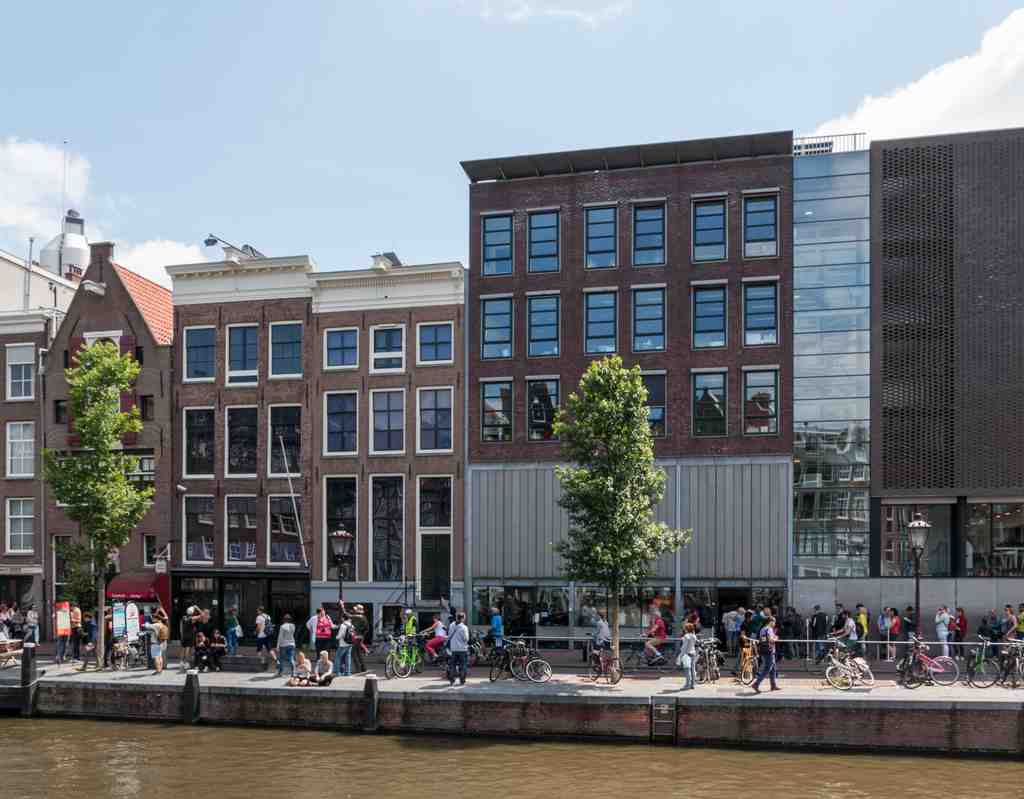
In front of you, right on the Prinsengracht canal, you’ll spot a row of tall, narrow brick townhouses-look for the simple, dark windows with cream trim among the crowd of visitors, just where the contemporary glass structure meets the classic canal houses.
Now, take a deep breath and imagine stepping back in time to Amsterdam during World War II. The city is occupied, fear hangs in the air, and just behind these plain windows-maybe less noticeable than the bicycles piled outside-a secret world once existed. These houses, built all the way back in 1635, might look like your typical Dutch canal homes from the outside. But hidden at the rear, through a bookshelf that swung open like an invitation to a mystery novel, was the Secret Annex where Anne Frank and seven others hid for over two years.
Picture it: summer sunlight glinting off the canal, the murmur of distant voices outside, but inside, silence is everything. This was where laughter had to be muffled, meals had to be eaten in secrecy, and every passing siren sent chills down spines. In the cramped spaces-just about 450 square feet for eight people-Anne wrote in her diary, her words painting pictures brighter than any paint could manage. She wrote about her dreams, fears, and even cracked jokes, proving that a little humor can survive even the darkest times.
But here's a twist worthy of a detective show: the building wasn’t always a secret sanctuary. It was once a fashionable family home, then a warehouse with horses clopping through its wide doors, and later even a piano roll factory! By the 1940s, Otto Frank set up his spice and gelling business here. The ground floor hustle-think of sacks of spices rustling and being packed for shipment-hid the sorrowful truth of what was happening above.
For more than two years, Anne and her family relied on the courageous help of employees like Miep Gies and Bep Voskuijl. They risked everything to bring food, news, and hope, sneaking upstairs with bread or news of the outside world. Still, fear was a constant guest in the Annex. The radio played softly for encouragement, until it too was surrendered when Nazis demanded them turned in.
One terrible day, the secret was discovered. The rooms were raided, lives were upended, and the Frank family was sent away. Of the eight, only Otto Frank survived the camps. The Annex was emptied by the authorities, and only thanks to the bravery of Miep and Bep were Anne’s diaries saved. It’s almost poetic: a story meant to be hushed, saved by those who refused silence to win.
After the war, Otto returned, found Anne’s words, and helped turn her writings into the magical, heartbreaking “Diary of a Young Girl.” And almost as if the story wasn’t powerful enough, the fate of the house itself became a drama. Developers nearly demolished the block, but campaigners protested, and with the creation of the Anne Frank Foundation, the building was saved just in time. Restored, expanded, and opened as a museum in 1960, the house has drawn people from around the world-over a million visitors a year! They come to walk those narrow staircases, see the famous hiding place, and feel the hope and sadness in those rooms.
Today, the museum covers several buildings, creating space for exhibitions about all forms of discrimination and the fight against it. Objects from Anne’s time are displayed, including a Hollywood touch-a real Academy Award in a bullet-proof case, donated by Shelley Winters for her role in the 1959 film about Anne Frank. And just for a sprinkle of modern trivia: even pop stars drop by! When Justin Bieber visited, he left a guestbook note that sparked headlines, showing just how much Anne’s story still moves new generations.
If these walls could talk, they’d whisper tragedy and courage, ordinary daily life turned upside down, and a young girl whose words outlasted the darkness. So, as you stand here, with the gentle slap of the canal’s water echoing on the cobbles -remember, history isn’t just behind glass. Sometimes, it’s right under your feet, and still speaking through a diary, a house, and the bravery of those who dared to hope.




