
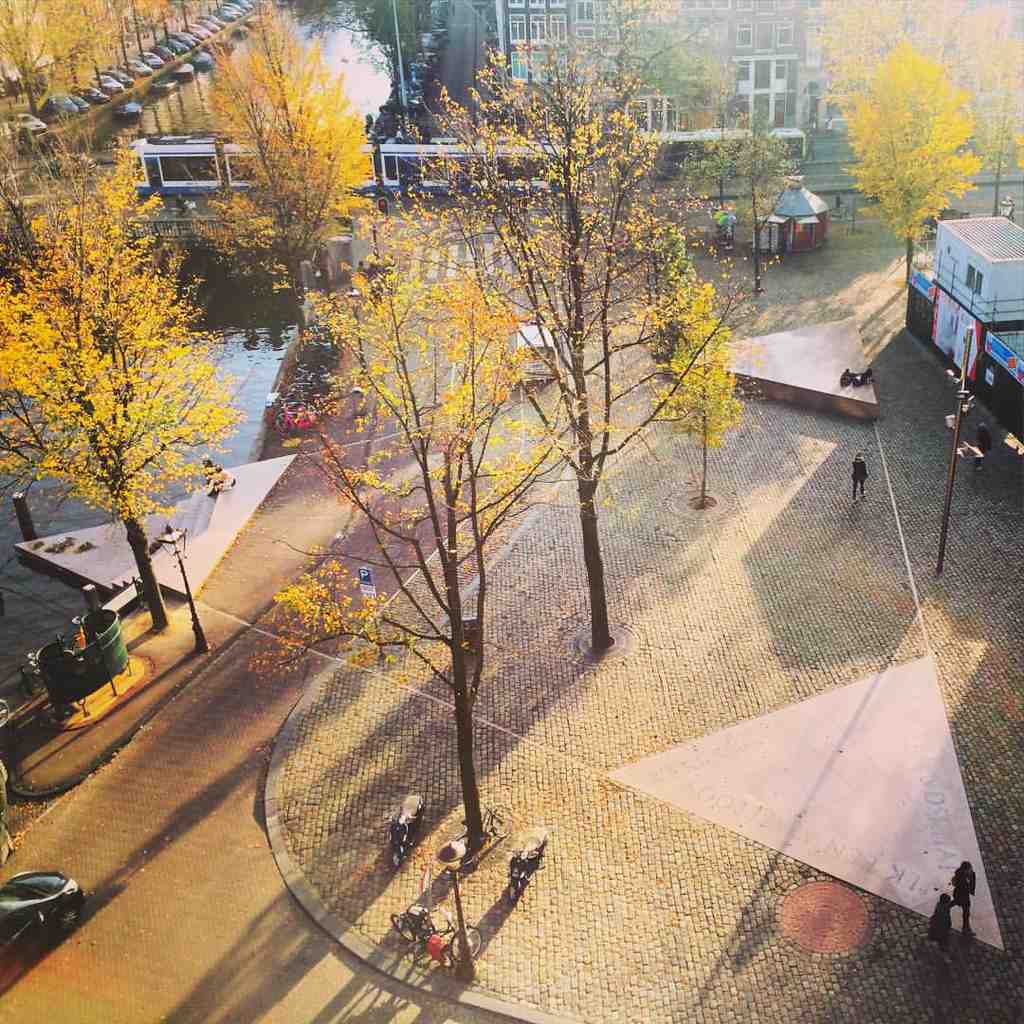
Look down at the ground in front of you and to your left-three giant pink granite triangles are set into the cobblestones, each about the size of a small car, forming a larger triangle right where the square meets the canal.
You’re now standing at the Homomonument, one of Amsterdam’s most quietly powerful landmarks-though it’s big enough to fit a group of dancing drag queens, many people walk over it every day without noticing its message. Picture yourself here on a sunny afternoon, the canal sparkling nearby, while footsteps echo on the stone underfoot and the city hums with the sound of trams. But beneath this calm is a patchwork of stories, struggles, and victories that changed the world.
The Homomonument was unveiled in 1987, after a battle that lasted decades-not your average home improvement project! Here’s the setting: Amsterdam. The air was buzzing with movement from the LGBTQ community, who wanted their place in history not just marked, but carved in granite. Imagine activists in the 1970s, gathering in secret, frustrated because whenever they tried to lay a simple wreath for gay victims of World War II at the Dam Square memorial, the police snatched the flowers away. It may sound absurd now, but back then, denying the memory of homosexual victims was the official line.
Enter the Homomonument Foundation, stubborn as a Dutch bike-lock, refusing to let this chapter be ignored. By the late seventies and early eighties, people of every political stripe in the Netherlands were arguing whether this monument should even exist. Some politicians compared homosexuals to criminals, while supporters fired back, insisting it was long past time for recognition. In this mix, an artist named Karin Daan designed what you see before you now: not a towering statue, but three pink triangles, each one loaded with meaning, stitched gently into the very heart of the city-a bit like embroidery on the city’s fabric.
Now, let’s explore the triangles. Each triangle tells part of a story: the triangle by the canal, with steps leading down to the water, points directly at Dam Square-the city’s main memorial. People like to sit here, dangle their feet over the water, and sometimes you’ll see flowers or candles left behind for someone from the past. If you listen closely, you might almost hear the water lapping at the edge beneath you.
The triangle up above becomes a small stage for future hope, pointing towards the old headquarters of the world’s oldest LGBT organization. During festivals, this space is awash with color and laughter as Amsterdam’s LGBTQ community takes over the square with music, dance, and pride. The final triangle, set flat with the stones, points towards the Anne Frank House-a reminder of the darkest days of persecution under the Nazis. Around its edge, there’s a haunting line from Dutch-Jewish poet Jacob Israël de Haan, which translates to “Such a boundless craving for friendship”-a phrase that’s both an ache and a promise.
And what about the big pink triangle itself? That was the patch the Nazis made gay men wear in concentration camps-a mark of shame transformed, years later, into a symbol of pride, resistance, and remembrance. The monument here is the world’s first memorial to gay and lesbian victims, not just of the Nazis, but of all eras. It stands for those lost, those fighting today, and those who dream of a more equal tomorrow. Every May, locals gather here on Remembrance Day to lay flowers and light candles, while the next night, the square erupts in music and celebration for Liberation Day.
So, as you stand here, surrounded by trees and water, bicycles rolling past, remember you’re on a piece of living history: the Homomonument is woven into the city, proud and strong as granite, whispering that we’re all connected-in the past, the present, and the future. And if anyone says a triangle can’t change the world, just ask a Dutch person… or maybe a geometry teacher!
Intrigued by the symbolism, construction or the current situation? Explore further by joining me in the chat section below.




