
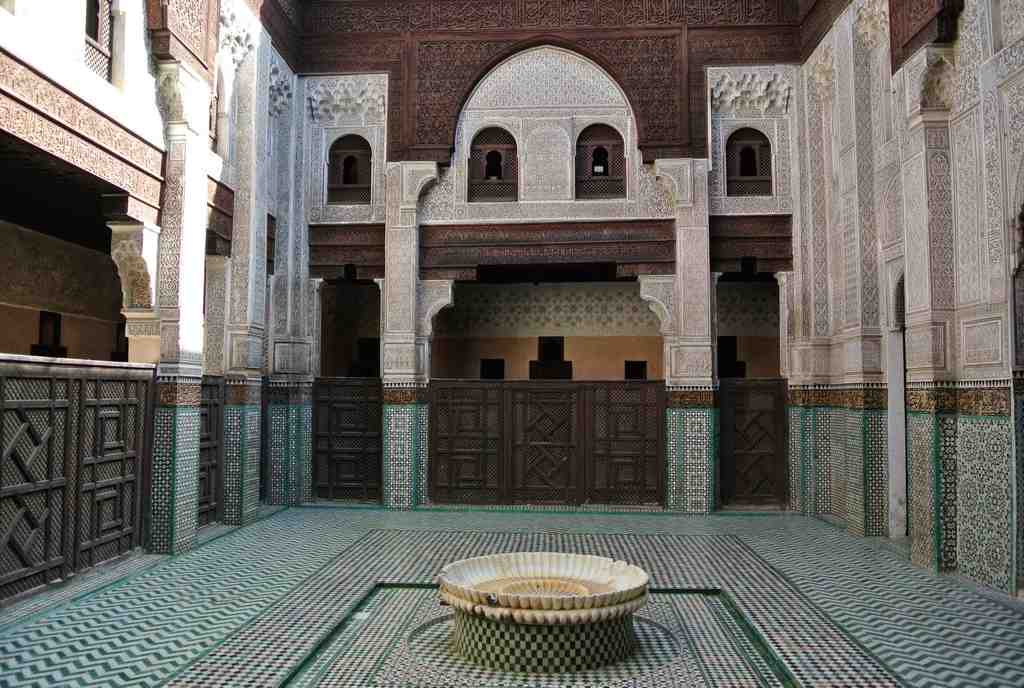
To spot the Bou Inania Madrasa, look for a building with a grand wooden doorway decorated with copper fittings and, once inside, a mesmerizing courtyard with geometric green-and-white tilework, carved stucco arches, and elegant wooden screens.
Welcome to the Bou Inania Madrasa! Take a deep breath and imagine the year is 1335. The streets of Meknes are humming with the soft echo of sandals on stones, and young scholars, eager to learn, step through these beautifully crafted wooden doors. Now, it’s easy to think this place got its name from the famous sultan Abu Inan Faris, but plot twist-it was his dad, Abu al-Hasan, who built it first! Evidence is literally written on the walls inside, in case you don’t believe me. Abu Inan probably did a little glow-up renovation later on, so history gave him the naming rights, which just goes to show rebranding isn’t just a modern thing.
You’d never guess it, but Bou Inania wasn’t called that at first. Back in its earliest days, people simply called it the “New Madrasa”-which probably made things confusing whenever they built another new one. It’s one of several historic madrasas that helped turn this area, not far from the Grand Mosque, into the scholarly heart of Meknes. Imagine dozens of students, hailing from all over, living upstairs or in the little ground-floor rooms, trying to remember if they were on page 22 or still stuck at basic grammar. Some were lucky enough to grab a room with a window into this glorious courtyard, where a marble water fountain sits in the middle, splashing gently like a mini oasis.
The whole place was as lively as a beehive: lessons echoing under the arches, the scent of old wood and incense, feet pattering toward the nearby ablutions house with its 22 little changing rooms, and gossip about which student had the best lunch. At the southeastern end, you’d find the prayer hall, entered through an arch so ornate it looks like sugar icing, with a mihrab shimmering in the sunlight and carved stucco so detailed it could make you dizzy.
And here’s a fun bit: historians say the Bou Inania Madrasa marked a moment of change in Moroccan architecture-bridging styles from Abu al-Hasan’s other madrasas to those of his ambitious son, Abu Inan. So yes, this place is a living, breathing landmark of both rivalry and beauty. If you listen closely, you might just hear the murmurs of centuries of students-and, if you’re lucky, catch a cool breeze weaving through the magnificent mashrabiya screens.


