
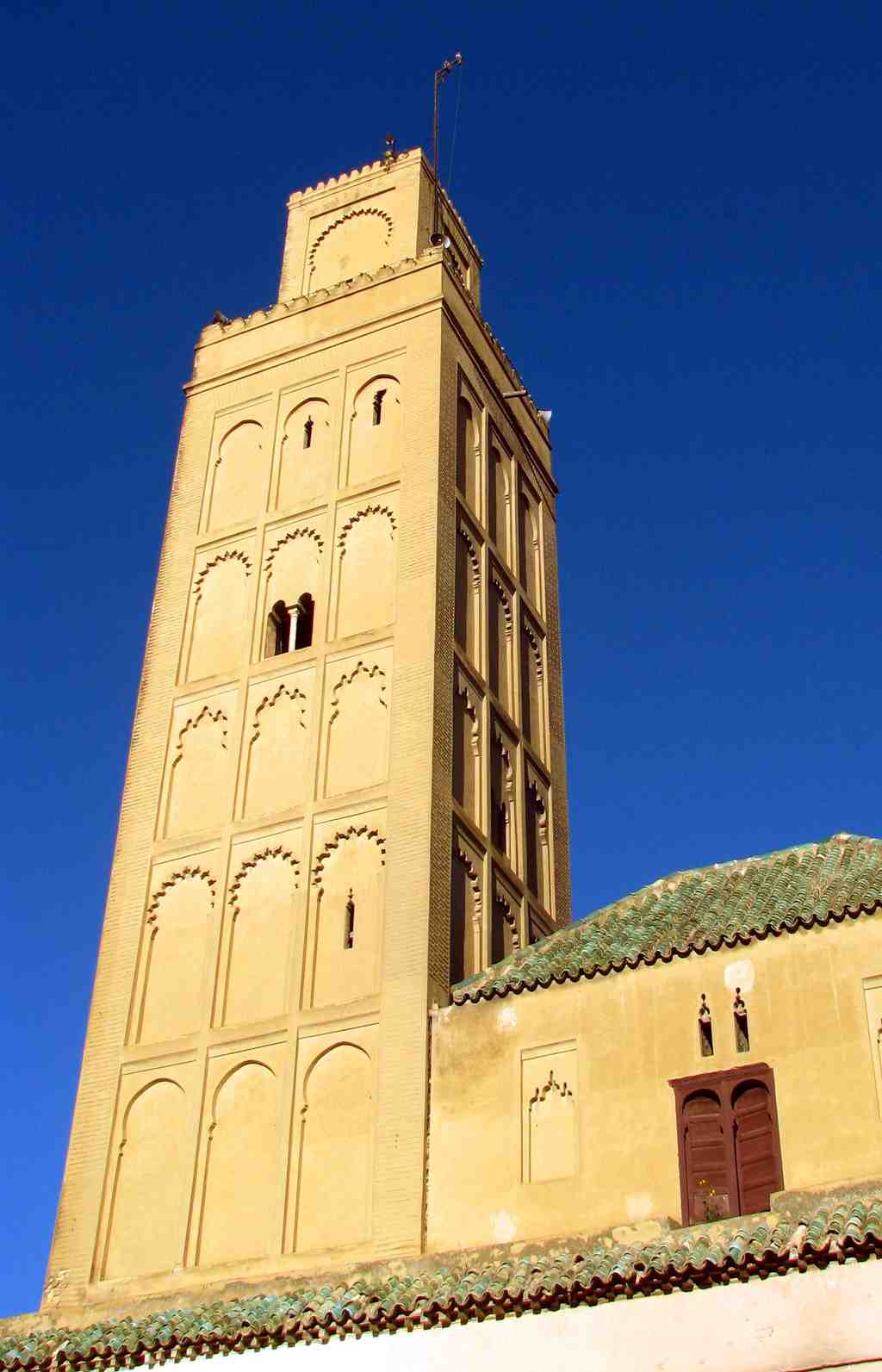
To spot the Bab Berdieyinne Mosque, look for the tall, square minaret rising above the tiled rooftops, with its pale sandy walls patterned by rows of simple arched designs and topped by a delicate metal finial.
Now, as you’re standing here beneath the blue Moroccan sky, let’s tumble into the story of the Bab Berdieyinne Mosque-a true heavyweight in Meknes’ skyline, with its lofty minaret watching over the winding lanes since 1709. But here’s the twist: this beauty owes its existence, in part, to Khnata bent Bakkar, Morocco’s first female minister. Imagine the awe in the medina as word spread that a woman of vision and power was behind this new house of worship. Back then, under Sultan Moulay Isma'il-who seemed to build more than he slept-Meknes was transforming into an imperial dream, and the Bab Berdieyinne Mosque arose from layers of rammed earth, close to the packsaddles market at the Bab al-Bard’iyin city gate.
Feel the sunlight against your face, and picture the mosque’s earliest days-workers with dust on their brows, Berber chief 'Ali ibn Yashu al-Yazghi overseeing- walls ascending as prayers drift through the air. Its minaret, simple at first glance but tallest in the city, soon became a guiding landmark, each facade wearing a matching jacket of arched frames, brick upon brick.
Time swept on, and like an ambitious old uncle, every new sultan wanted to leave his mark-Moulay Muhammad ibn Abdallah polished it up in the 18th century, and decades later, the French Protectorate dusted off the old stones once again.
But let’s fast forward to a stormy day in February 2010. After days of pounding rain, the minaret-lovely but weary from centuries of storms-couldn’t hold out. Just as hundreds gathered for Friday prayers, as the imam prepared to speak, disaster struck. The tall tower collapsed, filling the narrow lanes with dust and heartbreak. Families ran, and rescuers clawed through the rubble with their bare hands. For a city used to dealing with rains and aging bricks, the fall of a minaret was something else; this tragedy claimed 41 lives and injured many more, making it the worst collapse of its kind in Morocco.
The king himself ordered a minaret reborn-precisely as it had been, a tribute to both memory and hope. Experts began inspecting old mosques around the country, making sure history wouldn’t tumble again unannounced.
As you stand in front of this restored minaret, think of all it’s witnessed: from markets of saddle-makers outside its walls, to women breaking barriers, to neighbors who came together at a time of loss. Whether you believe in destiny, or simply good builders, the Bab Berdieyinne Mosque stands as a testament to second chances and stubborn beauty-weathered but never quite defeated.


