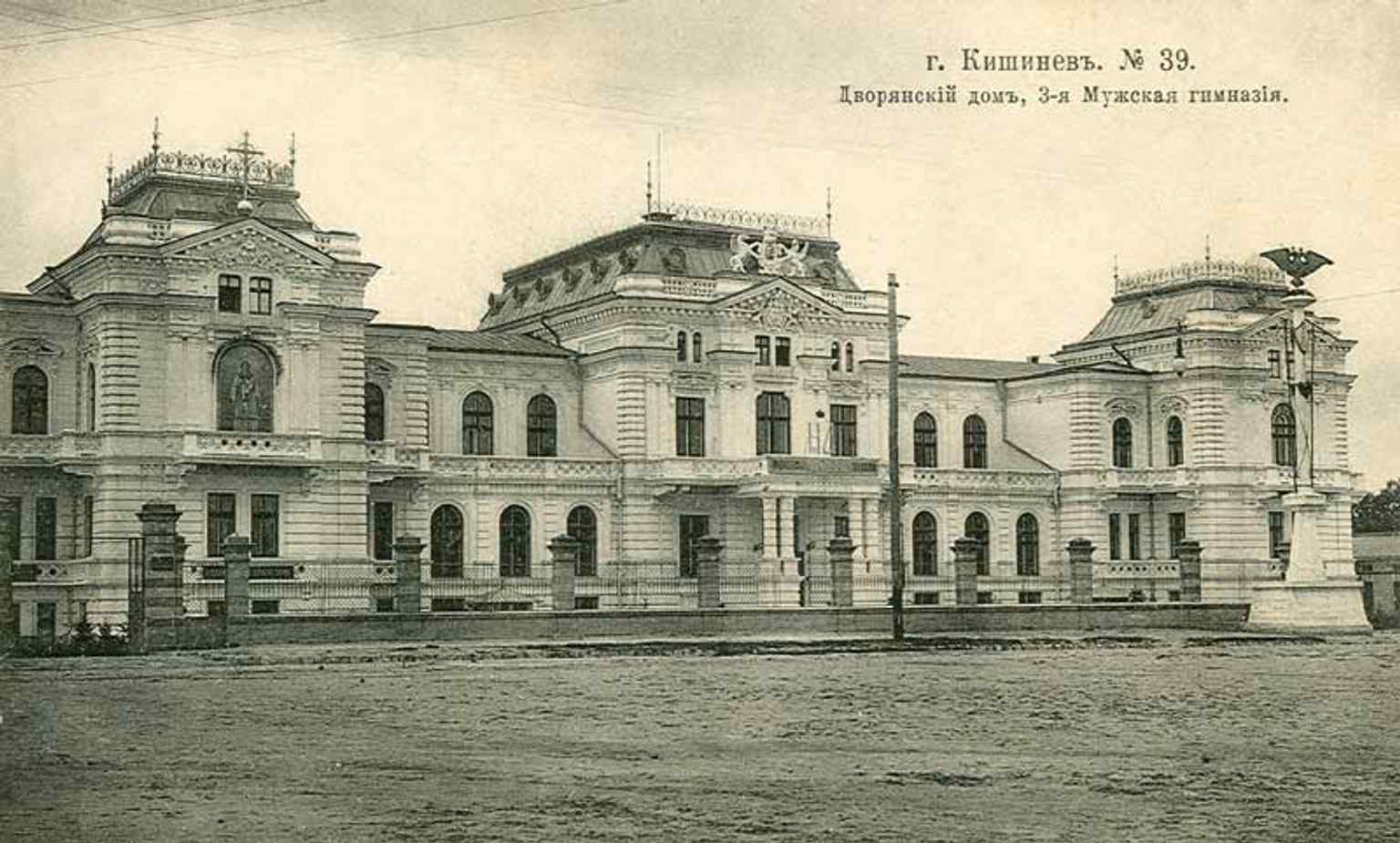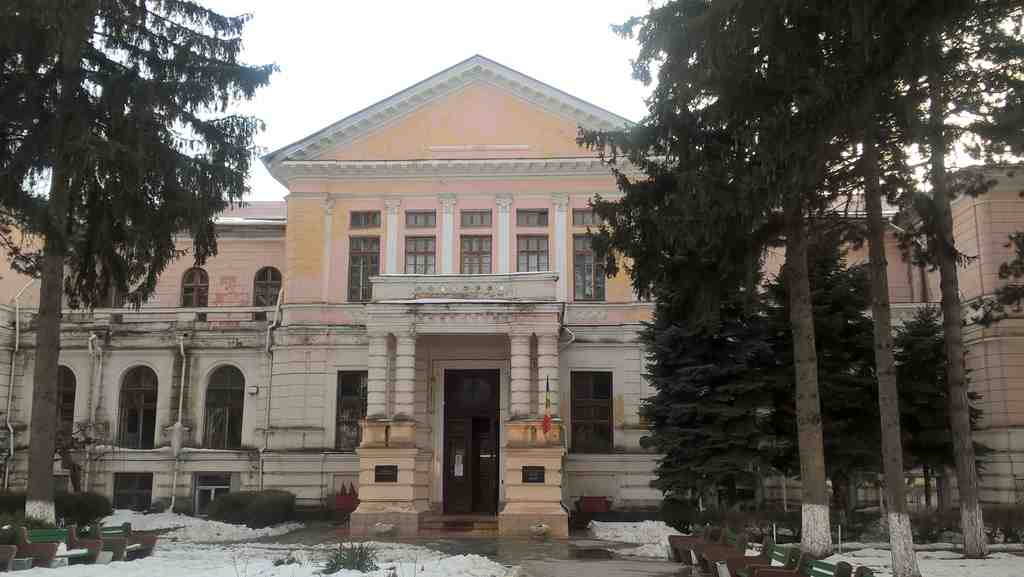
On your right stands a pale stone, two-story building with a symmetrical classical facade, three projecting sections, and four columns framing the entrance.
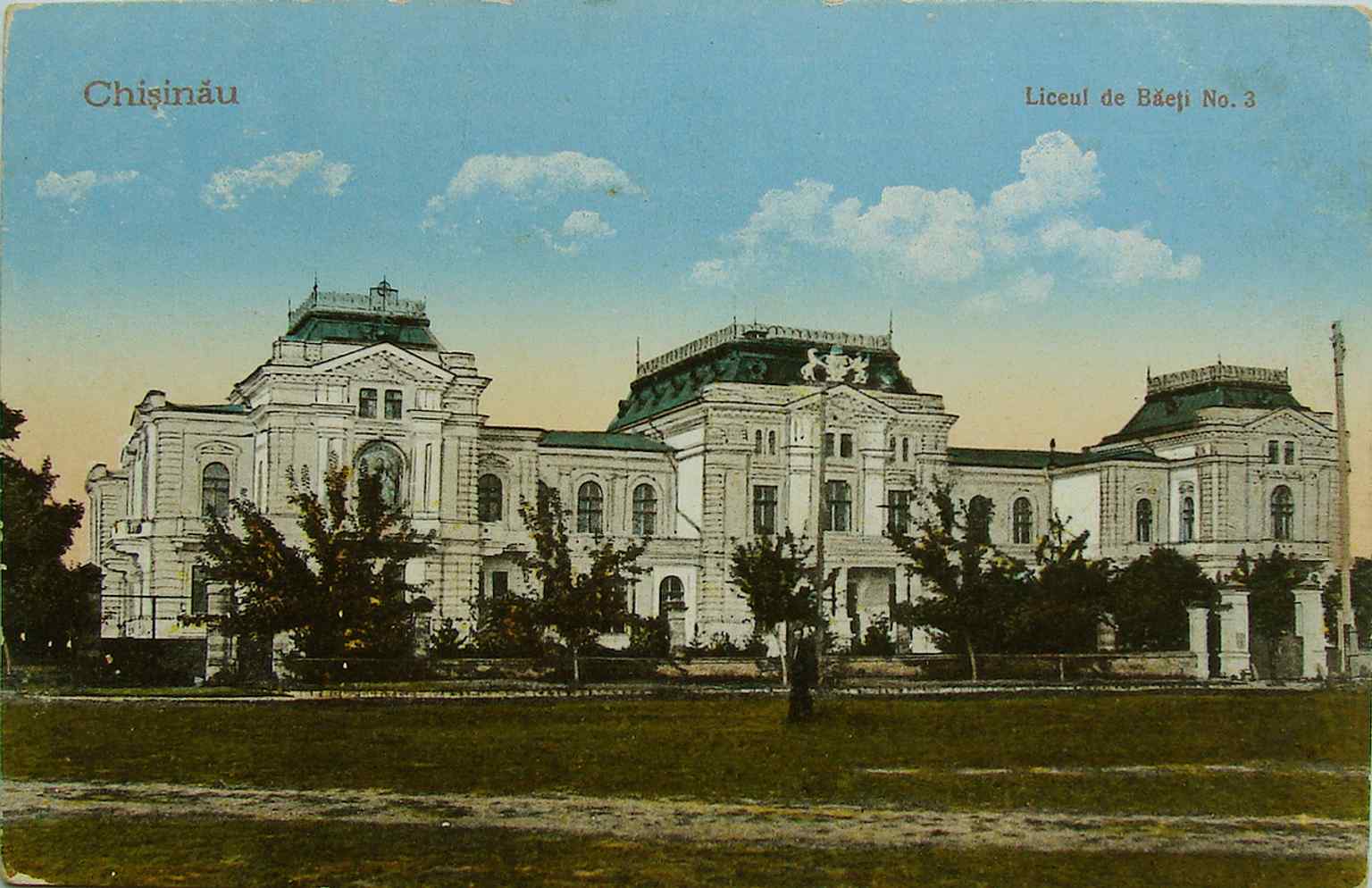
This is the former Headquarters of the Country Council, known in Romanian as Sfatul Țării, and its calm exterior hides one of the most decisive rooms in Moldovan history. Architect Vladimir Țîganco drew the plans in nineteen oh two in a French-influenced classical style, with balanced lines and restrained ornament. He first imagined it as an orphanage and boarding house for seventy boys from noble families. By nineteen oh five, the tsarist Ministry of Education took it over and opened Boys' Gymnasium Number Three here instead.
Then history kept changing the building's job. During the First World War, soldiers filled it as a military hospital. In nineteen seventeen, it became the seat of Bessarabia's parliament. Inside these walls, on the second of December, nineteen seventeen, delegates proclaimed the Moldavian Democratic Republic. Then, on the twenty-seventh of March, nineteen eighteen, they voted for the union of Bessarabia with Romania.
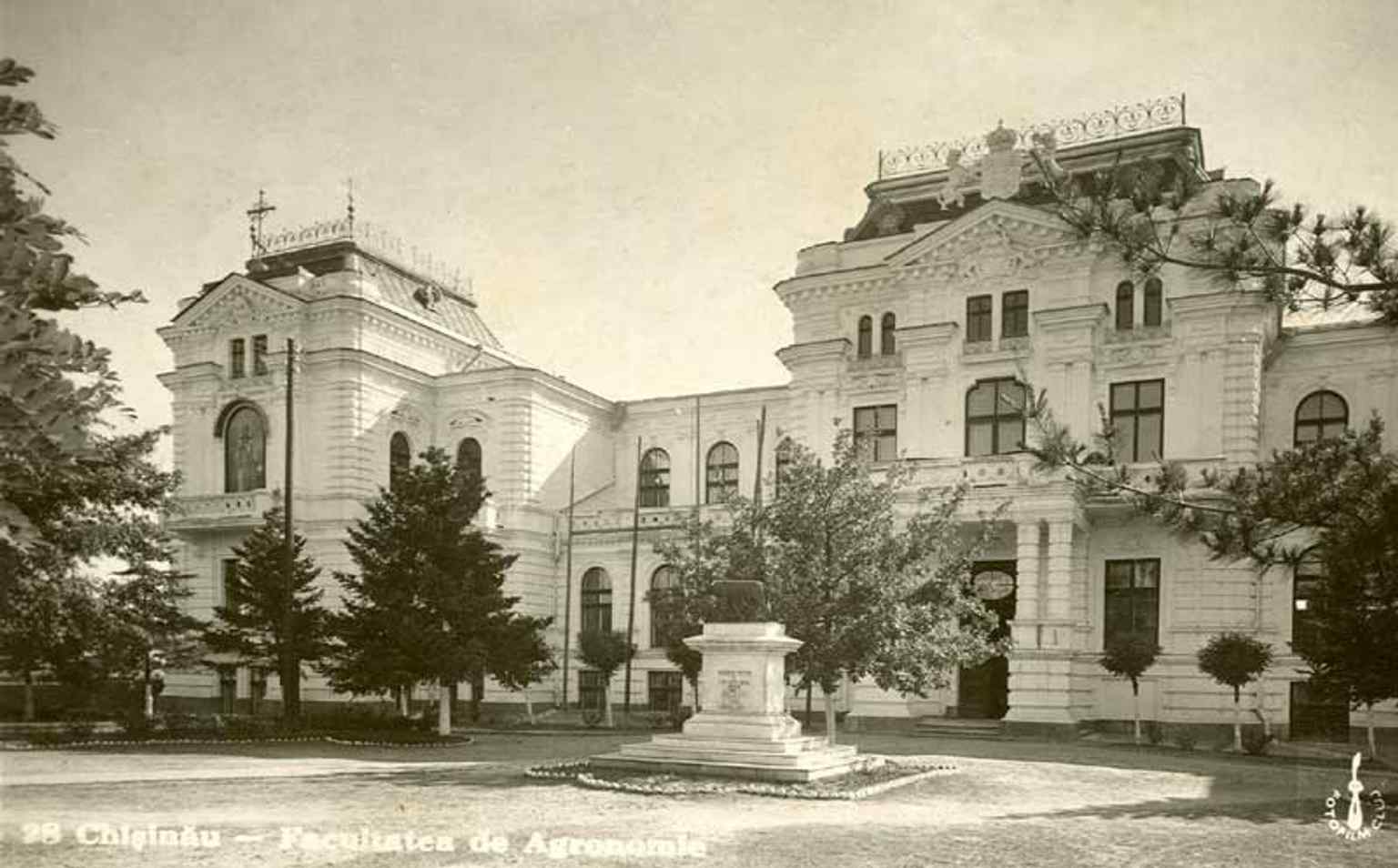
If you want, glance at the before-and-after image in the app; the facade stays almost the same, but the forecourt later gains the Capitoline Wolf, turning the scene into a statement about Romanian identity.
Afterward, the building served a boys' school again, then agronomic studies, then survived heavy war damage before architect Etti-Rosa Spirer reshaped it in nineteen fifty. Today it belongs to the Academy of Arts, still carrying memory and argument in the same walls.
This building remains one of Chișinău's clearest symbols of identity claimed in public. When you're ready, we can continue to the next stop.