
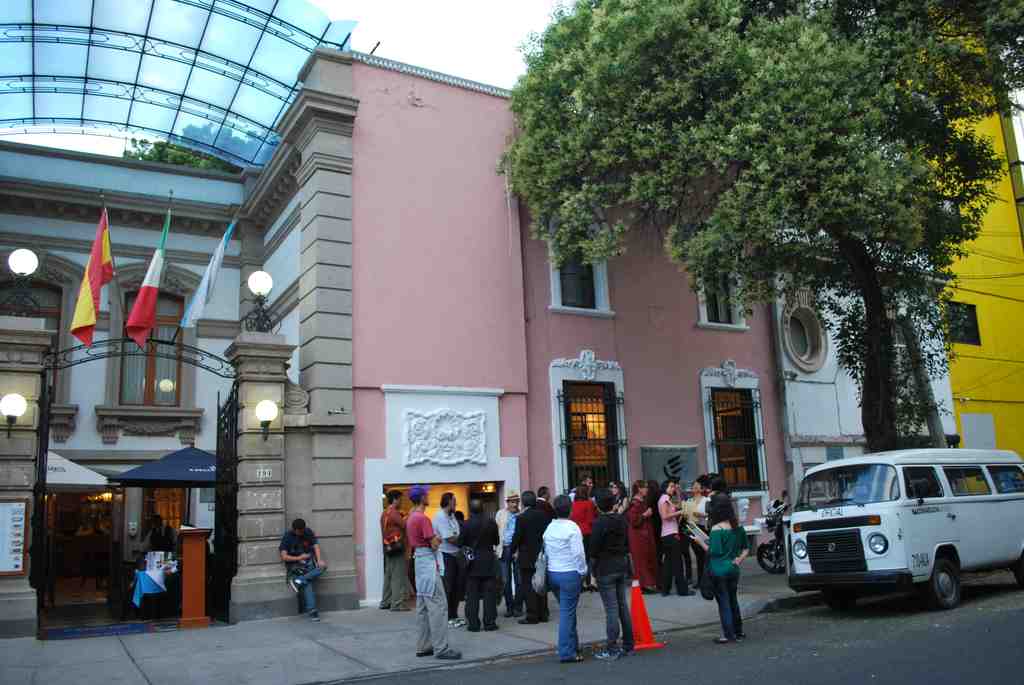
To spot the Salón de la Plástica Mexicana, look for a grand pink mansion with sculpted white details and tall windows, just beneath a leafy tree and beside a bright yellow building-there’s usually a crowd gathered outside for the latest exhibit.
Alright, you made it! You’re standing in front of a true gem of Mexican art, the Salón de la Plástica Mexicana. Let’s take a step back in time-and just for fun, imagine you’re stepping into 1949. The air is buzzing with excitement, artists in berets and bold dresses are carrying canvases, and conversations about “the next Rivera” or “the latest Orozco” hang in the air like thick paint on canvas.
Once upon a time, this storied institution opened its doors with a simple but revolutionary dream: to launch contemporary Mexican art to new heights and make it part of every home, not just the walls of millionaires. Back then, it wasn’t even here-it sat proudly in the historic center, where artists would gather, feverishly exchanging ideas. No stiff galleries here! They wanted everyone-yes, even the guy just looking for a nice picture for his living room-to leave with a masterpiece (and maybe a good story for dinner that night).
The place works a bit like a super-exclusive art club: to join the nearly four hundred member artists, you’ve got to already be a star in the art world, with works or a resume that makes people say, “Wow, who painted that?” From the first day, strict judges would decide whose art would hang here, keeping the standards sky-high-think of it as Mexico’s artistic Olympics, but with more paint and less spandex.
Over the decades, famous hands have shaped this space. Imagine browsing its early halls and stumbling upon pieces by Frida Kahlo, Diego Rivera, Rufino Tamayo, or Siqueiros-legends whose names are whispered with awe by art lovers worldwide. The Salón quickly became a magnet for collectors but also regular folks, drawn in by the promise of buying amazing art without breaking the bank. Back in those smoky post-war years, more than half a million pesos worth of art flew off the walls, sometimes by artists who would later become globally famous.
And the works themselves? Not just your average oils, but everything from bold engravings to shimmering watercolors, all echoing the wild, vibrant, sometimes rebellious spirit of Mexico. One day you might find a haunting Day of the Dead exhibit, another day, a celebration of ancient aqueducts or the chaos and beauty of downtown Mexico City.
But of course, even artists sometimes fight-by the 1970s, rivalries bubbled up. Young visionaries challenged the old guard, shaking things up and pushing the Salón to reinvent itself again and again. It moved to this grand Colonia Roma mansion, safe from the storms of change, surrounded by trees and busy city streets. Nowadays, it’s not about selling art so much as giving its members a stage to shine-every year, hundreds of artists, each with a story to tell and a style that’s undeniably theirs.
The Salón has always had a wild, creative spirit, like that one friend who dances first at the party. It’s linked to the National Institute of Fine Arts, yet it runs on its own steam, curating shows in partnership with universities, government, even hosting cultural festivals across Roma and Condesa. If you listen carefully, you might still hear the echo of passionate debates, laughter, and clinking glasses from past exhibition openings.
So, as you stand here beneath the shade of this old tree, looking at the soft pink walls, remember that you’re not just outside a gallery-you’re standing at the crossroads of modern Mexican art history. Who knows, maybe inside there’s a painting that changes the way you see the world, or at least makes you smile. Just don’t ask the artists if they prefer oils or watercolors-trust me, that’s how you start a ten-hour discussion! Shall we head inside, or are you ready for even more colorful adventures in the neighborhood?


