
Victoria Audio Tour: Sacred Echoes and Mysteries of the Cittadella
Beneath the golden stone walls of the Cittadella, echoes of rebellions and conspiracies still linger over the streets of Victoria, revealing secrets that only those who listen carefully can unravel. This is a self-guided audio tour, designed for those who wish to explore every corner with freedom, delving into surprising stories and places overlooked by most visitors. Why did a confrontation between knights and villagers almost change Gozo's destiny forever? What mysterious secret watches over every mass in St. George's Basilica? What can a lost document from 1799 reveal about the French occupation? Prepare to cross medieval alleys, traverse sun-dappled courtyards, feel the weight of bold decisions and forgotten scandals. Every step here transforms the ordinary into something extraordinary. Heed the call of the walls and begin to discover the true soul of Victoria.
Tour preview
About this tour
- scheduleDuration 40–60 minsGo at your own pace
- straighten3.2 km walking routeFollow the guided path
- location_on
- wifi_offWorks offlineDownload once, use anywhere
- all_inclusiveLifetime accessReplay anytime, forever
- location_onStarts at St Francis Church, Victoria
Stops on this tour
To find St. Francis Church, just look for its wide golden stone facade with statues in niches, a clock at the top, and a beautiful wooden door - it's right in the heart of the…Read moreShow less
To find St. Francis Church, just look for its wide golden stone facade with statues in niches, a clock at the top, and a beautiful wooden door - it's right in the heart of the square, impossible to miss! Now, just imagine: the year 1492, boats sailing, clothes fluttering, and a convent dedicated to St. Mark began to emerge here in Gozo. But life changes, doesn't it? In 1535, they decided to switch saints - the place then fell into the hands of St. Francis, and rumor has it, even the pigeons in the square found the change strange! Almost two centuries later, most of this church and the adjacent convent were rebuilt with much stone, faith, and probably a few headaches for those carrying the blocks. By 1663, the work was complete, gleaming under the Maltese sun. But there were more twists: in 1742, an illustrious guest paid a visit. None other than Grand Master António Manoel de Vilhena, who decided to take possession of the island and spent five days here. There's even an inscription on the wall commemorating this visit - quite fancy, wouldn't you say? Time, however, spares no one, not even the best roofs. In 1890, the government closed the church because the roof was in such a state that even the spiders didn't like it anymore. It was only years later, with a brand new roof and facade, that the church reopened its doors in 1893 and was officially consecrated in 1906. And look at the art show you can find inside: a marvelous painting of St. Francis of Assisi by Jean-Baptiste van Loo, plus a statue of St. Isidore the Farmer from 1680 - which was once pure gold ostentation, but was eventually painted over to avoid attracting the covetous eyes of French invaders. Every December 8th, since 1663, the Feast of the Immaculate Conception transforms the square into a pure celebration. It's incredible how one place gathers so much history, isn't it? And hey, if you ever come across a closed door, remember: it used to be much worse for the old roof!
Open dedicated page →Before you stands the Church of Our Lady of Pompeii, with its imposing beige facade, carved wooden doors, and two curved balconies, easily recognizable by its ornate top and…Read moreShow less
Before you stands the Church of Our Lady of Pompeii, with its imposing beige facade, carved wooden doors, and two curved balconies, easily recognizable by its ornate top and beautiful decorated portal. Imagine yourself at the end of the 19th century, when the Dominican sisters arrived full of energy and began building this monastery next to the church. In 1900, all it took was ringing the bell to open the doors to the public - an event so eagerly awaited that, they say, the air was filled with the scent of flowers and curious whispers from neighbors! From then on, this place became a pulsating heart of stories and devotions. In 1923, the church was finally consecrated by Bishop Angelo Portelli, and everyone celebrated as if they were getting double Christmas presents! Inside, you would find the famous painting of Our Lady of Pompeii, a work by artist Lazzaro Pisani - a true gem. But the excitement didn't end there: in 1966, the image of the Virgin of Pompeii received a crown from Bishop Giuseppe Pace, in a ceremony that even the swallows tried to watch through the windows! Just a slightly sad detail, but worthy of a movie: there was a statue of Our Lady on top of the dome, but in 2009 a very strong wind swept through and - everything flew away! Now, up there, stands a cross that defies the gale. And look, this church is so special that it's part of Malta's national inventory, a source of pride for Gozo.
Open dedicated page →Before you, you'll see a golden stone church, decorated with four large white statues right at the entrance - it's hard to miss this “portal” of saints! Imagine yourself in the…Read moreShow less
Before you, you'll see a golden stone church, decorated with four large white statues right at the entrance - it's hard to miss this “portal” of saints! Imagine yourself in the 13th century, the Augustinians arriving in Gozo, probably with somewhat worn sandals and a great desire to pray! Before settling here in Victoria, they lived in Xagħra, until they decided to found this special place. The first record of this church is from 1435, but some say it already existed in 1260! A story worthy of a soap opera followed: in 1652, by order of Pope Innocent X, the church almost closed its doors forever... but four months later, Grand Master Lascaris entered the scene and guaranteed: “You can reopen!” In the 17th century, an “upgrade”: reconstruction, a new monastery and, almost like a birthday cake, consecration in 1782. Inside, you'll find a masterful painting by Mattia Preti, depicting St. Augustine, John the Baptist, and even a French duke! And here's the suspense: in 1836, a gift arrived from Rome - the body of Saint Dionysia, which rests in one of the side altars. And speaking of mystery, in 2007 some thieves tried to take a piece of this treasure... But they couldn't steal the historical aura you feel now.
Open dedicated page →
Show 10 more stopsShow fewer stopsexpand_moreexpand_less
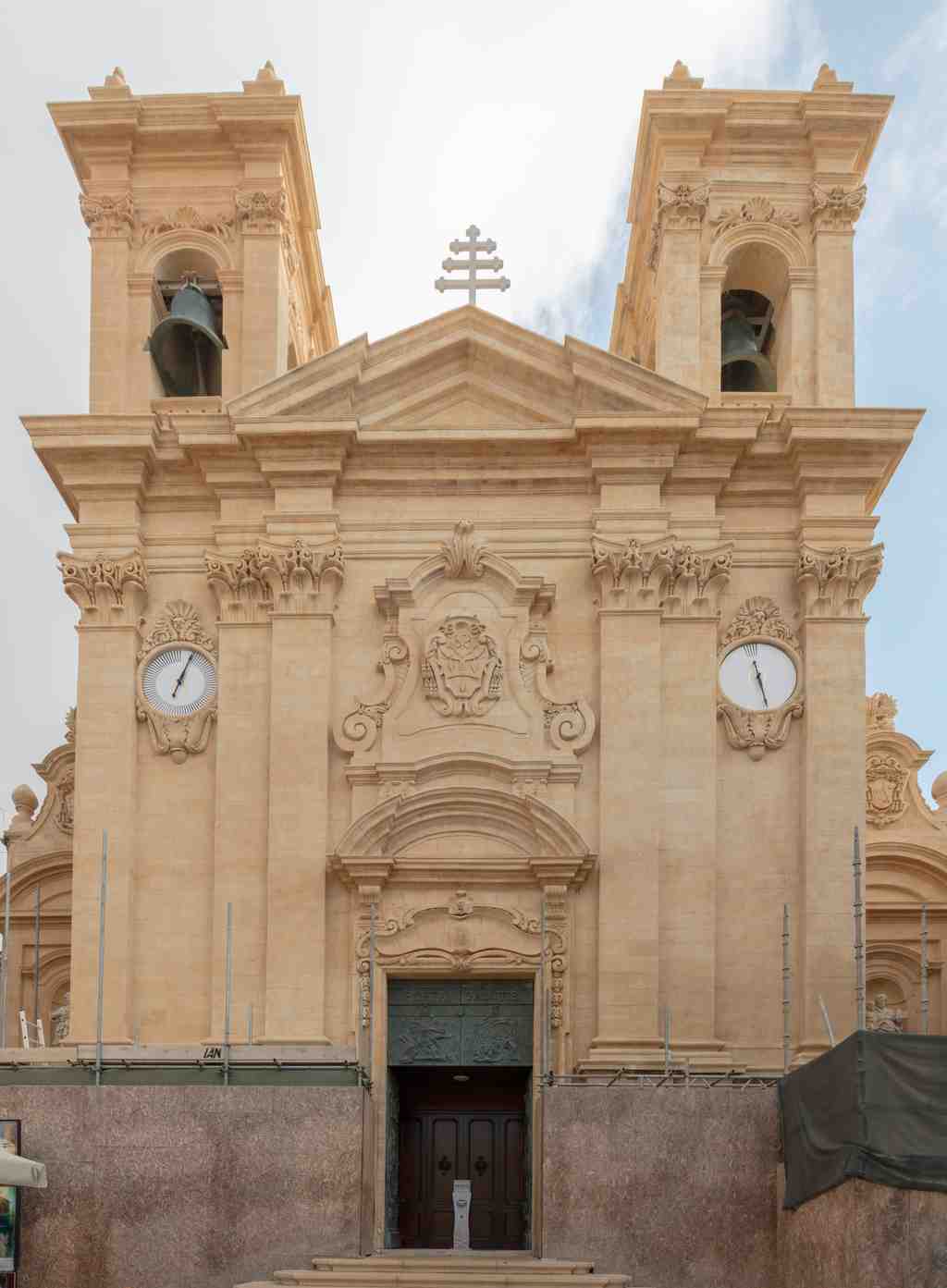
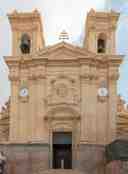
Before you stands an imposing beige limestone facade, with two symmetrical towers and white clocks on the sides: this is St. George's Basilica! Now imagine this place almost 1700…Read moreShow less
Before you stands an imposing beige limestone facade, with two symmetrical towers and white clocks on the sides: this is St. George's Basilica! Now imagine this place almost 1700 years ago, when it was still a Roman temple: in the heart of a labyrinth of narrow streets, curious people, merchants, and pilgrims bustled, and suddenly a Greek missionary decided to transform the ancient pagan temple into a Christian church dedicated to St. George. It sounds like a movie scene, but it all began right here! As early as the 4th century, when Emperor Theodosius I still wore sandals, the parish existed. And, surprisingly, until the end of the 1500s, religious celebrations here were held in the Byzantine tradition, complete with Gregorian chant and much incense. The church has been rebuilt so many times that if each stone could speak, you'd need a translator just to keep up with all the stories! Between invasions and earthquakes, it rose from the ashes thanks to people like Father Lorenzo de Apapis, who was kidnapped by the Ottomans in 1551, taken to Constantinople, but, full of courage, managed to buy his freedom, return to Gozo, and rebuild St. George. Not bad for a “traveling reverend,” huh? The church we see today was designed by Vittorio Cassar and began to emerge in 1672 - a project full of daring, so much so that even surrounding buildings were demolished to prevent them from providing cover in a possible invasion of the Cittadella. The work was only completed six years later, but it was only in 1755 that the church was finally consecrated. In the 21st century, St. George's Basilica boasts the title of “Gozo's golden church,” but it didn't always shine so brightly. It has faced earthquakes that destroyed its facade and even been part of a dispute between rival parishes. In the midst of the 17th century, the bishop had to unite, by decree, the parish of St. George with that of the Assumption, there in the Cittadella. The two remained together for over two centuries until they became independent again in 1955 - I'd say it was almost like a parochial marriage and divorce! Take a look at the main door: you might notice that it is made entirely of bronze, inaugurated only in 2004, and even bears the coat of arms of Pope John Paul II, as it was during his pontificate that it was opened. And speaking of exclusivity, it is the only entirely bronze door on the entire island of Gozo! Inside, prepare for a dive into gold, marble, and masterpieces by artists like Mattia Preti and Stefano Erardi. The main altar has changed its appearance several times: the original, from 1755, disappeared for decades and was miraculously rediscovered only in 1999 (it must have been playing hide-and-seek in the warehouses!). The current altar, made of Carrara marble, is supported by four angels dressed as altar boys, a unique scene in Gozo. The internal highlight is the wooden statue of St. George, made by Pietru Pawl Azzopardi in 1839, which was commissioned as an ex-voto - they say it is so beloved that it has undergone restoration twice and only needs a vacation from participating in so many processions! The basilica is not only a stage for faith but also for music: even the Sistine Chapel choirs have performed here, attracting crowds and bringing a “Roman” touch to the island. In its museum “Heart of Gozo: Il-Hagar,” on the left side, you'll find relics, paintings, and a collection that shows how the church has always been linked to daily life and local culture. Oh, and the festivals? Well, if you're here in July, you'll see processions, fireworks, and crowds celebrating St. George, patron of Gozo. They say that during this week, the basilica gets so crowded that you can only get in with a reservation - or divine luck! Final curiosity: despite all the pomp, even the Anglican community participates in the celebrations here. What an ecumenical church! I bet, looking at these towers, no one imagines the number of surprises St. George's Basilica holds. And you, do you already feel part of this story? To expand your understanding of the artworks, events and services or important dates, feel free to interact with me in the chat section below.
Open dedicated page →Before you stands the Church of the Nativity of Our Lady, known as Ta’ Savina, easily recognizable by its light stone facade with a beautiful bell tower and a statue of the Virgin…Read moreShow less
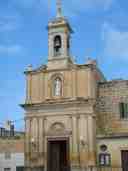
Before you stands the Church of the Nativity of Our Lady, known as Ta’ Savina, easily recognizable by its light stone facade with a beautiful bell tower and a statue of the Virgin Mary right above the main door. Imagine this bustling place centuries ago, when Victoria was just a labyrinth of stone streets and residents kept an eye on church bells to know which one was open at night. Ta' Savina is one of Gozo's oldest churches, mentioned in documents as far back as 1479 - practically a centenarian celebrity! It's even said to have roots in the time of Count Roger I of Sicily… Can you imagine a mustachioed count stumbling around here, choosing where to build a church? Legend has it that, along with the churches of St. James and St. George, Ta’ Savina was the “dawn parish,” serving the faithful while the main church in the Cittadella was closed and inaccessible at night. It was a kind of church rotation, only instead of pizza, it served prayers! But, over time, the fear of invasions diminished, and Savina lost its parish status - only two main parishes remained in Victoria. In fact, until 1899, burials took place right there in the churchyard… The current church only took on this appearance between 1901 and 1904, when Monsignor Luigi Vella rolled up his sleeves and led the reconstruction. Soon after, in 1913, they decided: "It's not enough, let's expand!" Imagine the work! Then, Cardinal Domenico Ferrata came especially to reopen the church. Final curiosity: the main altar displays a painting from 1622, showing the birth of the Virgin Mary, commissioned by an important governor - a true noble gift! Through the corridors, this mix of antiquity, faith, and that touch of history almost makes you expect to see someone in armor. Ready for Victoria's next mystery?
Open dedicated page →Before you, you'll see the Gozo Nature Museum: it's nestled among honey-colored houses, with ancient facades and wooden windows, just beyond this charming staircase flanked by…Read moreShow less
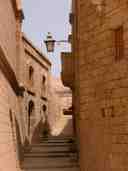
Before you, you'll see the Gozo Nature Museum: it's nestled among honey-colored houses, with ancient facades and wooden windows, just beyond this charming staircase flanked by pots. Imagine, where you are now, there used to be an old inn, welcoming tired travelers back in 1495 - and some only stopped here because they heard about the clean beds and the dinner that didn't break the bank! In the 17th century, more houses became part of this group, forming the building that now houses the museum. The scent of ancient stone almost seems to tell stories of a time when, during World War II, there was a great rush: entire families ran here, bringing their cats, chickens, and even Uncle's bad jokes, just to protect themselves from the bombings. Today, you'll find fantastic exhibitions here, such as fossils, minerals, insects, and even rare plants like the Maltese Centaury - don't try to eat it, it's not lettuce! Each room shows a bit of Gozo's life: from the bottom of the sea to swarms of locusts. Scientists revel, but the curious... it's guaranteed fun! And all this, in a building that is part of a protected island treasure. Entering, you take a true journey - but, I promise, without turbulence!
Open dedicated page →Before you, you'll notice a building with ancient yellow stones, a simple iron door, and a circular window just above: that's it, Old St Joseph in the Cittadella! Imagine…Read moreShow less
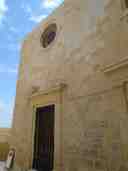
Before you, you'll notice a building with ancient yellow stones, a simple iron door, and a circular window just above: that's it, Old St Joseph in the Cittadella! Imagine yourself in Gozo's Cittadella in the 16th century, where four churches vied for the hearts of the faithful, and this little corner here was known as St. Nicholas Church. Over time, the inhabitants ended up transferring their prayers here, because this church was, they say, the best maintained in the region - you know how it is, nobody likes to pray in a messy place! In 1625, the bishop ordered reforms with plans by a famous architect, Vittorio Cassar, and gave it a new name: St. Joseph, the first on the island to bear that title. Even a small palace was built next door, exclusively for the bishop! Lively celebrations took place here every March 19th, St. Joseph's Day, with a special vigil since 1672. But, like every good story has a plot twist, the 1693 earthquake caused terrible damage and the church was abandoned for almost two centuries. It was only in 1930 that interest in restoring it resurfaced, but the work stopped halfway... It was only in 1975 that Old St Joseph finally regained its splendor, blessed again in 1976. A church that was once forgotten became a symbol of resistance - no earthquake can shake the faith of this place!
Open dedicated page →To find the Cittadella right now, just look up and see a powerful fortress with golden walls crowning the rocky top of the city, drawing attention with its imposing ramparts and…Read moreShow less
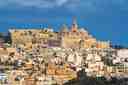
To find the Cittadella right now, just look up and see a powerful fortress with golden walls crowning the rocky top of the city, drawing attention with its imposing ramparts and the cathedral standing out in the center, as if protecting everything below. Now, prepare for a journey through time! Imagine that, long before all this, thousands of years ago, this hill was already considered special - and not just for the view. Since the Bronze Age, people lived here, leaving scattered pieces of pottery, as if they were the first to play dominoes on top of the hill! The Phoenicians and then the Romans wasted no time and built a city here, Gaulos, complete with a temple just for Juno - who, apparently, was a VIP around these parts. With the Middle Ages, it was time for the fortress to grow: it became a castle and a refuge against all kinds of attacks. It wasn't easy! Imagine the tension: the walls were all that separated the inhabitants from threats coming from the sea. At night, everyone slept huddled inside. And around 1551, peace ended too quickly: the Ottomans invaded Gozo, besieged the citadel, and took almost the entire population as slaves. Heavy, right? After this terror, they decided to upgrade the walls: between 1599 and 1622, the fortification gained bastions that were state-of-the-art in military technology, ready to face even a hungover pirate. Curiously, they only rebuilt part of it - the north remained somewhat medieval, perhaps to maintain that old charm. Over the following centuries, many wanted to demolish everything and start from scratch, but you know how it is... lack of funds always postpones these crazy ideas. And there was more action: at the end of the 18th century, the French arrived and took the Cittadella, but the counter-offensive by the residents of Gozo didn't take long. Then came the turn of the English, who eventually deactivated the citadel in 1868. The times of battles ended, but the stories remained trapped in the stones, like an endless novel. You are now before a “living hill,” where churches, historic houses, and museums mingle. Among them, the Cathedral of the Assumption shines: they say that Juno's temple once stood there, but today what attracts attention is a fun trick on the ceiling - a painting creates a dome that doesn't actually exist! Seriously, that's a lot of creativity. Besides the cathedral, the Cittadella houses old courthouses, palaces, and a prison, which operated until the 1960s. There's even a nature museum, archaeology museum, and folklore houses! In every corner, you feel the past pulsating, with winds bringing echoes of ancient voices. Recently, the entire citadel underwent a breathtaking restoration - so no one can complain about leaks or crooked walls! Today, walking these streets and smelling the sun-warmed stones, try to imagine the secrets each wall holds, the people who have taken refuge here, and the battles that echoed through these ramparts. And believe me: it almost feels like at any moment you'll hear a soldier running in a hurry or the cathedral bell calling the city to a new chapter in its history. Go ahead, explore, and prepare to feel like a true time traveler inside the Cittadella!
Open dedicated page →Before you, you'll see an impressive golden stone facade with grand staircases and a white statue of Mary above the central door - look up, in the center of the Cittadella…Read moreShow less
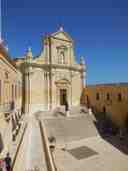
Before you, you'll see an impressive golden stone facade with grand staircases and a white statue of Mary above the central door - look up, in the center of the Cittadella square. Imagine yourself now, surrounded by the warmth of the Maltese sun, right where the stones carry millennia of stories. This Cathedral of the Assumption has deeper roots than it seems! Thousands of years ago, a Roman temple dedicated to the goddess Juno already stood here, with Romans coming and going, bringing offerings and, who knows, gossiping about the gods of the moment. But, time changed the winds: the first Christians transformed this place into a church dedicated to the Virgin Mary. Years later, the scene was different: Byzantine bishops, Arab invaders, much rise and fall of power and... there goes the old church, destroyed, rebuilt, expanded. I think if they bet on how many times this temple was remodeled, someone would get rich! Now, hold onto your hat because back in 1551, the fierce Ottomans invaded Gozo and plundered everything here. Three years later, courageous inhabitants had already returned and reopened the church, only for it to be damaged again by the great earthquake of 1693. Wow, this cathedral took a lot of historical beating, didn't it? The solution? They tore down the old building and called none other than the famous Maltese architect Lorenzo Gafà, who designed this magnificent Baroque-style building. You'll notice the Latin cross shape, the tall columns, the movie-worthy facade, and - don't tell anyone - a painted dome on the ceiling, creating an illusion worthy of a magic trick! It gained the title of cathedral in 1864 and, since then, it has been the spiritual heart of Gozo, protected as a national treasure. Around it, imagine pilgrims, nobles, and families - all treading this ground for centuries. So, if you want a little luck, gently touch these stones… but don't ask to win the lottery!
Open dedicated page →Before you, notice a two-story golden stone house, with a symmetrical and severe facade, tall windows, and an elegant carved stone balcony just above the main entrance. Now…Read moreShow less
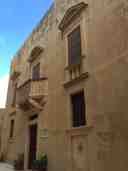
Before you, notice a two-story golden stone house, with a symmetrical and severe facade, tall windows, and an elegant carved stone balcony just above the main entrance. Now imagine: you are standing before an ancient house known as Casa Bondi, where time seems to have left its secret footprints. In the 17th century, important families passed through this door, unaware that one day the first public museum of Gozo would be born there, officially opening in 1960 - an authentic “treasure chest” full of stories. In 1986, this museum gained a new name and mission: to protect and reveal relics ranging from prehistory to the modern era. Upon entering, you can almost smell the ancient excavations and hear the clinking of archaeological tools: these are pieces that tell secrets of the island's past, such as the intriguing Maymūnah Stone, full of mysterious inscriptions. The building, bought by the government from the Bondis in 1937, is so important that it is part of the National Inventory of the Cultural Heritage of Malta. Can you imagine someone opening the window of that balcony, casting a curious glance into the future, never dreaming that their old home would one day hold so many fascinating chapters of human adventure in Gozo? Perhaps even the ghosts here are scholars!
Open dedicated page →Before you, notice a light stone church with a very visible bell tower, a small balcony above the main door, and elegant details: you've arrived at St James Church, right in the…Read moreShow less
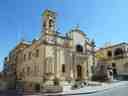
Before you, notice a light stone church with a very visible bell tower, a small balcony above the main door, and elegant details: you've arrived at St James Church, right in the heart of Independence Square! So, prepare for a story worthy of a novel! Imagine yourself back in the 16th century: night falls, Gozo becomes silent, and the residents of the eastern part of the island walk briskly here - because, at that time, there were only two large parishes on the island, and this church was a true meeting point in the early hours of the morning! St James has been the scene of dramas, reconstructions, and miracles, facing everything from corsairs hungry for treasures to determined bishops, as in the terrible attack of 1551. Led by Sinam Baxa, the pirates devastated Gozo and the small church almost turned to dust, but do not underestimate the strength of the Gozitans: some time later, it was rebuilt by order of the powerful Grand Master Ramon Despuig and finished in 1740, more robust than ever. For years, part of the routine was to have not one, but two attached chapels - one dedicated to the Holy Cross and another to St. Mark, both already mentioned in 1575 in the report of that meticulous inquisitor, Pietro Dusina. By the way, did you know that this church became a symbol of abundance? On St. Mark's Day, there was even a blessing of the harvests, in an almost festive atmosphere, a tradition that began in 1847 and only ended in 1968. Can you imagine the joy of the people? But of course, the walls of this church have also suffered: it was deconsecrated, partially demolished in 1979 for safety reasons (some poorly done “Tetris,” perhaps?), and once again, rebuilt. And the artistic treasures? Inside, the main altar, painted in 1742, shows us St. James triumphant, surrounded by side altars dedicated to St. Barbara, St. Teresa of Ávila, and St. Rose of Lima, with works attributed to the master Francesco Zahra. Curiously, the greatest popular treasure is an impressive statue of Our Lady of Sorrows, brought directly from Munich in 1879, which every year goes out in procession on a Friday before Good Friday, moving crowds in the alleys of Victoria. You can feel the weight of memories and the scent of history, can't you? If these walls could talk, they would certainly tell even more mysteries of this enchanted corner of Gozo!
Open dedicated page →Before you, see a garden with tall palm trees and a large open space of light stone in the shape of an amphitheater, perfect for those seeking shade and a little peace away from…Read moreShow less
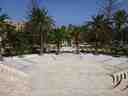
Before you, see a garden with tall palm trees and a large open space of light stone in the shape of an amphitheater, perfect for those seeking shade and a little peace away from the scorching sun. Now, imagine yourself over a hundred years ago, walking along this same avenue, but with much less movement - only the sound of birds and the rustling of leaves in the wind. The year was 1915, and a British general with an impeccably chic name, Leslie Rundle, decided that Victoria needed a special gift: a green refuge where British jackets could rest without melting in the Maltese sun! With a pinch of English madness and a shovel of willpower, he brought trees from all corners, mixing local ficus with Canary palms, just to ensure the shade was international. They say that even today, the palm trees whisper in old English when a suspicious breeze blows! Here, every bench has a story, every corner hides a secret… Villa Rundle Garden is much more than plants: it's a piece of peace, created to protect everyone from the heat and the world's problems - and, of course, to escape British soldiers with an excess of tea in their veins!
Open dedicated page →You've arrived at the place where, between 1798 and 1801, Gozo almost became a “soap opera country” - all it lacked was the dramatic soundtrack! Imagine the scene: the streets of…Read moreShow less
You've arrived at the place where, between 1798 and 1801, Gozo almost became a “soap opera country” - all it lacked was the dramatic soundtrack! Imagine the scene: the streets of Rabat filled with whispers and tension, a scorching heat, and church bells echoing, while the island's fate hung in the balance. Before it all began, Gozo and Malta were governed by the Knights of St. John, but then Napoleon arrived with all his military glamour, expelled the Knights, and quickly installed the French here. But you know how it is: nobody likes visitors who come changing everything. Quickly, in September 1798, the Maltese began a rebellion in Mdina, shouting “Sicily, come back!” The next day, the Gozitans got excited and… decided to speak up too! The leader was Saverio Cassar, the bravest priest around, chosen by popular acclamation. They set up headquarters there at the Banca Giuratale - look, the building is still here, but now it's more bureaucracy than rebellion! Saverio raised money, organized soldiers, and even arrested some pro-Napoleon Frenchmen who were idling around. Don't think it was easy: the French locked themselves in the Cittadella and Fort Chambray, just waiting to see who would tire first. After almost two months of tension, back-and-forth, negotiations, with the help of Alexander Ball (a British friend of the locals), the French finally gave up: they left without even a battle sound, just abandoning 24 cannons, a lot of ammunition, and three thousand bags of flour. Ah, it almost sounds like the end of a market day! Then it became a party: the British handed over the administration to the Gozitans themselves, the flag of the Kingdom of the Two Sicilies was hoisted, and King Ferdinand III was proclaimed the big boss (from afar, because he preferred to stay comfortably in Naples - who hasn't?). Saverio Cassar became governor-general, organized food for the people, reopened the court, appointed new jurists, and even asked for Gozo to have its own diocese - but that only arrived decades later, bureaucracy takes time! Meanwhile, the world was upside down: Napoleon came and went, battles exploded, Ferdinand fled by ship to Palermo, the French took Naples and founded the Parthenopean Republic… All that was missing was someone losing their head, literally. In the end, when the French in Valletta also surrendered, the British took overall control and Gozo ended up under the British umbrella for good. Saverio Cassar stepped down from government in 1801, and the “nation” of Gozo became a short, but very significant, chapter in the history of these incredible islands. And so, even French flour became history here!
Open dedicated page →

Frequently asked questions
How do I start the tour?
After purchase, download the AudaTours app and enter your redemption code. The tour will be ready to start immediately - just tap play and follow the GPS-guided route.
Do I need internet during the tour?
No! Download the tour before you start and enjoy it fully offline. Only the chat feature requires internet. We recommend downloading on WiFi to save mobile data.
Is this a guided group tour?
No - this is a self-guided audio tour. You explore independently at your own pace, with audio narration playing through your phone. No tour guide, no group, no schedule.
How long does the tour take?
Most tours take 60–90 minutes to complete, but you control the pace entirely. Pause, skip stops, or take breaks whenever you want.
What if I can't finish the tour today?
No problem! Tours have lifetime access. Pause and resume whenever you like - tomorrow, next week, or next year. Your progress is saved.
What languages are available?
All tours are available in 50+ languages. Select your preferred language when redeeming your code. Note: language cannot be changed after tour generation.
Where do I access the tour after purchase?
Download the free AudaTours app from the App Store or Google Play. Enter your redemption code (sent via email) and the tour will appear in your library, ready to download and start.
If you don't enjoy the tour, we'll refund your purchase. Contact us at [email protected]
Checkout securely with 


