
Floriana Audio Tour: Hidden Treasures between Monuments and Memories
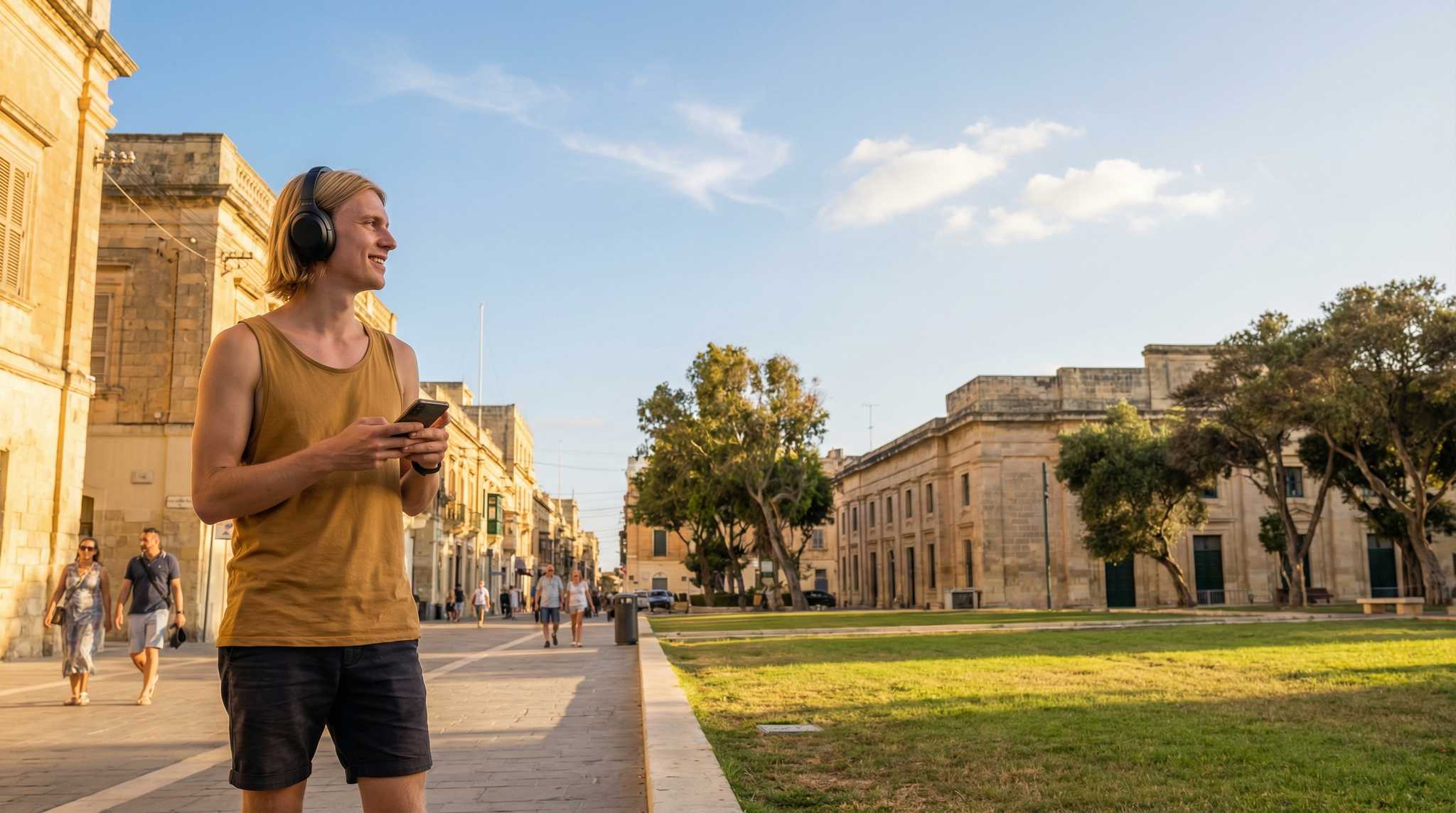
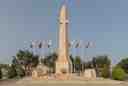
A 15 metre column of pale stone rises beside the palms of Floriana, crowned by a golden eagle that still seems to scan the Mediterranean sky. This self guided audio tour threads through Floriana and its edge of Valletta, turning quiet squares and overlooked corners into a map of voices, rivalries, and forgotten moments most visitors walk straight past. What did the crowd feel at Independence Arena when Malta’s flag climbed for the first time in 1964, and what political battles pulsed under the cheers? Why did the Statue of António Manoel de Vilhena spend centuries being moved like contraband, and what mystery was sealed inside its base? Who lost a single shoe under the grandstand, and why did nobody ever claim it? Walk from memorial hush to baroque scandal, from rebellion whispers to wartime skies, and watch Floriana sharpen into a city of secrets. Press play, and follow the eagle’s gaze.
Tour preview
About this tour
- scheduleDuration 30–50 minsGo at your own pace
- straighten3.6 km walking routeFollow the guided path
- location_on
- wifi_offWorks offlineDownload once, use anywhere
- all_inclusiveLifetime accessReplay anytime, forever
- location_onStarts at Malta Memorial
Stops on this tour
On your left, look for the chunky, honey-colored round church topped with a big gray dome, like a stone helmet under that deep Maltese-blue sky. This is Sarria Church, officially…Read moreShow less
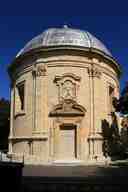
On your left, look for the chunky, honey-colored round church topped with a big gray dome, like a stone helmet under that deep Maltese-blue sky. This is Sarria Church, officially the Church of the Immaculate Conception-and it’s a rotunda, so it feels more like a perfect circle than a long hallway of pews. The story starts back in 1585, when a knight named Fra Martin Sarria Navarra paid to build a small chapel here. Then Malta got hit hard by the plague of 1675 to 1676-one of those moments where the air itself must have felt suspicious. After it passed, Grand Master Nicolas Cotoner rebuilt this place as a big thank-you. Here’s the fun twist: the designer was Mattia Preti-famous as a painter, not an architect-and this is the only church he ever designed. Lorenzo Gafà supervised the build, basically making sure the artist didn’t get too creative with the physics. Inside, Preti’s seven huge canvases wrap around you, and the altarpiece shows angels lowering their swords after “defeating” the plague. When you’re set, Chiesa parrocchiale di St. Publius is a 3-minute walk heading north.
Open dedicated page →
Show 6 more stopsShow fewer stopsexpand_moreexpand_less
On your right, you cannot miss the big honey-colored church with a columned front like a Roman temple, twin bell towers with clocks, and a statue standing up on the…Read moreShow less
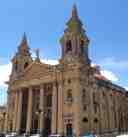
On your right, you cannot miss the big honey-colored church with a columned front like a Roman temple, twin bell towers with clocks, and a statue standing up on the roofline. Alright, welcome to the Saint Publius Parish Church, Floriana’s main “we mean business” landmark. That grand front you’re looking at? It’s neoclassical-basically the church dressed up in its best suit, complete with a triangular pediment and those chunky columns that make you feel about five feet tall. And up top, there’s Christ the King, posted like a watchman, keeping an eye on Floriana the way a neighbor watches the street from their balcony. This place didn’t pop up overnight. The very first stone was set down on 2 August 1733, and not quietly either-Bishop Paul Alphéran de Bussan was there, and Grand Master António Manoel de Vilhena showed up too. Picture it: hot summer sun, formal robes, and a whole lot of serious expressions… while Floriana was still the “new suburb” trying to find its groove. They finished the sacristy first, and people started using it like a small church while the bigger dream slowly took shape. By 1768, the church was ready for a major moment: a relic of Saint Publius arrived. Publius, by the way, is tied to the story of Saint Paul’s shipwreck on Malta-so yes, this church is basically connected to Malta’s ultimate “unexpected guest” tale. Inside, the ceiling paintings lean into that drama, showing Paul’s shipwreck and his time on the island. And the altarpiece of Publius’ martyrdom, painted in 1773 by Antoine de Favray and his pupil, is not subtle-Catholic art rarely is. Then history got rough. In 1942, bombs hit-twice-tearing into the façade and dome, and sixteen people were killed. The parish had to worship over at Sarria Church for a while, until this place reopened in December 1944. Reconstruction kept going into the late 1950s, and the interior’s finishing touches carried on for decades, finally wrapping up in the early 1990s. Today it’s protected as a top-grade national monument, for good reason: it’s survived ambition, upgrades, and war. Ready for Statua di António Manoel de Vilhena? Just walk southeast for 2 minutes.
Open dedicated page →On your left, look for the dark bronze, life-sized gentleman in an enormous curly wig, standing on a pale marble pedestal like he just won “Best Dressed Grand Master.” Meet…Read moreShow less
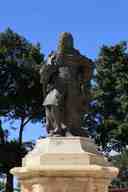
On your left, look for the dark bronze, life-sized gentleman in an enormous curly wig, standing on a pale marble pedestal like he just won “Best Dressed Grand Master.” Meet António Manoel de Vilhena: Portuguese Grand Master of the Knights of St John, and-judging by the confident stance-someone who never had to ask twice for a good seat at dinner. This is Baroque drama in bronze: wig cascading like a waterfall, cape tossed over one shoulder, boots planted wide, and a chest plate that says, “Yes, I am important, and yes, I’d like you to notice.” Now here’s the fun part: this statue is basically Malta’s most well-traveled resident who never once had to carry luggage. It was commissioned in 1734 by a knight named Felician de Savasse. Picture a guy trying to win the boss’s favor the old-fashioned way: not with a nice email or a gift card-nope-with a full, life-sized bronze statue. “Grand Master, I got you… you.” The sculptor was Pietro Paolo Troisi, and the bronze was cast by Aloisio Bouchut at the Order’s own foundry. It went up in 1736 at Fort Manoel, in the big parade ground. And it wasn’t cheap: 2,159 scudi, 5 tarì, and 14 grani-roughly the kind of money that today would feel like dropping a few hundred thousand US dollars on public art. But Savasse, our generous flatterer, hit financial trouble. He paid Bouchut only 100 scudi and then left the island. Classic. Imagine commissioning a luxury item, paying the deposit, and disappearing like a magician at a kid’s party. Bouchut fought for his money in court for years-long enough that both he and Savasse died before it got settled. Only in 1775 did Bouchut’s widow finally get compensation: 800 scudi, ordered by a later Grand Master and paid through the Manoel Foundation. This statue also has a brush with early photography fame. In 1840, while a French artist named Horace Vernet was stuck in quarantine nearby at the Lazzaretto, he took what are believed to be the earliest photographs ever made in Malta-featuring this statue back at Fort Manoel. The photos are lost now, which feels very on-brand for history: “We documented it!” “Great, where is it?” “Uh…” Then Vilhena started moving around: to Valletta in 1858, to the entrance of The Mall gardens in Floriana in 1891, and finally here in 1989, at Pope John the Twenty-Third Square. Along the way, they even found bronze medals hidden in the base during a move-like a little 18th-century time capsule. When you’re ready, the Memoriale di guerra is about a 3-minute walk heading northeast.
Open dedicated page →Right in front of you, look for the tall, pale limestone obelisk shaped like a cross, rising from a stepped platform with flagpoles behind it and two small flames flickering on…Read moreShow less
Right in front of you, look for the tall, pale limestone obelisk shaped like a cross, rising from a stepped platform with flagpoles behind it and two small flames flickering on either side. This is Floriana’s War Memorial, and it has that “stand up straight, shoulders back” kind of presence. It went up in 1938, unveiled on November 11 by the British governor, to honor Malta’s dead from World War One. Then history, as it loves to do, doubled back for a second round: after World War Two, it was rededicated in 1949 to remember the fallen of both wars. Take a closer look at the stonework. Maltese artist Louis Naudi designed it in local globigerina limestone, and he wasn’t interested in copying the usual British colonial style you see around Malta. He went bold and modern for the time-some folks even compare its vibe to early Italian “future” design ideas, though it fits neatly into that punchy Art Deco look: strong lines, clean geometry, no fuss, all impact. Now, the plaques are where the story gets personal. You’ve got the colonial badge of Malta, plus reproductions of major messages: King George V acknowledging Malta’s World War One contribution, King George VI’s letter awarding the George Cross in 1942, and a 1943 tribute from Franklin D. Roosevelt. Basically: three big powers, one small island, and a whole lot of grit. One more chill-up-the-spine detail: this spot used to be used for public executions under the Knights. Today, instead of fear, you get remembrance-wreaths, ceremonies, and that eternal flame that refuses to go out, just like the memory. Ready for Elenco dei ambasciatori d'Italia a Malta? Just walk southwest for 4 minutes.
Open dedicated page →On your right, spot the honey-colored stone chapel with a fancy baroque doorway, a little dome, and two open bell towers peeking up behind a palm tree. Alright, welcome to the…Read moreShow less
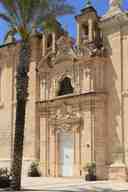
On your right, spot the honey-colored stone chapel with a fancy baroque doorway, a little dome, and two open bell towers peeking up behind a palm tree. Alright, welcome to the Church of the Flight into Egypt, a waterfront chapel with a big story packed into a small body-kind of like a Maltese espresso. This is the only church in Malta dedicated to the Holy Family’s escape into Egypt, and it was purpose-built in the 1750s when Grand Master Manuel Pinto da Fonseca was running the show and the waterfront was all sweat, rope, and shipping crates. Look up over the door: you’ll see a proud inscription with the date in Roman numerals-1752-plus Pinto’s coat of arms sitting there like it owns the place, topped with an imperial crown. Subtle? Not exactly. Pinto basically signed the building the way a kid signs a sandcastle, only this one is limestone and has better engineering. The architect, Andrea Belli, pulled a clever trick: even though the chapel is small, he gave it the full “grand church” treatment-two bell towers and a cupola-like showing up to a casual barbecue in a tuxedo. This spot also served sailors coming and going, the last quick prayer before the sea, the first thank-you after it. Then war hit hard: an air raid on January 16, 1941 left it badly damaged. It was restored in 1989, but stayed unconsecrated-until 2006, when it reopened with the revived Valletta Waterfront. Today, it’s watched over by its rector, Paul Attard. When you’re set, Fontana del leone is a 17-minute walk heading northeast along the waterfront, passing Mediterranean Ceramics on your left.
Open dedicated page →On your right, look for the chunky honey-colored stone fountain topped with a seated lion, like he’s on duty in the middle of the square under the big shady trees. Now, meet…Read moreShow less
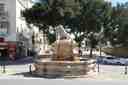
On your right, look for the chunky honey-colored stone fountain topped with a seated lion, like he’s on duty in the middle of the square under the big shady trees. Now, meet Floriana’s most patient resident: the Lion Fountain, also called the Vilhena Fountain. He’s Baroque, he’s dramatic, and he’s been sitting here since 1728 like he’s waiting for someone to bring him a cappuccino. Grand Master António Manoel de Vilhena had it installed soon after he officially made Floriana a suburb of Valletta-basically declaring, “Congrats, you’re on the map… now here’s your water.” And water was the whole point. Back then, this fountain was supplied by the Wignacourt Aqueduct, and for years it was the neighborhood’s main source of water. Picture it: locals lining up with buckets, gossip flowing faster than the water, and this stone lion watching it all like a furry security camera. Take a closer look at the lion’s paws: he’s holding a shield with Vilhena’s coat of arms, because of course he is. That lion symbol didn’t just stay on the fountain-it became a symbol for Floriana itself, shaping the town’s coat of arms later on. Down below, the water comes out through little spouts-set in cherubs’ mouths-because nothing says “practical drinking water” like chubby angel faces doing the plumbing. He’s also a survivor. During World War II, they actually removed the lion and hid him nearby, wrapped up in stone to protect him from bombs. After the war he even spent time stored in a garage-imagine that: a national symbol parked between tools and maybe a bicycle. In the 1950s, when the square was reshaped, the whole fountain was moved a few meters, and the lion was reinstalled overnight on New Year’s Eve 1958 into 1959-Floriana’s classiest countdown party. Today he’s protected as a top-grade national monument, and he even made it onto a Maltese €0.06 stamp. Not bad for a guy who mostly just sits, stares, and hydrates a town.
Open dedicated page →
Frequently asked questions
How do I start the tour?
After purchase, download the AudaTours app and enter your redemption code. The tour will be ready to start immediately - just tap play and follow the GPS-guided route.
Do I need internet during the tour?
No! Download the tour before you start and enjoy it fully offline. Only the chat feature requires internet. We recommend downloading on WiFi to save mobile data.
Is this a guided group tour?
No - this is a self-guided audio tour. You explore independently at your own pace, with audio narration playing through your phone. No tour guide, no group, no schedule.
How long does the tour take?
Most tours take 60–90 minutes to complete, but you control the pace entirely. Pause, skip stops, or take breaks whenever you want.
What if I can't finish the tour today?
No problem! Tours have lifetime access. Pause and resume whenever you like - tomorrow, next week, or next year. Your progress is saved.
What languages are available?
All tours are available in 50+ languages. Select your preferred language when redeeming your code. Note: language cannot be changed after tour generation.
Where do I access the tour after purchase?
Download the free AudaTours app from the App Store or Google Play. Enter your redemption code (sent via email) and the tour will appear in your library, ready to download and start.
If you don't enjoy the tour, we'll refund your purchase. Contact us at [email protected]
Checkout securely with 


