
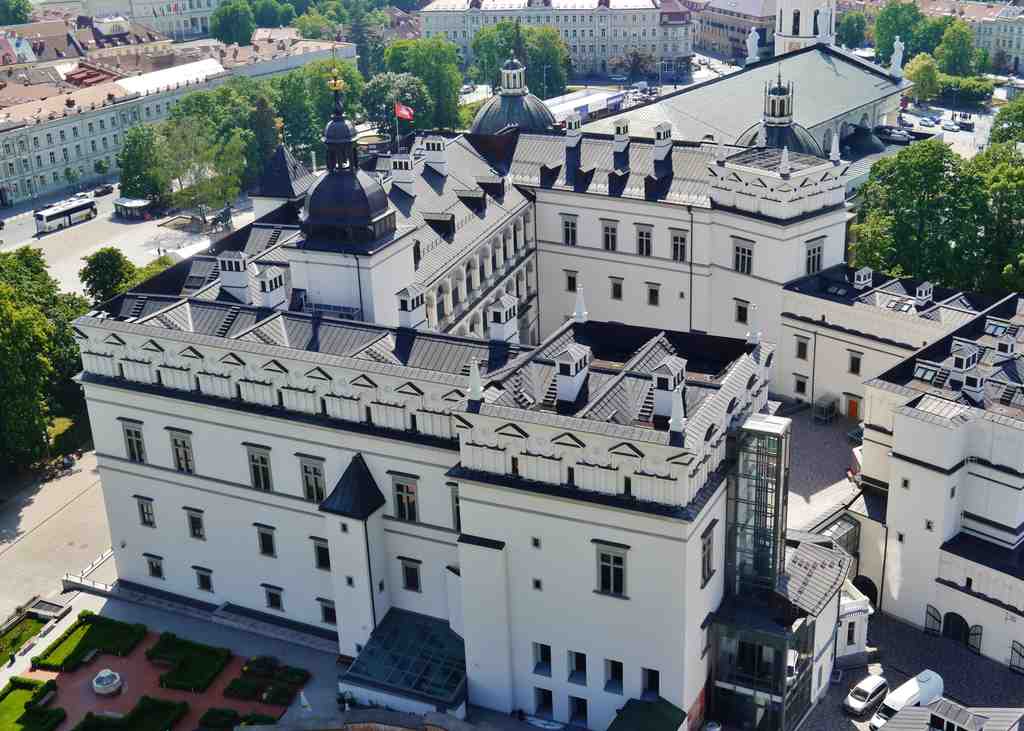
To spot the Palace of the Grand Dukes of Lithuania, look for a huge and elegant white building with rows of tall windows, decorative Renaissance details, and a distinctive tower topped by a golden ornament rising above the symmetrical black roofs, right ahead of you.
Now imagine yourself standing right where generations of dukes, queens, soldiers, musicians, and history lovers have stood-because in front of you is more than just a palace. It’s a building that’s been burned, plundered, demolished, and then, centuries later, incredibly, resurrected. If buildings could talk, this one would have some wild stories to tell you-some romantic, some tragic, and definitely a few that would keep you up at night. Just don’t worry-there are no reported ghosts. Yet.
Let’s rewind all the way to the 15th century, when the very first stones for the Palace of the Grand Dukes were laid. At that time, the Grand Duchy of Lithuania was one of the strongest states in Europe. The original palace took shape after a fiery disaster (literally a fire) in 1419, when leaders wanted a place both impressive and secure. You’d see sharp Gothic towers, thick stone walls, and important folks in glorious robes coming and going.
This place only became grander with time. As Renaissance fashion swept across Europe, so did architects and artists-some even recruited from Italy by kings with a taste for the latest trends. Sigismund I the Old, whose name was much grander than his haircut, dramatically expanded the palace, adding lush gardens, extra floors, and plenty of space for royal affairs of every variety. In the 16th century, his son Sigismund II Augustus even married here-his first wife was the Emperor of Austria’s daughter, and his second was the legendary Barbara Radziwiłł. According to one curious visitor from the Vatican, the palace glittered with more treasures than the Pope’s own stash. Imagine tapestries, golden goblets, and libraries so big you’d need a map just to find the exit.
But it wasn’t always balls and banquets. As the palace bustled with operas (yes, the first in Lithuania was staged right here in 1634!) and state ceremonies, shadows began to gather. The 17th century brought war. In 1655, the Russians swept in. The palace was burned, pillaged, and left a blackened shell for more than a century.
People tried to make the ruins useful-Jews ran a house here, then the Russian army moved in, even using part of the old palace as military barracks. Trees grew up through shattered walls. Fires, wars, and changing empires left the place almost forgotten, except for local legends and the pigeons.
Fast forward to modern times: as Lithuania regained its freedom, archaeologists began to dig. What they found convinced the country that the site deserved more than just weeds and whispers. Between 2002 and 2018, the palace you see before you was meticulously rebuilt upon those old bones, mixing ancient remains with fresh marble-and someone even made sure the gardens were still grand enough to make Sigismund jealous. They took fragments from every age, including a quirky old merchant’s house, and knit them together into the elegant, Renaissance-style wonder you’re looking at right now.
Like a phoenix from the ashes, the palace became a symbol of hope, culture, and resilience for Lithuania. It isn’t just a museum of riches or royal memories-it’s a place where contemporary history is made. In 2013, it even hosted the summit of European leaders, where presidents and prime ministers talked politics late into the night. I’ve always wondered what snacks they served. Kingly cookies? Ministerial muffins?
The Palace has four grand wings: the south wing once welcomed foreign ambassadors, the east holds the oldest surviving walls, the west was home to the Grand Duke himself, and the north kept a lively theatre for entertainments. Each stone here is soaked in stories.
So, as you gaze up at those white walls and elegant towers, picture not just a royal residence, but centuries of drama-weddings, wars, music, and invention-etched into every corner. And who knows: maybe tonight, when the city quiets down, the echoes of royal footsteps will drift out across the square. If you hear the faint sound of an opera or the laughter of a courtier, it’s probably just the magic of this place sneaking up on you.




