
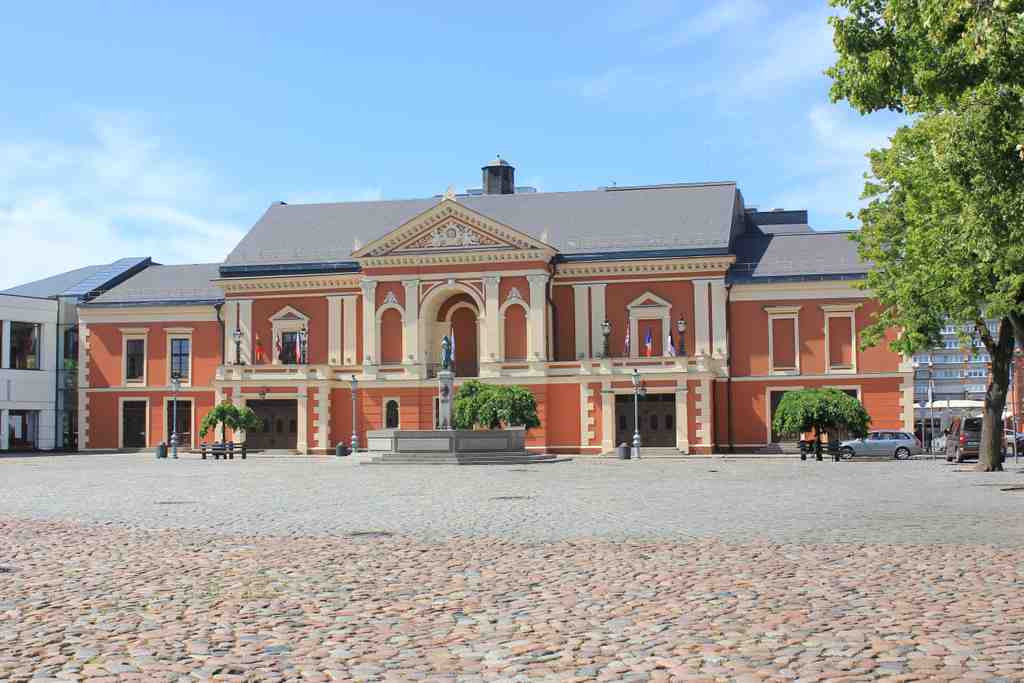
To spot the Klaipėda Drama Theatre, just look ahead for a grand, reddish-orange building right in the middle of the square. Its beautiful classical facade is decorated with white columns, large arched windows, and a triangular roof with ornate trim. The building is wide and symmetrical, and at the very top is a small cupola. There’s a statue in front and those sturdy oak doors almost look like they’re waiting to swing open for the next performance. The square in front is paved with old cobblestones, so you’ll know you’re in the right place when your footsteps start to sound like a percussion section on uneven stones.
Welcome to Klaipėda Drama Theatre! Take a deep breath and imagine the magic of theatre-curtains rising, the scent of fresh paint backstage, the low hum of anticipation from the crowd.
This isn’t just any building. Back in 1935, the story of Klaipėda’s drama theatre officially began when the old Šiauliai drama theatre packed up and moved here. Now, you might say: “Why’d they move?” Turns out, theatres like a bit of drama off the stage too! For years, this location was at the center of buzzing cultural life. The theatre even survived fires, wars, and enough plot twists to fill its own play.
But let’s rewind a couple of centuries. Nobody’s sure exactly when the first theatre stood here, but there’s a hint in old city maps. Imagine the late 1700s-a mysterious square building called the “Comedy House” popped up not far from the castle, likely echoing with laughter, drama, and maybe some confused sheep, considering it once had a military use.
After more than one fire and a series of rebuildings-including one sponsored by a very generous merchant-the theatre rose in the spot you’re standing now, eventually becoming this handsome two-story stone building by the start of the 19th century.
Over the years, the theatre saw troupes from Berlin, actors from Lithuania, and even some friendly (and not so friendly) theatrical competitions with Germans. When tensions ran high before World War II, the actors here didn’t just act out drama-they lived it. Rivalries, riots, and a passion for art fueled every performance until, in 1939, the storm of history swept over Klaipėda and many artists found themselves without a home.
But through it all, the theatre always came back. So next time you hear applause or walk past here on a show night, remember: every stone, every echo, and maybe even a few ghosts in the wings, are all part of the grandest show in town. How about that-a stage where even the building itself deserves a standing ovation!


