
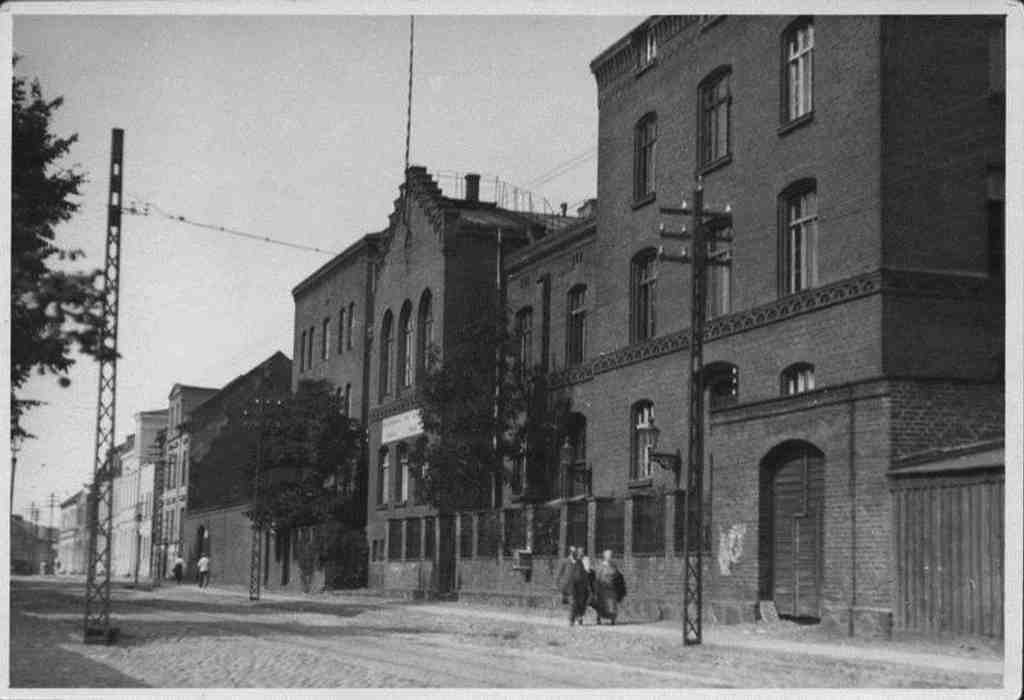
You’re standing right next to the old Klaipeda prison, and you really can’t miss it. Look for a large red brick building that stretches along the street with a kind of tough, no-nonsense attitude. Its windows are tall and narrow with old iron bars-just the look you’d expect for a place that’s held so many stories behind its walls. The facade has a stepped gable at the top, making the roofline a little jagged, and there’s a sturdy brick and wrought iron fence that seems to whisper, “Don’t even think about hopping over.” Above the main entrance, you might notice a round window and decorative brickwork splitting the building between the first and second floors-a dash of style for an otherwise serious place. If you’re wondering where you are, just look around for the big, blocky U-shaped building on Jūros Street with a slightly intimidating presence.
Now, let me take you back in time-no need to worry, I checked, the doors are locked! This prison complex has been standing here since 1862, and it used to be the main court and prison for all of Klaipeda. In fact, the very first courtroom and prison in the city was over at Klaipeda Castle, but after a huge fire swept through the area in 1857, this new, fireproof brick fortress was built in what used to be a lumber yard.
Just picture the daily life inside: thick metal beams holding up vaulted ceilings, heavy stone cellars, echoing corridors, and rooms that held more secrets than a magician’s hat. In its day, it even had special apartments for the guards-luxurious, if by “luxurious” you mean having running water. There was a part just for women, and a special yard where prisoners could stretch their legs, stare at the clouds, and dream of freedom.
This place saw all kinds of people come and go-judges, wardens, prisoners, and once, a famous Lithuanian newspaper editor named Jurgis Arnašius, who worked here as a translator. If you glance up, you might see a memorial plaque for him, a little reminder that history isn’t always about the bad guys.
During the Soviet years, these walls got even heavier, as the building became Prison No. 2, a spot where partisans and civilians faced interrogation during dark and stormy times after World War II. Later, the prison closed, and for a while, the police moved in. But eventually, everyone left, leaving this complex empty and echoing with memories.
And get this-just a few years ago, someone actually bought this whole place for 2.2 million euros! Imagine the property listing: “Cozy neogothic fixer-upper, perfect for anyone who likes privacy and lots of… bars on the windows.”
So, while you stand here and take in the serious brickwork, remember: this building watched over Klaipeda through fires, wars, and revolutions-if only those walls could talk, right? But don’t worry, you’re free to continue your tour!


