
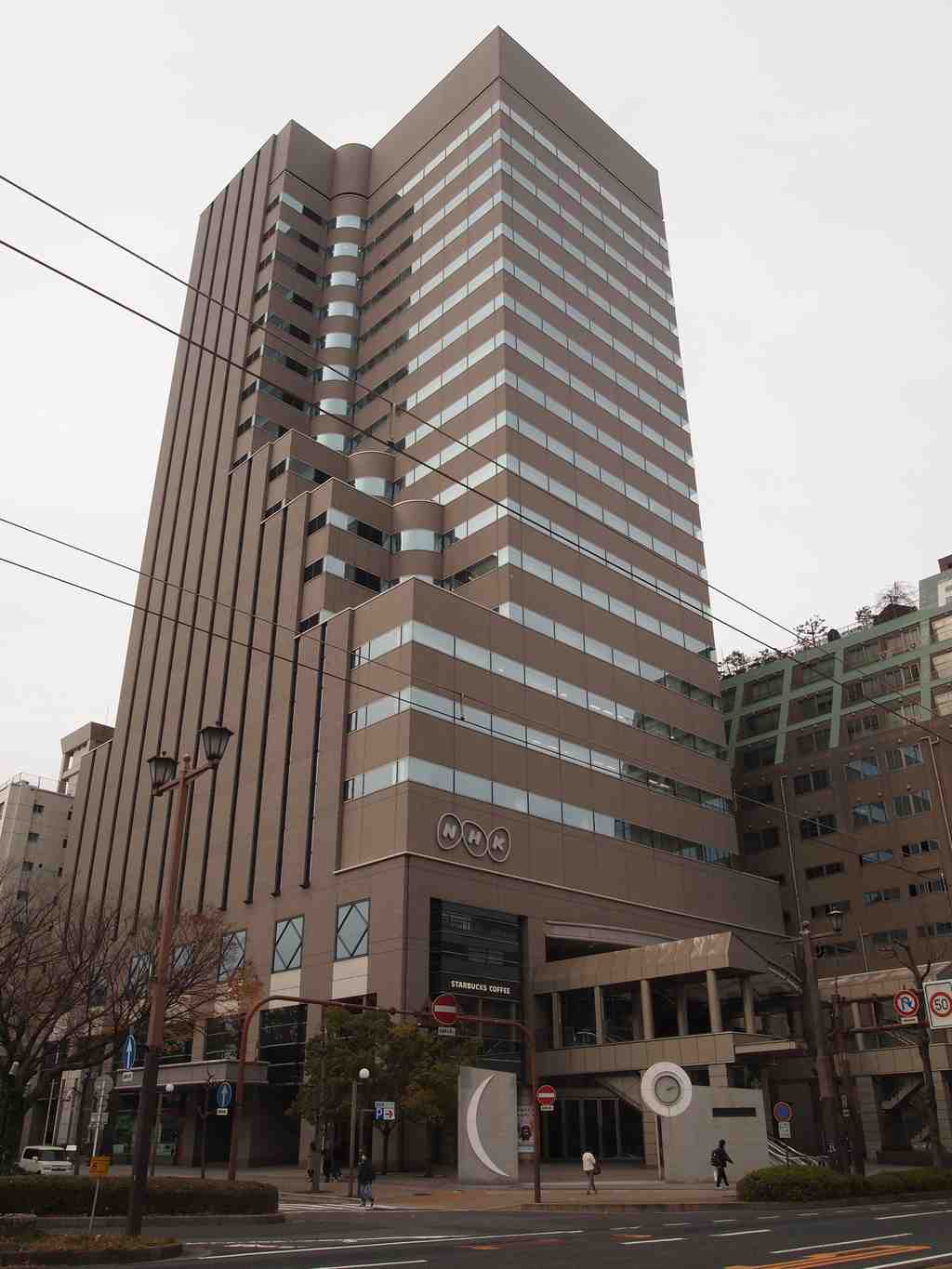
Standing right in front of you is a tall, modern high-rise with clean, reflective glass windows and the bold NHK logo-just look for the big building beside the street with a Starbucks and a café entrance near the corner.
Alright, let’s dive into the time machine-because the NHK Hiroshima Broadcasting Station is far more than just a shiny tower in the city center. Imagine the air humming with anticipation and electricity, because you’re looking at the headquarters for NHK in the entire Chugoku region-so, yes, if the news is breaking in five prefectures, it probably passes through here first! But, what really makes this place tick isn’t just the endless weather updates or baseball broadcasts-although, trust me, locals never miss a Carp game.
Now, let’s roll the calendar back to 1928. Back then, this was the place where Hiroshima tuned in to hear the very first radio waves-long before Netflix binges or TikTok trends, neighbors would huddle around the radio for updates. It started off as just a humble radio station, but by 1934, it was promoted to a central hub, commanding attention for the whole region.
Then, the world changed on August 6th, 1945. Picture a morning as ordinary as any-announcers getting ready, scripts in hand-when suddenly, time froze. At 8:13am, the air was split by a voice announcing, "Enemy bombers overhead..." Just two minutes later, silence swept the city as the atomic bomb struck. The broadcast building was destroyed. Thirty-six staff lost their lives, yet, in an almost miraculous act of resilience, the surviving crew gathered at another small station outside the city and, by the next day, they were broadcasting again. Word spread: “Hiroshima cannot broadcast-Osaka, please take over... Osaka, please... please...” Their desperate call wasn’t just a message; it became a historic echo-a plea for help broadcast over the airwaves to the world.
Over the years, the NHK Hiroshima station has become a voice not just for news but for peace and remembrance. They’re especially active each August, covering the Hiroshima Peace Memorial Ceremony and creating special programs about war, atomic bombing, and the hope for a peaceful future. Some of their dramas, like "The Hat" or "Fish of Fire," have even picked up awards-and trust me, you haven’t seen passion for storytelling until you’ve met a broadcaster who’s lived through history!
Now, fast forward to today, and you’re standing outside a building that’s grown tall both physically and in spirit. NHK Hiroshima isn’t just one department; it’s a whole ecosystem inside this skyscraper! There’s a management center, a content center for creating TV and radio shows, and even a viewer relations center that listens to the many voices of Chugoku’s people (hopefully, not just the ones complaining about the weather forecast, but we can’t make any promises).
Technology here has evolved too-color TV showed up in the ’60s, FM broadcasts arrived in the early ’60s, and then, in 2006, Hiroshima started digital broadcasting. If you’ve ever watched a Carp game on TV or caught the regional morning show "Ohayou Chugoku," you’ve tuned into the beating heart of this place.
Oh-and just for fun, next time you see a cute candle character or a samurai with a rice scoop on TV, that’s “Peace-kun” and “Shamobee,” the NHK mascots! They might not help you check your mail, but they sure know how to liven up the local news.
So, as you stand here, let your imagination tune in to all those layers-modern news, echoes of history, and the undying hope for peace-broadcast not just through antennas but straight from Hiroshima’s heart. And if you listen really carefully, you might just catch the spirit of the voices that kept broadcasting through the darkest hour, ensuring that no story, no matter how hard, was left untold.
To delve deeper into the history, main channels and frequencies or the main hiroshima station production programs, simply drop your query in the chat section and I'll provide more information.




