
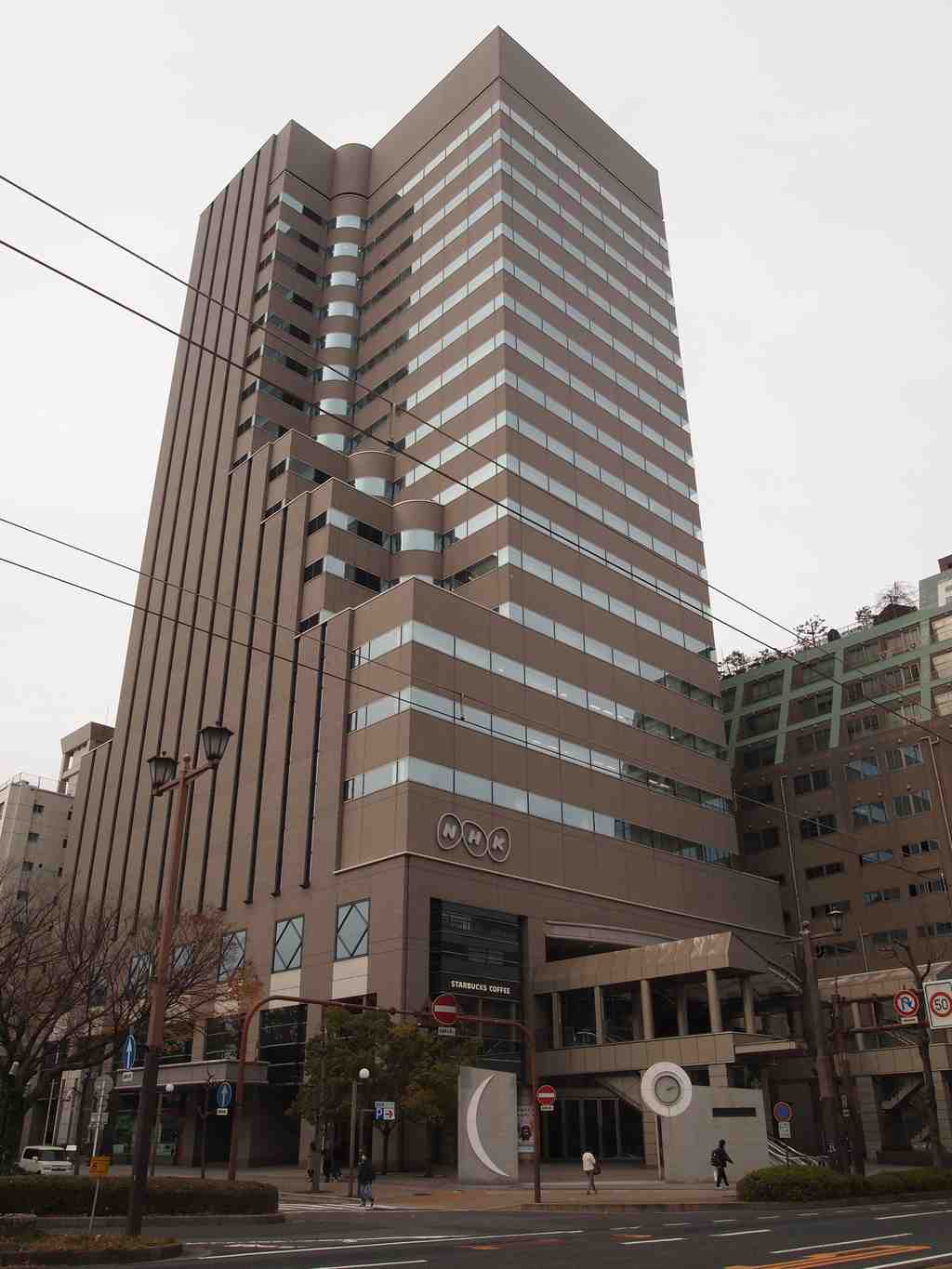
To spot the NHK Hiroshima Broadcasting Station, look up and ahead for a tall, modern brown building covered in rows of silvery windows with a bold “NHK” logo near the middle, rising high above the street with an arched entrance and a clock structure at the front.
Alright, now that you’re standing outside the impressive headquarters of NHK Hiroshima, let’s step into a story that spans nearly a century-full of drama, innovation, and yes, even a couple of quirky TV mascots. Imagine it’s the summer of 1928, and for the first time, the airwaves in Hiroshima are buzzing with the sounds of radio. The humble beginnings of this station, once just a small broadcaster with the call sign JOFK, would soon grow into a media giant-commanding not just Hiroshima, but all of the Chugoku region.
But life at NHK hasn’t always followed a smooth script. Fast forward to August 6, 1945-the morning sky is eerily still. Suddenly, an air raid warning interrupts regular programming. Moments later, Hiroshima is plunged into chaos as the first atomic bomb in history detonates over the city. In that instant, the old NHK station is destroyed, 36 staff members lose their lives, and everything falls silent. But here’s a sign of resilience that makes history: just one day after the devastation, surviving employees gather at a backup facility and manage to get the voice of Hiroshima back on the radio. Even as the world outside is unrecognizable, those fragile radio waves carry both the city’s suffering and its determination to endure. Rumor has it that a sorrowful female announcer’s voice pleaded for help over the airwaves that day-real or not, it’s a haunting piece of broadcasting folklore.
In the years since, the NHK Hiroshima Broadcasting Station has become more than a place to catch the news-it’s a guardian of memories, lessons, and hopes. Standing tall here, you’re looking at a building that doesn’t just talk about peace, but actually reaches out with programs dedicated to understanding Hiroshima’s history-the horrors endured, and the hope for a world without nuclear weapons. NHK Hiroshima produces award-winning documentaries and dramas about the bomb, like “The Hat” and “Fish of Fire,” sharing these powerful stories far beyond Japan’s borders. You might even imagine whispers of actors rehearsing lines, producers arguing over scripts, or the shuffle of staff racing to break a big story.
And hey, it’s not all serious business! NHK Hiroshima has its fun side, too. For their 80th anniversary, they let viewers design their own mascots: out came “Peace-kun,” a gentle candle whose flame changes with his feelings (good luck getting him to talk though-he has a mouth shaped like ‘Hi’ from Hiroshima, but he never says a word). His sidekick, “Shamobee,” might look like a friendly rice paddle-bearing samurai, but he’s surprisingly strict about fairness and loves supporting local sports teams-always ready to turn up at an event and strike a pose.
Inside this building, NHK runs like a city in miniature, split up into three main “centers” since 2023-there’s management, content creation, and a center dedicated to all things audience-related. They broadcast local news, weather, and sports, but also keep one ear tuned beyond Hiroshima-supervising other NHK stations across the region, and sometimes even teaming up with broadcasters in places like Fukuoka and Shikoku to cover big disasters together by sharing helicopter footage. You’ll find digital studios, high-tech editing rooms, and journalists fueled by endless cups of coffee from the Starbucks right inside the building. No joke-news can’t wait for sleep.
But that’s only the surface. Beneath all the technology is a devotion to remembrance. Every August 6th, while much of Japan is busy with daily routines, at NHK Hiroshima, the only thing that matters is the annual Peace Memorial Ceremony. It’s broadcast live and in multiple languages-reaching millions with the message: “never again.”
So next time you see the NHK logo or hear one of their news jingles, remember: this is not just a place for weather reports and baseball scores. It’s a living witness to Hiroshima’s past and present-a station that picked up the mic and spoke for a city when almost no one else could. Let’s tip a hat to the storytellers, from the ghosts of old-time radio to the tech wizards of modern TV, for keeping the heart of Hiroshima beating loud and clear.
Intrigued by the history, main channels and frequencies or the main hiroshima station production programs? Explore further by joining me in the chat section below.


