
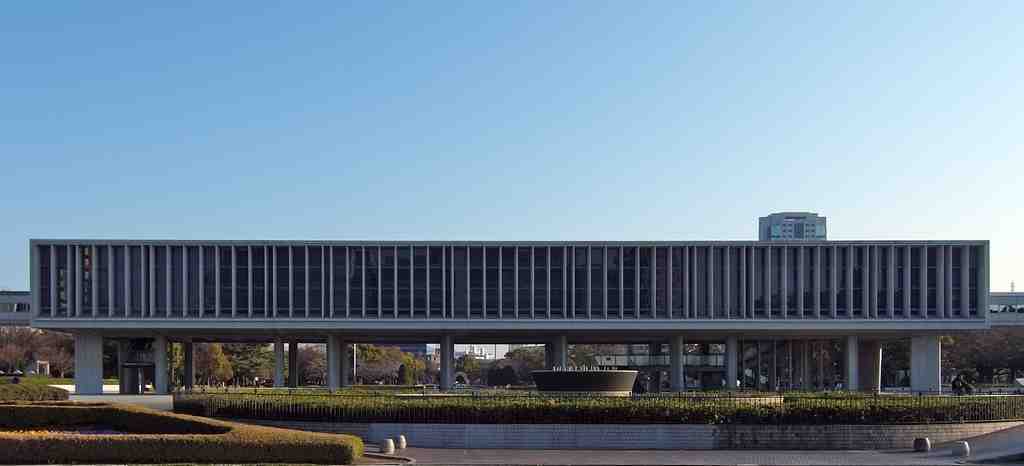
To spot the Hiroshima Peace Memorial Museum, look ahead for a long, modern building raised on sturdy pillars, with tall vertical windows running across its length like a row of silent sentinels-trust me, you can’t miss its striking simplicity and strong presence!
Now, take a deep breath as we peek into the story of this iconic spot-because what stands before you isn’t just a building; it’s a living memory, a witness to history’s heartbeat and humanity’s hope. The Hiroshima Peace Memorial Museum opened its doors back in 1955, right in the heart of what’s now Peace Memorial Park. Every year, more than a million people wander through, searching not just for facts, but for answers, for understanding, maybe even a bit of hope-a bit like all of us, really.
This museum was designed by Kenzō Tange, a star architect famous for his bold modern style, and it’s no accident it looks so unique. Its clean lines and calm gray frame offer a silent stage for stories that need no embellishment. Inside, you’ll find items left behind by those who lived through that unimaginable day in August 1945-from a scorched school uniform to a melted tricycle, and letters exchanged between world leaders, fizzing with the tension of atomic-age secrets. Some objects seem almost ordinary, until you realize they hold the weight of lives turned upside-down.
The exhibits are split into two wings: one tells the story of Hiroshima before and after the bomb, letting you see how the city once bustled with life-and how it was reshaped by a single moment. You'll even find a model of the city, hauntingly showing the devastation, now upgraded with projection mapping so you can almost feel the blast ripple out in cold silence. The other wing focuses on the raw aftermath, with displays that bring you uncomfortably close to the effects of heat, blast, and radiation-a reminder that it wasn’t just buildings that were shattered.
Through everything, the message is clear: out of this deep scar, Hiroshima doesn’t send a cry for revenge, but for peace. It’s a wish etched into every display, echoing with the laughter of schoolkids on field trips and the silent steps of travelers from every corner of the world. So, as you stand here, remember-this is a place where past pain has been transformed into a beacon for a better future. And remember, while you can’t press a “fix history” button, you can try not to lose your group in the museum; statistically, you have better odds than a pair of socks in a washing machine.


