Verona Audio Tour: Journey Through Time and Grandeur
Blood once flowed beneath Verona’s elegant arches and secrets still echo in shadowed corridors. Behind every marble column and fresco lies a tale most visitors never hear. On this self-guided audio tour, wind through ancient streets at your own pace and unlock stories hidden between the stones. Encounter drama and intrigue that slip through the city’s beating heart. Which Bishop’s decision inside the Cathedral nearly tore Verona apart in one wild night? What vanished treasure keeps archaeologists whispering at the Roman Theatre? And who hid forbidden letters within Palazzo Emilei Forti, changing a noble family’s fate forever? Let curiosity pull you from hushed chapels to sunlit ruins as lost voices rise around you. Each step blurs past with present until every archway pulses with suspense. These streets come alive for those bold enough to listen closely. Dare to enter Verona’s living legend—let the city reveal what it hides.
Tour preview
About this tour
- scheduleDuration 40–60 minsGo at your own pace
- straighten2.8 km walking routeFollow the guided path
- location_on
- wifi_offWorks offlineDownload once, use anywhere
- all_inclusiveLifetime accessReplay anytime, forever
- location_onStarts at Sant'Anastasia, Verona
Stops on this tour
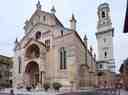
To spot Sant’Anastasia, look for the colossal red brick church with its unfinished facade, rose window, and the soaring bell tower near the river, standing proudly at the edge of…Read moreShow less
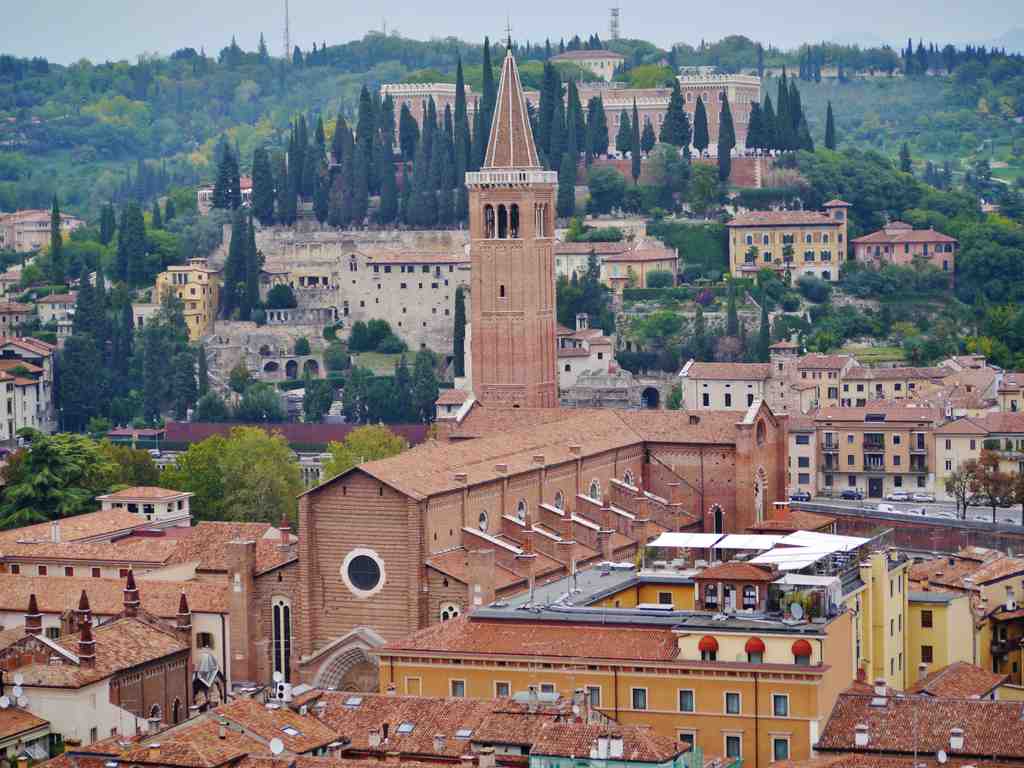
To spot Sant’Anastasia, look for the colossal red brick church with its unfinished facade, rose window, and the soaring bell tower near the river, standing proudly at the edge of Verona’s historic center, just before the Ponte Pietra. Ah, you made it! Welcome, my friend, to the grand heart of Verona’s faith and history: the Basilica di Santa Anastasia! Take a breath-do you smell that? Incense, old stone, and maybe a whiff of mystery, floating through eight centuries. You’re standing where Verona’s two ancient lifelines-the road and the river-once crossed, the perfect place for a church meant to be more impressive than your nonna’s Sunday feast. Now, close your eyes for a moment and let’s travel back to the 13th century. Imagine a tangle of medieval streets buzzing with traders, gossiping townsfolk, and clattering horse carts-when the mighty Dominicans arrived on the scene, pockets generously lined with coins from Verona’s rulers, the fearsome Della Scala family. Back then, even God was impressed by a good sponsor, and let’s be honest, if you wanted to show off your power in those days, you built big and you built beautiful! Here’s a little secret: beneath your feet, there were once two even older churches-one for Saint Remigius and the other for Anastasia, a bold Christian martyr. Rumor has it that King Theodoric the Ostrogoth himself once had a hand in choosing the spot. Talk about real estate with a history! Evidence of those ancient churches still lingers, hidden in the corners of chapels and crypts, waiting for the day some curious soul-maybe you?-deciphers more secrets. When the Dominicans got to work in 1290, they must have thought they’d finish the basilica in no time. Well, try telling that to medieval workers! It took almost 150 years from first brick to consecration, with pauses for everything from politics to plagues. To keep spirits high and donations flowing, the Pope even handed out indulgences. That’s right-donate your ducats and save your soul. Hey, if you’re clever with your coins, you might even spot the Della Scala family’s crest painted on the ogival arch inside. The basilica itself is the city’s largest-a celebration of Gothic ambition. The exterior is a patchwork of ambition and patience; the facade, still unfinished, is a testament to biting off more than you can chew! But don’t judge too harshly. The doorway, a forest of red, white, and black marble, is grand enough to distract from any missing pieces. If you squint, you’ll spot saints frozen above the portal-Saint Anastasia with her own statue-and the story of Christ’s life carved along the lintel like a comic strip for the faithful. And that bell tower, soaring above the rooftops like it’s trying to catch clouds? That’s no accident! At 72 meters tall, built from sturdy stone and crowned with a pointy Gothic spire, it has withstood lightning strikes, wars, and the kind of winter winds that would chill even a Veronese. The bells-ah, the bells!-have been recast, rung, and celebrated for centuries, and once, the best bell-ringers in Verona made this their home, jangling out melodies that echoed well into the hills. Step inside (don’t trip over the “hunchback” stoups-local legends say they’re good luck if you give them a pat). The air feels cooler, hushed, carrying centuries of whispered prayers. Paintings by legends like Pisanello, frescoes by Altichiero, and the dazzling floor in red, white, and black marble-all stone poetry. Look for two hunchbacks holding holy water fonts; the locals say the one with the mustache is a selfie from 1491-it’s the Renaissance equivalent of a cheeky Instagram filter. Every corner here brims with stories: the mighty Cavalli and Pellegrini families, rivalries, grandeur, and generous bequests. And let’s not forget the mighty sarcophagus outside, belonging to Guglielmo da Castelbarco-the original overachiever, and his tomb even inspired the legendary Scaliger Tombs! Now, as you stand here, you’re not just a modern visitor-you’re part of the endless parade of dreamers, believers, and wanderers who’ve been drawn to this basilica for over eight hundred years. Shall we wander on to the next marvel? Onward, explorer-Verona’s stories are just beginning!
Open dedicated page →To spot Palazzo Bevilacqua, look for the warm, salmon-pink building on the corner with elegant shuttered windows and a small balcony just at eye level above the street. Ah,…Read moreShow less
To spot Palazzo Bevilacqua, look for the warm, salmon-pink building on the corner with elegant shuttered windows and a small balcony just at eye level above the street. Ah, you’ve found it! This unassuming facade hides centuries of drama and noble rivalry. Imagine: it’s the 1300s, and this very corner is home to Pietro Alighieri, son of Dante-yes, the famous poet, so if you feel inspired to write a few verses, blame the air! The family expanded the property in true Italian style, by buying up the neighbor’s house for the next generation. But fortunes shift faster here than an espresso shot! By 1453, the Alighieri clan sold the place, and soon the illustrious Bevilacqua family swept in. Picture Guglielmo Bevilacqua riding in from Mantua, fresh from courtly duels and intrigue, turning this house into a palazzo worthy of a knight and his descendants-a true Verona power-move. Centuries later, the medieval touches were nearly swept away by Gaetano Bevilacqua’s 19th-century facelift, which left just a teasing glimpse of old Gothic windows. So as car horns echo and sunlight warms the pink walls, remember: beneath these shutters, Verona's history danced, schemed, and plotted their way into a palazzo that still whispers with secrets.
Open dedicated page →Just ahead, you’ll spot Corso Santa Anastasia as a narrow, lively street bustled between terracotta rooftops and colorful facades, heading straight towards the tall brick bell…Read moreShow less
Just ahead, you’ll spot Corso Santa Anastasia as a narrow, lively street bustled between terracotta rooftops and colorful facades, heading straight towards the tall brick bell tower of the basilica in the distance. Now, let your imagination loose on this avenue-Corso Santa Anastasia, the heartline of Verona for centuries. In Roman days, this street was part of the city’s main artery, the grand decumano massimo, where togas and legionnaires would cross from the ancient Porta Borsari all the way to the long-lost Ponte Postumio. Picture a parade of chariots here, only now the horses have become smartly dressed locals… but the drama remains! In the 1300s, it was simply “Il Corso,” and people wandered it searching for gossip fresher than the morning bread. The street got its current mouthful of a name after Veneto joined Italy in 1866, though it’s had more identity changes than a secret agent-Corso Felice Cavallotti, Corso Francesco Crispi, and, finally, back to Santa Anastasia after the Second World War. At the beginning of the street, look out for a humble Madonna with Child, painted in the late 1700s and rediscovered under layers of dust in 1949. Opposite, the Mazzanti houses once flashed a gigantic Laocoonte on their walls-a sort of ancient comic strip. And if walls here could blush, it’d be knowing that even the mighty Scaligeri family, Verona’s medieval rulers, lived among these humble blocks. Look for the courtyard at number 12: it belongs to the grand Palazzo del Podestà, each corner built by someone from a different century, like a real-life architectural family reunion. The journey ends with the Renaissance elegance of number 29, where windows are framed in red Verona marble. Just imagine Dante’s son, Pietro Alighieri, working as a judge here-Verona’s legal dramas could surely inspire a soap opera of their own! The street is truly a parade of eras, legends, and local quirks all strutting in the sunlight.
Open dedicated page →
Show 12 more stopsShow fewer stopsexpand_moreexpand_less
- location_on4
Palazzo Maffei Casa Museo
Buy tour to unlock all 19 tracksTo spot Palazzo Maffei Casa Museo, glance toward the ornate, cream-colored façade adorned with statues that rises dramatically above the arcade at the end of Piazza delle Erbe-its…Read moreShow less
To spot Palazzo Maffei Casa Museo, glance toward the ornate, cream-colored façade adorned with statues that rises dramatically above the arcade at the end of Piazza delle Erbe-its Baroque flourish and majestic presence make it pop out from the medieval jumble around it. Ah, you’ve arrived in front of Palazzo Maffei Casa Museo-one of Verona’s most spectacular fusions of ancient power, aristocratic swagger, and deliciously eclectic art. This isn’t just any old palace-here, you’re standing face to face with three centuries of ambition and artistry, perched right at the old Roman crossroads where anything could happen… and, in Verona, just about everything did. Imagine: beneath your feet once rumbled the excitement of the Capitolium, the very beating heart of Roman Verona, where toga-clad citizens bustled to settle affairs on the decumanus and cardo-the two main roads of the ancient city. But look up! The fairy-tale façade you see is thanks to the Maffei family, savvy 17th-century bankers who clearly believed bigger is better and set about transforming medieval walls into something worthy of an emperor-or, at the very least, someone with excellent taste and a dramatic sense of occasion. It’s all columns, curlicues, and statues craning their necks above the crowds, as if even the building can’t wait to show off what’s inside. Inside, the adventure begins. The palace isn’t just a home; it’s a museum and a love letter to centuries of human creativity, brought to life by the unstoppable Luigi Carlon-a Veronese entrepreneur with an eye for art and a heart as grand as the building itself. Carlon spent half a century on an epic collecting quest, scouring markets, galleries, and anywhere else you might lose your wallet, to assemble a treasure trove bursting with over 650 works across 29 rooms. And when he decided to open his doors to the public in 2020, he didn’t just dust off some paintings and call it a day. No, he brought in the magician of Italian museum design, Gabriella Belli, to spin the place into a masterpiece-two floors, no barriers, bold colors, and a collection that skips from ancient ivory to Andy Warhol faster than you can say “wow.” As you wander through Palazzo Maffei’s sumptuous halls, you’re swept from Greeks and Romans, through riotous Renaissance ceramics, to contemporary splashes of genius. It’s a dizzying conversation between epochs and masters: altarpieces by Altichiero and Turchi wink at mischievous abstracts by Miró and Kandinsky, wood sculptures gossip with brassy pop art, and somewhere between Picasso, de Chirico, and Warhol, you begin to wonder if art history might actually be… fun. Let’s not forget the locals: those Veronese luminaries-Boldini, Brentana, Giolfino, and Liberale-who strut alongside global icons in a never-ending parade. Getting lost in the decor is half the pleasure. The staircases swirl skyward like something out of a baroque fever dream, bedecked with stone statues, dominated by a whimsical lantern overhead. Even the courtyards whisper tales of restoration triumphs, where bold architects dug under layers of paint to rediscover 18th-century frescoes and sunflower-bright stucco, all carefully restored to dazzle once again. Each room brims with a mood all its own: plush blue salons where ancient landscapes hang alongside modernist chairs from 1917, delicate sitting rooms festooned with golden cherubs, and the odd flickering neon-yes, neon!-installation to spark a debate. Upstairs, the spectacle continues: antiquities brush shoulders with surrealist dreams, mementos of Roman Verona jostle for space with Canova’s ethereal sculptures or Mattiacci’s gravity-defying creations. There’s even an intimate theatre tucked away with a bird’s-eye view of Piazza delle Erbe, ready for lectures, laughter, and-knowing Verona’s love for drama-the occasional thunderous applause. And so, Palazzo Maffei isn’t just a museum or a monument; it’s a living, laughing storybook. Every statue, lamp, or painting is another page, inviting you to marvel, question, and maybe-just maybe-see Verona through the eyes of those who built, dreamed, and collected here. Truly, there’s no better place for a little cultural mischief in the city of love.
Open dedicated page → - location_on5
Palazzo della Ragione
Buy tour to unlock all 19 tracksAh, you can’t miss it-the Palazzo della Ragione cuts a striking profile right between Piazza delle Erbe and Piazza dei Signori, its reddish brick and tufo stripes layered like…Read moreShow less
Ah, you can’t miss it-the Palazzo della Ragione cuts a striking profile right between Piazza delle Erbe and Piazza dei Signori, its reddish brick and tufo stripes layered like tiramisu, crowned by elegant arched windows and a grand staircase leading to its heart. Just linger a moment here, in the shadow of these stately walls-it’s not just stone and mortar, it’s the unruly heart of Verona, beating for almost nine centuries. Let’s wind back to the aftermath of 1117, when a monstrous earthquake knocked Verona sideways-buildings crumbled, the streets filled with dust, and the city’s leaders eyed this very spot, then little more than a jumble of medieval ruins, as the place to build something bold: The Palacium Communis Veronae, soon to be the very first public palace in Italy. What ambition! The original structure, begun in 1172, was all business: a nearly square plan, sturdy arches, a proud courtyard surrounded by a muscular portico, and in each corner… a tower poised like a chess piece. Only two still stand; one of them is the legendary Torre dei Lamberti, shooting up like a sentinel over both Piazza delle Erbe and Piazza dei Signori. The palace’s life, naturally, was never simple and never boring. In less than fifty years, in 1218, a massive fire turned much of it to cinders-yet within a year, hearsay has it, the repairs were funded by a not-so-modest count, who may have had his eye on political favors (or perhaps just didn’t want ash on his shoes). They even say that the air must’ve smelled of burning wood and fresh hope in those months, with hungry workers clattering around to rebuild the city’s pride. Oh, but here’s a delicious slice of history: imagine, April 11, 1226. This silent courtyard bursting with chatter as representatives from all the major cities-Lombardy, Emilia, Piedmont, Veneto-gathered under its porticoes. Papers rustled, voices echoed, as, right here, they renewed the Lombard League: a mighty alliance to keep Emperor Frederick Barbarossa’s nose out of their business for another 25 years. Surely some local merchant must have tried to sell bread or cheese to the powerful and hungry, because even peace talks can’t happen on an empty stomach! Venetian flags fluttered here eventually, bringing more drama and change. The Palazzo wasn’t just city hall anymore-it became a one-stop shop for civil and criminal courts, prisons, the Notaries’ College, the public granaries, and storage for salt, grain, and silk. The ground floor facing Piazza delle Erbe? Privatized! It bustled with homes, workshops, and shops, tying the palace firmly into the daily bustle of Verona. No shortage of commotion-imagine the mix of judges, notaries, prisoners, bakers, and officials gossiping at the well, while a merchant tries, perhaps a little too loudly, to hawk his wares. Let’s not forget the drama from above, literally. The chapel of the Notaries was added into the "Massaria" tower near 1419. For a while, the prison sat right above it-a recipe for disaster, you say? Spot on! In 1650, the overloaded floors gave way, dropping prisoners and rubble into the chapel below. Then, a repeat offender: In 1723, a prisoner, perhaps chafing at the clergy’s sermons overhead, managed to light the place up in flames! The upper tower was so damaged they chopped it down to just above the chapel, likely muttering, “Basta! Enough already!” Every time fire or famine struck, the Palazzo adapted. After another fierce fire in 1541, restoration crews worked through the century to revive it. During a famine, the courtyard itself transformed into a flour market-the old “Mercato Vecchio”-with families desperate for sustenance lining up here for the essentials of life. The centuries rolled on, the building morphing with each whim of fate. In the 1800s, grand facades received elegant neoclassical touch-ups; throughout the 19th century, every official seemed to take a turn within these walls-from judges and firemen, to the savings bank, to the charitable committee, and even the police. By the time Verona joined the unified Italy in 1866, the Palazzo was a multi-purpose beehive of municipal activity. Modern restorations have peeled away centuries of grime and bad renovations, revealing the splendid striped brick and tufo pattern that defines Verona. Meetings were held, prisoners judged, bread sold, and rebellious alliances brokered-all under your feet. Today, the Palazzo della Ragione welcomes visitors to the Achille Forti Gallery of Modern Art, but its aura is thick with echoes of the city’s grandest quarrels, cleverest deals, and most infamous mishaps. Stand tall with your head high, for you’re in Verona’s greatest room-where centuries of drama are layered just as delicately as that spectacular brickwork above you.
Open dedicated page → - location_on6
Palazzo del Podestà
Buy tour to unlock all 19 tracksLook ahead for a big, sturdy red-brick palace with rows of arched windows and dramatic crenellations along the top like a medieval crown, right opposite the wide piazza and…Read moreShow less
Look ahead for a big, sturdy red-brick palace with rows of arched windows and dramatic crenellations along the top like a medieval crown, right opposite the wide piazza and impossible to miss beside the white-marble entrance lined with statues and two proud flags waving above. Ah, eccoci, my friend! You’re standing right in the shadow of the Palazzo del Podestà-oh, but don’t just admire those playful battlements and the red brick warmed by centuries of Veronese sun. Let’s step into a time machine together, yes? Picture this square thrumming with gossipy nobles and clanking armored guards. The air would have snapped with ambition-because this palace was, for four centuries, the absolute heartbeat of power under Venice’s rule. If walls could talk, you’d get an earful! This noble palace first came to life under the legendary Cangrande I della Scala, back at the dawn of the 1300s. Now, Cangrande wasn’t just some medieval landlord-he was the “big dog” (literally: “Cangrande”!) of Verona, and he built this place as a home, fortress, and statement to the world: “Here reigns the Scala family!” Imagine him throwing lavish feasts in these echoing halls, and entertaining celebrity guests like... Dante Alighieri! Yes, our exiled poet found shelter here not once, but twice-maybe nursing a goblet of Valpolicella in hand and whispering a little love-lorn gossip to his host, fueling the drama that’s still alive on every Verona stage. But wait, the palace is also wrapped in art and whispers of mystery. It’s said the genius painter Giotto himself spent some time here, decorating the walls with vibrant frescoes-can you imagine peeking over his shoulder as he worked, while Cangrande posed grandly for his portrait? Sadly, all traces of Giotto’s magic are lost, but out in the city museum, you can see other fragments from this time-ghosts of color and kings that once made these rooms shine. Now, step with me forward to the 1360s: Cansignorio della Scala (don’t worry, you don’t have to remember all these Scala names-just nod and say “che famiglia!”) extends the palace with a grand loggia-two bold storeys of mighty saloni where artists like Jacopo Avanzi unleashed epic scenes of Roman triumphs, painted right onto the walls. I bet the family liked to parade their guests through as if to say, “You see? We outshine even the emperors!” When the Venetian Republic arrived, the party didn’t stop-though the rulers changed, this become the seat of their powerful Podestà. Imagine the intrigue! Secret meetings, sneaky deals, perhaps a broken heart or two (but no duels inside, please, try the piazza for that). The loggia was expanded, elegant new Renaissance details took shape-just look at that entrance; it’s like a Roman triumphal arch dreamed up by the famous Michele Sanmicheli, inspired by ancient ruins but designed to impress the neighbors. Wars, cannonballs, even some bad French guests in the Napoleonic era tried to bring the place down, but-like any proper Veronese-it dusted itself off and got a facelift in the 1920s. The battlements you see, those proud pointed teeth, are the work of Antonio Avena, breathing back its medieval soul. Today, the Prefect still works inside. But for me, the true pulse of the place lingers in the air, where the poetry of power, beauty, and ambition never quite goes out of style. Shall we wander on?
Open dedicated page → - location_on7
Teatro Nuovo
Buy tour to unlock all 19 tracksLook for a grand, neoclassical facade with five stately stone columns and the words "Teatro Nuovo" engraved above the entrance, right on busy Piazza Viviani-it's hard to miss with…Read moreShow less
Look for a grand, neoclassical facade with five stately stone columns and the words "Teatro Nuovo" engraved above the entrance, right on busy Piazza Viviani-it's hard to miss with the banners flanking the doorway. Ah, cara amica, caro amico! You’re standing before the Teatro Nuovo, a place where Verona’s heart truly beats a little faster, just a whisper away from the bustle of Piazza delle Erbe and the secret sighs of Giulietta’s courtyard next door. This isn’t just a theatre, it’s a stage where the city itself has been applauding, gasping, and sometimes plotting for nearly two centuries. Picture yourself on a September evening in 1846, the city alight with excitement. For its grand opening, a Verdi opera thunders through these walls-Attila, no less! Verona, never before graced by such a spectacle, explodes with applause. A famous soprano, Rita Basso Borio, becomes the star of both the show and a secret patriotic sonnet, passed hand to hand so quickly one has to wonder if even the police brushing past in the glittering crowd caught a word of it. Now, this was under Austrian rule, so waving the Italian flag, even in rhyme, was more dangerous than juggling flaming bottles of Valpolicella! Soon after, the drama didn’t just unfold on stage. Imagine 1848-news crackles through the air: Vienna is in revolution, Metternich has fled, and the Emperor of Austria has been forced to grant a constitution. Word spreads to Verona like wildfire. The city can’t contain itself. The crowds pour into the Teatro Nuovo and, for a moment, the performance inside is overshadowed by history itself. Shouts for Italy, roars for Pio IX, it’s pandemonium! So enthusiastic, in fact, that the theatre is promptly closed. Suspicious authorities again shut the doors ten years later-clearly, in Verona, political intrigue likes a good seat as much as anyone else. The story doesn’t quit there. By 1862, with Italy marching toward unification, the stage lights flicker back to life with Il Trovatore, and from then on, greats like Pagliacci and Tosca echo through the ornate, golden-hued auditorium. Of course, not every evening ended in triumph-one performance of Flotow’s Martha was such a flop, I’m told the applause could have fit in an espresso cup. With the 20th century, tragedy strikes again. The war leaves the theatre battered and bruised, forced to close while the city cleans its wounds. But Verona is nothing if not determined. With a little spit, polish, and some rather serious architectural muscle, the Teatro Nuovo is revamped from tip to toe by 1949, earning a second golden age, this time as a home for drama, literature, and even feisty political debate. Now, it’s one of Italy’s great cultural institutions, home to the Fondazione Atlantide-heck, it’s even got its own “Piccolo Teatro di Giulietta” for more intimate performances, and directly connects to the legendary lovers’ courtyard. Shakespeare, you see, is virtually part of the cleaning staff. So, as you gaze at those severe white-and-grey columns towering above you and feel the pulse of the street, imagine for a moment the generations of laughter, whispers, wild applause, and secret poetry echoing through these stones. Only in Verona does a theatre double as a time machine and a powder keg-and what a show it puts on!
Open dedicated page →
8Convent of Saint Mary 'della Scala' of the Servants of Mary
Buy tour to unlock all 19 tracksTo find the Church of Santa Maria della Scala, look straight ahead for a striking red-brick façade with tall, narrow arched windows, a round rose window above a Renaissance-style…Read moreShow less
To find the Church of Santa Maria della Scala, look straight ahead for a striking red-brick façade with tall, narrow arched windows, a round rose window above a Renaissance-style stone portal, all rising on a simple triangular gable right along the street-trust me, you can’t miss it! Ahhhh, now you’re here, right outside Santa Maria della Scala! Take a deep breath-can you smell the faint aroma of history lingering in the air? This unassuming brick face hides a tale as tangled as a bowl of spaghetti. Let me whisk you back to the turbulent 1300s, when a certain Cangrande della Scala-yes, a man whose name means "Big Dog of the Ladder," how’s that for a nickname?-fell so gravely ill he swore to the Virgin Mary, “If I walk again, I’ll build you a church so grand even the angels will want to stop by for mass!” Miraculously, Cangrande recovers (never underestimate a determined Italian, eh?), and in 1324, he gifts this very site to the Servants of Mary, or Servi di Maria. That was just the first gift; the family kept on giving, like they were playing a medieval round of “who brings the best lasagna to the party?” Building began in earnest, but trouble was already bubbling like a pot of polenta. You see, the nearby Franciscan monks at San Fermo weren’t thrilled to have competition moving in. Clerical drama! Despite all the huffing, by 1329 the church was ready for consecration, but the dust and hammering would go on for years-almost like a never-ending home renovation. Fires, arguments, even lawsuits spiced up the story. The right apse you see today finished in 1362 after a fire wiped out a dormitory (maybe someone was sneaking a late-night grappa). By 1416 the left apse was complete, and the convent continued to expand around it-picture new dorms, cloisters, and a portico popping up like mushrooms after rain. As Verona blossomed, so did this church. In the 1500s, its face was adorned with that proud rose window, and the entrance was crowned with a Renaissance portal, likely shaped by the hands of Francesco da Castello-although, in Verona, ask two locals and you’ll get three opinions about who built what. Flash forward to the 1700s, the walls were lifted five meters higher, new windows sliced in, the old ones bricked up. Imagine the workers muttering, “Haven’t we rebuilt this wall before?” By the mid-1700s, even more twists: the convent across the street was torn down for a new building. Next, cue Napoleon-the conqueror with a taste for real estate. By 1806, under his decree, the convent was dissolved and sold, transformed into shops and apartments by the shrewd Leone Pincherle. The church itself nearly became a theater! Imagine, one day praying, the next watching Hamlet in the nave. Only the quick thinking of a local priest, Pietro Leonardi, stopped this holy house’s dramatic debut, snatching it back for charity. But the greatest test came during the Second World War when the church was smashed by bombing raids. Miraculously, parts of the apses, the façade, and the bell tower-decorated with delicate arches and crowned by pinnacles-survived. Post-war, the interior was rebuilt with soaring arches and visible beams, blending ancient brick with a dash of mid-century modern flair. Fussy baroque decorations were swept away, letting sunlight flood through-the church, ever the Veronese chameleon, changed yet again. And tucked away inside is the Guantieri Chapel, a true hidden gem that survived the bombs and became a stage for family drama fit for a soap opera. In 1430, Paolo Filippo Guantieri, a wealthy politician, dies and wants a fancy tomb. His wife wasn’t having it and dragged the business through a game of medieval legal ping-pong for 12 years. In the end, his executors prevailed, and the brilliant Giovanni Badile painted 34 lively scenes of Saint Jerome’s adventures-so much drama, intrigue, and color that the chapel is still considered among the finest in Verona. So, as you stand here, let your gaze wander over the bricks and arches. Imagine medieval monks muttering, the clang of chisels, the laughter of artisans, even the rumble of distant warplanes. Santa Maria della Scala has not just stood the test of time-it’s danced through it, never losing that spark of Veronese spirit. Shall we step inside, or have you already fallen in love with her mysterious smile?
Open dedicated page →- location_on9
Via Mazzini
Buy tour to unlock all 19 tracksAhead of you stretches a lively, straight pedestrian street lined with tall, elegant stone buildings topped with balconies and awnings-a perfect spot to spot the stylish crowds…Read moreShow less
Ahead of you stretches a lively, straight pedestrian street lined with tall, elegant stone buildings topped with balconies and awnings-a perfect spot to spot the stylish crowds and bustling shops of central Verona. Welcome to Via Mazzini, Verona’s most fashionable promenade, where every stone and shutter has seen centuries of laughter, gossip, and almost certainly, a fight over the last piece of focaccia. Today you’ll see an elegant marbled street beckoning you toward shopping heaven, but let’s rewind this blockbuster avenue to its ancient roots. The first part of Via Mazzini actually follows the exact trace of an old Roman road-they didn’t have Gucci, but they sure knew how to lay out a city. If you start from Piazza Erbe, you’re walking the same route a Roman merchant or soldier might have taken, only with fewer sandals and more credit cards. Then in 1391, enter Gian Galeazzo Visconti, a fellow with dreams larger than his mustache. He wasn’t fond of roadblocks-or traffic jams of medieval wagons-so he ordered whole buildings demolished to create a wider street straight through to Piazza Bra and the mighty Citadel. The locals, with classic Veronese humor, nicknamed it “Via Nuova.” That’s right, “New Street.” Take that, real estate marketers. For centuries, Via Mazzini was more muddy track than marble catwalk, littered with shop canopies and sometimes the odd chicken. Not until 1818 did it get its first smart paving, after the fed-up residents chipped in to spruce up their address. The name “Mazzini” only landed in 1907, a tribute to the Italian patriot, while today’s gorgeous marble surface arrived much, much later-in 1998. Yes, even the grandest streets can take their sweet time getting ready for the ball. Take a peek to your left near Piazza Erbe, and you’ll spot the neoclassical façade of San Tomio-once a church, then a theater, back to a church, worthy of a soap opera plot. At number 19, you’ll see Palazzo Giusti, its portal still showing off the Giusti family crest and two Gothic windows that have outlasted a few Venetian rivals. Further on, Palazzo Morando Zeiner Wallner dominates the scene with its Renaissance flair and a pinch of 19th-century romance, all courtesy of architect Domenico Curtoni and his later renovator, Francesco Ronzani. Don’t miss the striking Loggia Arvedi where the street bends-a masterpiece of 1800s neoclassicism, with lions, Mercury’s head, and an image of Hercules wrestling a lion. Talk about showing off for the neighbors. And as you approach Piazza Bra, the mood turns reflective-the last house on the left bears moving plaques for two young men who fell to Austrian gunfire in the turbulent 1860s. Here the street opens gloriously onto the square, marked by a medieval column engraved with protectors of Verona-a reminder that this bustling lane is as much a monument to resilience as it is to style. So, as you walk, remember: every step is a waltz through centuries, scandals, and the ever-present search for the best gelato. This is Via Mazzini.
Open dedicated page → - location_on10
Sinagoga di Verona
Buy tour to unlock all 19 tracksSee that striking ochre-yellow building with the grand white stone doorframe, two Stars of David high on the walls, and a sculpted set of stone tablets right above the hefty…Read moreShow less
See that striking ochre-yellow building with the grand white stone doorframe, two Stars of David high on the walls, and a sculpted set of stone tablets right above the hefty golden doors-yes, that's the Synagogue of Verona right in front of you. Now, let’s dive into the story: you’re standing where centuries of endurance, hope, and truly Italian patience all come together. The first Jewish families in Verona are mentioned as early as the year 978, but things here were never simple-every now and then, they’d be told to pack up and leave, only to be invited back, a bit like those relatives you’re never quite sure when they’ll turn up at dinner! In 1408, the mighty Republic of Venice finally signed the official invitation: Jews could settle in Verona and even lend money, which didn’t exactly make them popular, but was certainly lucrative for the city. The old ghetto, right here between Via Mazzini, Piazza delle Erbe, and Via Pellicciai, sheltered a synagogue since 1604. It was cozy, but as the community grew-picture 1,400 voices joining in prayer-they needed something bigger and grander, a place that said: here we are! Enter architetto Giacomo Franco, and years hustling for donations and changed plans (because when does any Italian renovation ever go as expected?). Fast forward: Ettore Fagiuoli steps in, the facade is finished with neoclassical flair, and in 1929 this majestic building opens its doors. Step closer and look for the marble plaque-it's for Rita Rosani, a brave Jewish partisan who made the ultimate sacrifice during World War II. Peek inside, if you can, to see the original 19th-century décor, red marble columns, and the beautiful aròn, proudly facing Jerusalem. Each stone here isn’t just architecture; it’s resilience with a touch of Veronese drama-bellissimo!
Open dedicated page →
11Foundation Museum Miniscalchi Erizzo
Buy tour to unlock all 19 tracksYou’re facing a grand neoclassical façade flanked by two symmetrical wings and guarded by ornate iron gates, nestled at the crossroads of Via San Mammaso and Via Giuseppe…Read moreShow less
You’re facing a grand neoclassical façade flanked by two symmetrical wings and guarded by ornate iron gates, nestled at the crossroads of Via San Mammaso and Via Giuseppe Garibaldi-if you see a wide courtyard behind imposing railings and a pediment bearing a family crest, you’re in the right place! Ah, Miniscalchi Erizzo Palace! Doesn’t it look like the sort of place where you’d expect a count to pop out, adjust his ruffled collar, and invite you for a game of chess… or perhaps a duel if you’ve insulted his mustache? But let’s whisk ourselves back to when all of this began, centuries before daily traffic turned its courtyard into a parade of Fiats. Picture Verona at the end of the 1300s-a city rumbling with medieval merchants, cheeky poets, and rival noble families. Into this scene arrives the Miniscalchi clan from Bergamo, led by Zaninus Mereschalchus-quick on business, and even quicker on the climb to power. In 1409, Verona gave Zaninus the golden ticket: citizenship, which in those days opened more doors than a skeleton key. Flush with new status, the Miniscalchis bought themselves a spot on Via San Mammaso, where beneath the laughter and back-room deals of city life, they began plotting their legacy. The original home was already old by then, boasting a loggia that had seen plenty of sneaky midnight arrivals. But in the late 1400s, the family decided to give it a true glow-up-out with the old, in with a showstopper. The architect is still a tantalizing mystery, but clues point to Angelo di Giovanni, who left his mark all over Verona, including on the loggia of the Consiglio and the famous church of San Tomaso Cantuariense. By the time the dust settled, the palace wore a late-Gothic face along Via San Mammaso, with a stroboscopic portal and a rhythm of eighteen windows-three floors of grandeur designed like a stage set, every square inch screaming, “We’ve made it!” The inner courtyard, carefully paved with herringbone bricks, became the heartbeat of the house-a space for duels of wit or, if you were unlucky, swords. If only scandal and romance echoed half as long as those bricks last. Come the Renaissance, tastes get spicier-everyone wants a bit of fresco’d charm. Michelangelo Aliprandi, star apprentice of Veronese, splashed the façade with the hottest scenes and heroes. You’ve got banquet feasts right over the street, mythological characters striking poses above the windows, and a frisky parade of putti, wild beasts, and river gods. Try not to stare too long, or you’ll be accused of daydreaming about ancient glories yourself! Fast-forward to 1880 and a new appetite for everything neoclassical. Gustavo Strauss designed the impressive new wing, now facing you on Via Garibaldi, complete with a formal courtyard and iron fences heavy enough to keep out even the nosiest neighbor-or maybe just the local taxman. Their proud stone crest-crowned and inscribed with “Ex concordia fratrum” or “From brotherly harmony”-reminds everyone who really runs the show here. And you know, amid all that grandeur, some stories sting with a pinch of melancholy. The last Miniscalchi Erizzo, Count Mario, had no children to inherit his treasure chest of fine art and curiosities. Instead of letting it scatter to the wind, he founded a museum in 1955. The city waited until the passing of his widow in 1977; then, the restoration wizards got to work, scrubbing centuries of drama from the walls and unveiling collections-think Renaissance drawings, parade armor, ancient books, oddities from villa Pullé, and even a room recreating Ludovico Moscardo’s “wunderkammer.” By the late ‘80s, the exhibitions got so much applause that Verona’s sophisticated society nearly sprained a wrist clapping. “Painted Facades” won fans in Rome and even in Nîmes, during the week celebrating Verona’s friendship with its French cousin. So as you gaze at those solemn stone faces and mythic banquets overhead, imagine the swirl of dancers, the bristle of gossip, and the echoes of ambition that built these walls. Now you’re not just outside a museum-you’re chasing the footsteps of centuries of family drama, triumph, heartbreak, and art, all in one splendid court. Fancy a duel? Just kidding… unless you brought your ruffled collar.
Open dedicated page →- location_on12
Palazzo Emilei Forti
Buy tour to unlock all 19 tracksTo spot Palazzo Emilei Forti, look for a grand cream-colored palace with tall green-shuttered windows, imposing arched doorways, and a bold balcony-standing regally right beside…Read moreShow less
To spot Palazzo Emilei Forti, look for a grand cream-colored palace with tall green-shuttered windows, imposing arched doorways, and a bold balcony-standing regally right beside the narrow street, its carved stonework demanding your attention. Ah, now you’re right in front of Palazzo Emilei Forti! Take a deep breath-can you feel the centuries humming beneath your feet? If these walls could talk, I promise you they’d sing, argue, and maybe whisper about a hidden treasure or two. You’re looking at one of Verona’s most layered palaces, whose story stretches from the days of togas and sandals to arias echoing through gilded halls. Let me whisk you back-first, all the way to ancient Rome. When builders tried to give this palace some modern touches in the 1980s, they happily stumbled upon a Roman road! Picture a stone-paved street from the first century BC, cutting across a city block bustling with ancient Veronese. And get this-beneath your feet, along with that road, were the remains of a grand Roman house, a domus, which was so fancy and sprawling it ended up blocking the street itself. A bit of ancient urban planning chaos, eh? As the centuries ticked by, this spot hosted all kinds of stories, from emperors’ sandals to the medieval clatter of armor. By the early 1200s, powerful families like the Nascinguerra and the Castelbarco had staked their claim here, tearing out old shops and labs to build a show-stopping palace-because in Verona, a medieval palace is the ultimate status symbol, like having the fanciest Vespa on the block. Between 1249 and 1254, the palace became the chosen lair of Ezzelino III da Romano-a not-so-friendly tyrant you wouldn’t want as your neighbor unless you loved drama and the occasional siege. The construction was impressive: a monumental, brick-and-stone marvel, with a clever three-arched loggia giving the whole place a regal air, and a great hall inside for heated negotiations and, surely, the best gossip in town. Time marched on, and in the late 15th century, the up-and-coming Emilei family from Brescia moved in, determined to leave their mark. Picture serious renovation vibes-expanding, redecorating, and snapping up every property on the block. The place kept growing, filling up with Emileis and, I suspect, their endless parade of cousins and in-laws looking for a place to crash during Carnevale. By the 17th century, stylish upgrades courtesy of architect Vincenzo Pellesina added some neoclassical swagger, and in the late 1700s, Count Pietro Emilei called in Ignazio Pellegrini. Inspired and, let’s say, exasperated by Verona’s tight alleyways, Pellegrini devised a grand double-arched entrance-so striking that no one walking by could ignore the grandeur looming above. Baroque details danced with neoclassical order on the façade you see now: majestic arches, Doric columns, a balcony begging for a dramatic Juliet moment, and huge windows to watch over the city. But the drama didn’t end there. During Napoleon’s campaign in Italy, the palace became his headquarters-yes, the little man himself probably stomped around these halls! But the Emilei family didn’t take kindly to French rule and led Verona’s own rebellion-the Pasque veronesi. It didn’t go well for them: the leader, Francesco Emilei, was executed, and Napoleon’s soldiers ransacked the place. Later, when the Austrians came calling, their commander Radetzky lived here, turning staterooms into government offices complete with a breezy new terrace. Fast forward to 1854, and the whole palace changed hands, sold to the wealthy merchant Israele Forti, who kept expanding until he owned most of the block-clearly collecting property was his hobby. In the 20th century, Achille Forti, his descendant, gifted the entire building and his art treasures to Verona, making it a museum that, at different times, displayed modern art and celebrated Italian history, and even hosted legendary exhibits dedicated to artists like Kandinsky and Klee. Today, this grand dame of a palace celebrates something that makes every Italian heart beat a little faster: opera, as the home of the AMO museum. So as you admire that grand, ornate facade, imagine the secrets and songs trapped in its walls-the ambitions of tyrants, rebels, and dreamers all etched into stone, each era adding its own flavor. Here you stand, side by side with history itself-bravo, traveler, you found one of Verona’s greatest stories, right on this quiet street!
Open dedicated page →
13Complesso del Duomo di Verona
Buy tour to unlock all 19 tracksRight ahead, you can’t miss the grand striped façade of Verona’s Cathedral, dominated by tall pointed spires and an impressive arched entrance guarded by two majestic stone lions,…Read moreShow less
Right ahead, you can’t miss the grand striped façade of Verona’s Cathedral, dominated by tall pointed spires and an impressive arched entrance guarded by two majestic stone lions, with the towering bell tower rising just to the right. Ah, signore e signora! Welcome to the mighty Cathedral of Verona, known locally as the Duomo di Verona or, if you’re feeling poetic, the Cathedral of Santa Maria Assunta. Now, if you’re thinking this place has just popped up, let me assure you-even the pigeons here have tales older than most family trees! This is the very heart of Catholic Verona, the main seat of the city’s faith, and, by law and legend, the mama of all churches around here. But let’s travel back to the early 4th century, when Christianity was the new kid on the block here in Verona. On this very spot, our story begins not with one church, but two ancient basilicas-built over what was once, imagine, a Roman temple to Minerva and public baths. I guarantee you, the atmosphere was more like a spa than a cathedral back then! The city's very first Christian church, called “Chiesa A,” could fit nicely into today’s football field, while its sibling “Chiesa B” flaunted fine mosaics and even underfloor heating. Yes, these Veronese knew how to do winter in style! A fire in the 800s swept away much of the early complex, but our story doesn’t end there. After the disaster, local bishops rolled up their sleeves-a bit of drama, a new start, you know how Italians are!-and constructed yet another cathedral dedicated to the Madonna. This was the ancestor of the cathedral you see now: reborn in Romanesque glory after a catastrophic earthquake in 1117, which left the city wobbling like un turista after too much Valpolicella. Notice those striped walls-alternating tuff and brick like a great marble cake! The portal, what a masterpiece: two twisting columns perch on the backs of stone griffins, guarding the entrance. It’s the work of Master Niccolò, whose talent was so legendary, they carved his name on the stone so even the pigeons wouldn’t forget! Above, a carved Madonna looks down serenely, probably judging people’s outfits-she’s seen every style in history pass by. The bell tower? Ah, che spettacolo! Almost 75 meters high, it’s nearly the tallest in Verona, only outdone by the Torre dei Lamberti. Its base is a true Romanesque fortress, but the upper part is a slice of Renaissance ambition, topped with a belfry that was never quite finished-believe it or not, they ran out of money before adding the final flourish. Like many Italians, always dreaming bigger than the wallet allows! Step inside-oh, what a sight! Red Verona marble pillars march down the nave, and intricate chapels blossom on every side: one holds a masterpiece by Titian (yes, him!) returned after Napoleon’s troops tried to run off with it, another is filled with Renaissance frescoes and medieval tombs. The Cappella della Madonna del Popolo holds a special place in every Veronese’s heart, cradling treasures and the bones of saints. Don’t forget the organs-there are three! One old, one “new” (as in, only a hundred years ago!), and a shiny modern electronic one, all ready to wiggle the souls of the faithful and the eardrums of the unsuspecting. And then, my friend, there are the bells. Ten beauties, each with a voice that rings out in perfect harmony, played by human hands in a style unique to Verona. When the bells sing, the whole city listens. Local legend says if you hear all ten together, you’ll be blessed with a romantic adventure. Or maybe just with a spectacular meal-either way, you win! In every stone and shadow here, centuries of hope, fear, beauty, and ambition shine through. This is not just a building-it’s a living, breathing drama of Verona itself. And hey, if you want to try your luck, maybe ask the Madonna for a little help with your next lottery ticket-she’s seen plenty of miracles before!
Open dedicated page →- location_on14
Palazzo del Vescovado
Buy tour to unlock all 19 tracksTo spot the Palazzo del Vescovado, look for an impressive, creamy stone palace with ornate windows, Venetian-style battlements lining the top like the teeth of a golden crown, and…Read moreShow less
To spot the Palazzo del Vescovado, look for an impressive, creamy stone palace with ornate windows, Venetian-style battlements lining the top like the teeth of a golden crown, and a majestic marble entrance topped by statues-all directly ahead of you across the cobblestone square. Ah, here we are-standing in front of the Palazzo del Vescovado, where centuries of Verona’s secrets whisper from every window and the ghosts of bishops might just be peeking out to see who’s visiting today! Take a deep breath and imagine: the hustle of medieval life, the jingling of horse harnesses, and probably, the odd bishop making a dramatic exit through that stately doorway when political squabbles got a bit too heated. Now, this palazzo, hugging the cathedral’s flank, is the heart and soul of the diocesan complex, but its roots reach back as far as Verona herself. The bishops once found themselves outside the old Roman walls, among the tombs and silence of ancient roadside graveyards-how’s that for moving in next to the neighbors? Eventually, they settled here, inside the city, under the watchful eye of Bishop Annone in the 8th century. Imagine the relief: no more ghostly groaning from the graveyard, just the occasional bell of the cathedral! Oh, but this place hasn’t always been so serene, my friend. Picture the year 965-a furious mob, fires crackling, stones flying. The palace was sacked, left battered and bruised before being picked up, dusted off, and rebuilt. And then, as if things weren’t lively enough, the monstrous earthquake of 1117 struck. Try to imagine the chaos: masonry tumbling, the bell tower shivering, bishops shouting prayers and, let’s be honest, probably a little creative cursing too! Out of that disaster rose the solid Romanesque tower you still see today, its rugged tufa blocks and slit-like windows built as much for defense and punishment (yes, there was a prison inside!) as for piety. But Verona is a city that loves a good plot twist. Just when things seemed quiet, disaster struck again-an inferno, licking at the stones, nearly taking even the little private chapel inside with it. But look closely: somewhere on the western face you’ll find a forgotten slab, quietly bragging about surviving the fire and the fact that this little oratory was safe and sound before the flames could gobble it up. Do you feel the drama in the air? That’s probably from 1338, when right here-under these arches-a bishop met his dramatic end at the blade of Prince Mastino II della Scala. Now, that’s what I call a real-life Game of Thrones. After that, Veronese folks lost the right to pick their bishop. Hardly democratic, eh? Still, the palazzo flourished. In the Renaissance, Bishops Ermolao Barbaro and Giovanni Michiel swept in, rolling up their sleeves and giving the old place a facelift: grand new buildings, dazzling loggias, and of course, the magnificent Salone dei Vescovi. Step inside and, if you could peel back the years, you’d see 101 bishops glowering or smiling down from Brusasorzi’s frescoes-a grand family tree of Veronese churchmen, their stories painted into eternity. Even Napoleon fancied the place for his soldiers, leaving it battered and worn. Yet it survived, patched up, propped up, and finally restored in our own century. So now, as the sunlight dazzles off the marble, and pigeons strut on the old battlements, you stand where scandal mingled with sanctity, where kings, bishops, and the odd foot-soldier have walked. Trust me, the walls here would have a field day if they could gossip! Onward to the next chapter of Verona’s living history-off we go!
Open dedicated page → - location_on15
Museo Archeologico al Teatro Romano
Buy tour to unlock all 19 tracksTo spot the Archaeological Museum at the Roman Theatre, look ahead for a serene white building with arched walkways, stone columns, and a peaceful grassy courtyard centered around…Read moreShow less
To spot the Archaeological Museum at the Roman Theatre, look ahead for a serene white building with arched walkways, stone columns, and a peaceful grassy courtyard centered around a stone well-just the sort of place that seems to whisper with centuries of secrets. Ah, you’ve made it-benvenuto! Stand still just a moment, listen to the breeze rustling through those arched corridors and imagine you’re stepping straight into the heart of ancient Verona, with stones beneath your feet that have heard millennia of stories, scandal, and probably a bit of Roman gossip. Right in front of you is not just any old building, but the grand finale of our Verona adventure: the Archaeological Museum at the Roman Theatre, sprawled out over every nook and cranny of this hillside like a Roman emperor taking his well-deserved siesta. Now, close your eyes and just for fun, picture this: Almost two thousand years ago, the echoes of applause and shouts of “bravo!” bounced off these very stones, and the air was thick with excitement, theater, and-let’s be honest-the smell of roast wild boar. The museum complex today includes the elegant Palazzo Fontana, built on the remnants of the old Roman theatre, and the museum itself inside a 15th-century convent that perches dramatically over the ruins. Even now, as you look at the peaceful courtyard and those playful flowers by the well, remember-you’re walking right where gladiators, monks, and city nobility have all left their footprints. The collections inside were once the private treasures of Verona’s most powerful families-imagine the city’s high society in the 1800s, outdoing each other with grand donations of bronze statues, Etruscan urns, and Greek vases, while sipping espresso and trying not to let on who had the bigger collection. Some of the first treasures here came from Giovanni Fontana, whose decorative marvels and statues set the mood, while Giacomo Verità added a bit of Greek class and a touch of Etruscan mystery. Then came the Biondellis, the Musellis, and the Lazise-Gazzolas, handing over their precious vases, glass, and artifacts-probably so their wives would stop complaining about tripping over old Roman armor in the parlor. And if you thought the museum was just a dusty walk through old pottery, think again. When you step through Palazzo Fontana, you’ll see actual chunks of the ancient stage set right into the walls. Downstairs, the ticket hall greets you, while upstairs, you can smell the faint memory of curious schoolchildren poking at artifacts and imagining themselves as little Caesars. Move onward and you’re in the heart of the old theatre: climb the stone steps, feel the cold under your hands, and picture the seats alive with togas and laughter. The convent’s old cloisters hang above, with their mysterious cells and gorgeous church frescos, a perfect hiding place for a lost Roman treasure-who knows, maybe the monks threw wild parties up there after hours. Each level tells a different story. The upper floors introduce you to how Romans of Verona lived-and died! There are actual burial relics from outside the city walls, including the curious “doctor’s tomb,” uncovered only last century. There’s even a model of the magnificent Arco dei Gavi, painstakingly built from dozens of miniature wooden blocks, and a mosaics room that can transport you to an ancient villa with detailed scenes of gladiators, where every tile has a tale of grit and drama. On the next floors, admire the shimmer of real Roman bronze, stand face-to-face with grand marble statues, some of them having rolled from one dusty collection to another for centuries. There’s a beautiful cloister, a peaceful garden filled with ancient funeral monuments that-despite their somber origin-feel remarkably lively in this sunlit space. And don’t miss the church of San Girolamo with its glittering mosaics and a ceiling that’s seen more Roman knees bent in prayer than you’ve had slices of pizza. No matter which corridor you wander down, this place is alive with the dreams, worries, and wild ambitions of Verona’s rich and forgotten souls. Here, the past stretches, breathes, and sometimes winks, reminding you that every stone, every whispering arch, has a tale worth hearing. And as your guide, I can only say-what a story to end our Verona adventure!
Open dedicated page →
Frequently asked questions
How do I start the tour?
After purchase, download the AudaTours app and enter your redemption code. The tour will be ready to start immediately - just tap play and follow the GPS-guided route.
Do I need internet during the tour?
No! Download the tour before you start and enjoy it fully offline. Only the chat feature requires internet. We recommend downloading on WiFi to save mobile data.
Is this a guided group tour?
No - this is a self-guided audio tour. You explore independently at your own pace, with audio narration playing through your phone. No tour guide, no group, no schedule.
How long does the tour take?
Most tours take 60–90 minutes to complete, but you control the pace entirely. Pause, skip stops, or take breaks whenever you want.
What if I can't finish the tour today?
No problem! Tours have lifetime access. Pause and resume whenever you like - tomorrow, next week, or next year. Your progress is saved.
What languages are available?
All tours are available in 50+ languages. Select your preferred language when redeeming your code. Note: language cannot be changed after tour generation.
Where do I access the tour after purchase?
Download the free AudaTours app from the App Store or Google Play. Enter your redemption code (sent via email) and the tour will appear in your library, ready to download and start.
If you don't enjoy the tour, we'll refund your purchase. Contact us at [email protected]
Checkout securely with