
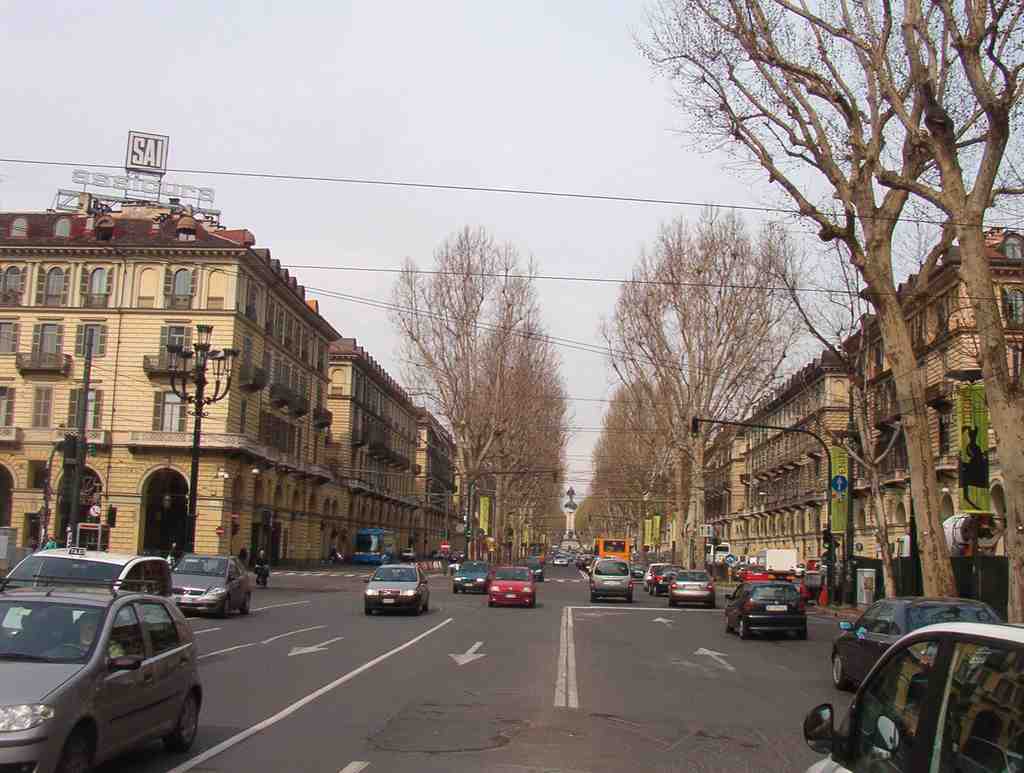
Welcome to Corso Vittorio Emanuele II, a vast paved avenue framed by long rows of arched stone porticos, which are continuous covered walkways built right into the architecture, all stretching endlessly toward a towering monument centered in the far distance.
Before this was a wide thoroughfare, this land was shaped by the House of Savoy, the historic royal family of the region. They had a beautiful summer residence nearby, the Valentino Castle, and the sprawling royal park surrounding it completely dictated the early layout of this area. The very first roads here were just modest carriage paths meant to gently skirt the northern edges of those grand royal gardens.
But as the city burst beyond its ancient boundaries, a grand vision took hold, sparking a massive wave of 19th-century urban expansion. This colossal street was carved out, extending an incredible four point two kilometers across the city as a bold, undeniable symbol of rapid modernization. Connecting the new railway station to the river, it transformed quiet dirt tracks into an elegant artery lined with commercial spaces, pulling Turin into a brand new industrial age.
If you look far down the avenue, you can spot that distant monument we noticed earlier. That is King Vittorio Emanuele the Second. The locals affectionately call him Barba Vigiu, or Uncle Vittorio. He sits perched atop a dizzying thirty nine meter pedestal. Now, the official reason for this towering height is deeply serious. His son, King Umberto the First, paid for this massive structure as a moral apology to the city. Turin was heartbroken when Vittorio's remains were taken away to the Pantheon in Rome, rather than being buried here in the family's traditional resting place.
However, the people of Turin have a much more entertaining theory about that tall statue. The king was widely notorious for his many romantic affairs. Rumor quickly spread among the citizens that the monument was built so ridiculously high just so the stone king could peer straight through the highest attic windows and directly into the bedrooms of the surrounding apartments.
This magnificent avenue reveals a society moving away from private aristocratic boundaries and hurtling toward a loud, deeply connected future. Let us keep walking down the Corso toward the first signs of social friction in this new era. We are heading to the Church of San Giovanni Evangelista, just a three minute walk away, to see how everyday people found their footing as their world rapidly shifted.




