
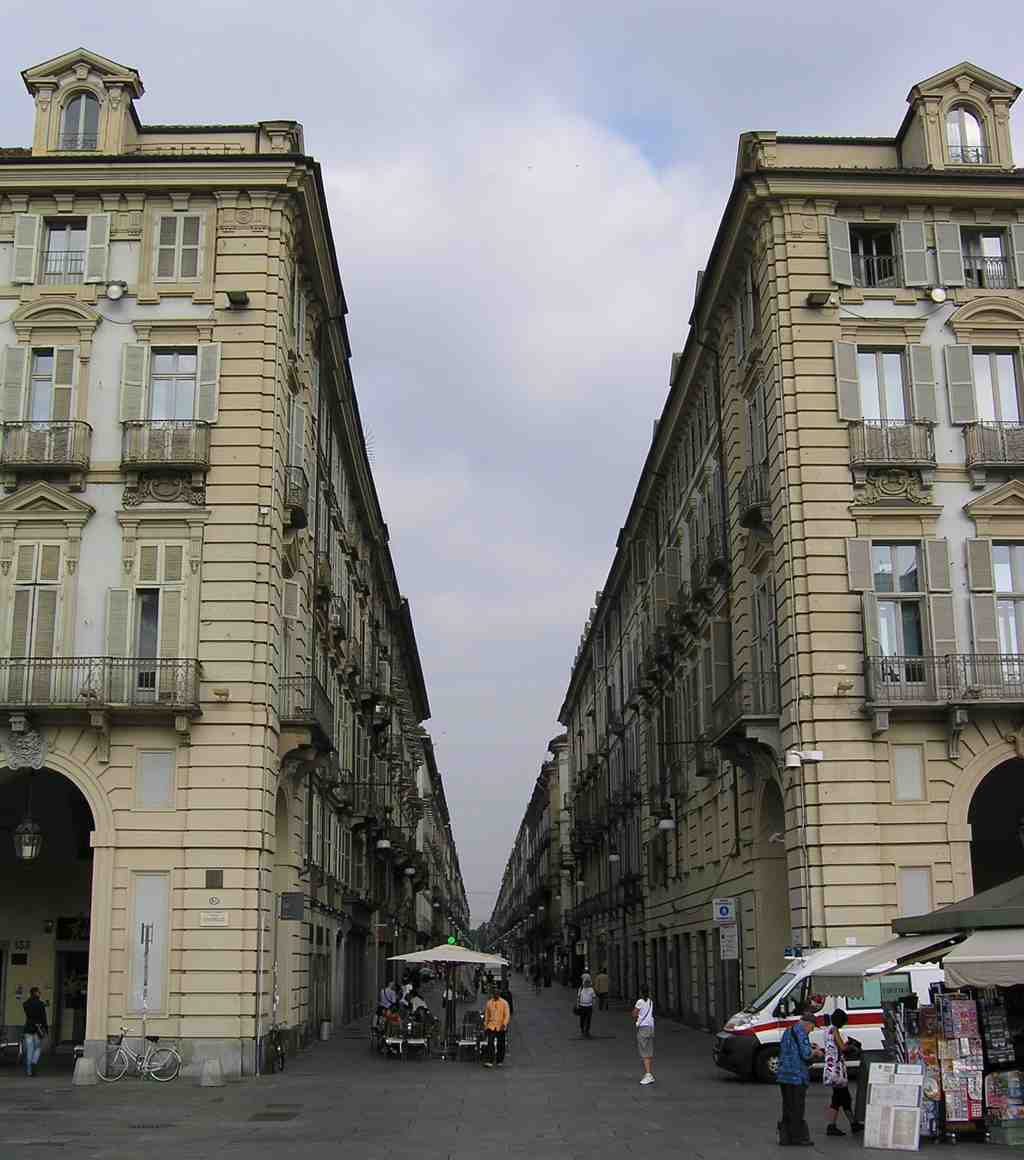
In front of you, Via Garibaldi stretches straight ahead like a grand, elegant corridor between two lines of pale 18th-century buildings-just walk toward the long, straight pedestrian street that's flanked by old shutters, balconies, and the occasional café umbrella spilling onto the walkway.
Now, picture yourself stepping into a true time machine-though don’t worry, you won’t need to spin any dials or risk turning into a Roman centurion. Via Garibaldi is one of Turin’s oldest roads, and as you walk its nearly one-kilometer length, you’re retracing footsteps that stretch back to the days when Julius Caesar was just a very ambitious teenager. This street was once the “decumanus maximus,” the main east-west road of Roman Turin-imagine, ancient carts trundling over dusty stones, merchants shouting about their wares, and the sweet, suspiciously sticky smell of honey seeping from market stalls.
Back then, the population was barely five thousand-so smaller crowds, but presumably the same level of complaining about traffic. Via Garibaldi (it wasn’t always called that!) was the city’s main artery, connecting two vital gates: Porta Decumana, now by the towers of Palazzo Madama, and Porta Praetoria, roughly where you find yourself right now. If you squint, you might imagine Roman soldiers marching in formation, their sandals slapping the stones, or a wayward goat breaking loose from a vegetable cart. Don’t worry-no goats today.
After Rome fell, things got rough, and the glamorous road shrank to a mere four meters wide-narrow, muddy, and lined with humble brick houses. Locals called it strata Civitatis Taurini. Yet, even as time passed, the street stayed lively: merchants came seeking luck under the protective gaze of Saint Expeditus-yes, there’s a patron saint of speedy deliveries. If you listen closely, can you hear the old voices bargaining, wheels creaking over cobbles, and church bells ringing from converted Roman temples?
In the late Renaissance, the name changed again-Contrada Dora Grossa. Why? Well, in 1573, Duke Emmanuel Philibert ordered a new canal to wash out the city’s narrow alleys. The “dòira,” or stream in Piemontese dialect, flowed right here, earning the street its fresh name. So much for fancy fountains-Turin was proud of its practical plumbing!
Then came transformation. Imagine the 1700s: the scent of pastries drifting from bakeries, the parade of ornate carriages, and elegant folks in powdered wigs strutting the brand-new sidewalks-possibly Europe’s oldest, since they were added here as early as 1730. Not only that, this was one of Turin’s very first paved streets! Royal orders stretched Via Dora Grossa longer than ever, eventually reaching Piazza Statuto and lined on both sides by stately palaces and lavish churches-like Chiesa dei Santi Martiri, Chiesa della Santissima Trinità, Chiesa di San Dalmazzo, and the grand palazzos Scaglia di Verrua and Saluzzo di Paesana. Even Napoleon’s troops couldn’t resist giving it a new name-rue du Mont-Cenise-but after the French left, the Savoia family switched it back, and finally, after the unification of Italy, the street was renamed after the legendary Giuseppe Garibaldi.
For most of the 1900s, Via Garibaldi pulsed with public and private traffic cars, trams, and buses. Imagine the constant clatter and whirring engines, shopkeepers racing for deliveries, and the occasional dramatic umbrella chase on a windy day! In 1979, after much local arguing-Turin is famous for passionate debates-the street finally became what you see today: the second-longest pedestrian street in Europe, just behind the famous one in Bordeaux.
So as you walk, notice how the street divides other avenues-northern and southern stretches have different names-but all of them meet here. You’re not just strolling between shuttered palaces and busy cafés, you’re wandering through layers of history, invention, and maybe a few ghostly echoes of the perfect bargain or the best cup of coffee some ancient merchant ever tasted. Keep your eyes open-you never know when the next story will leap out from behind a portico!




