
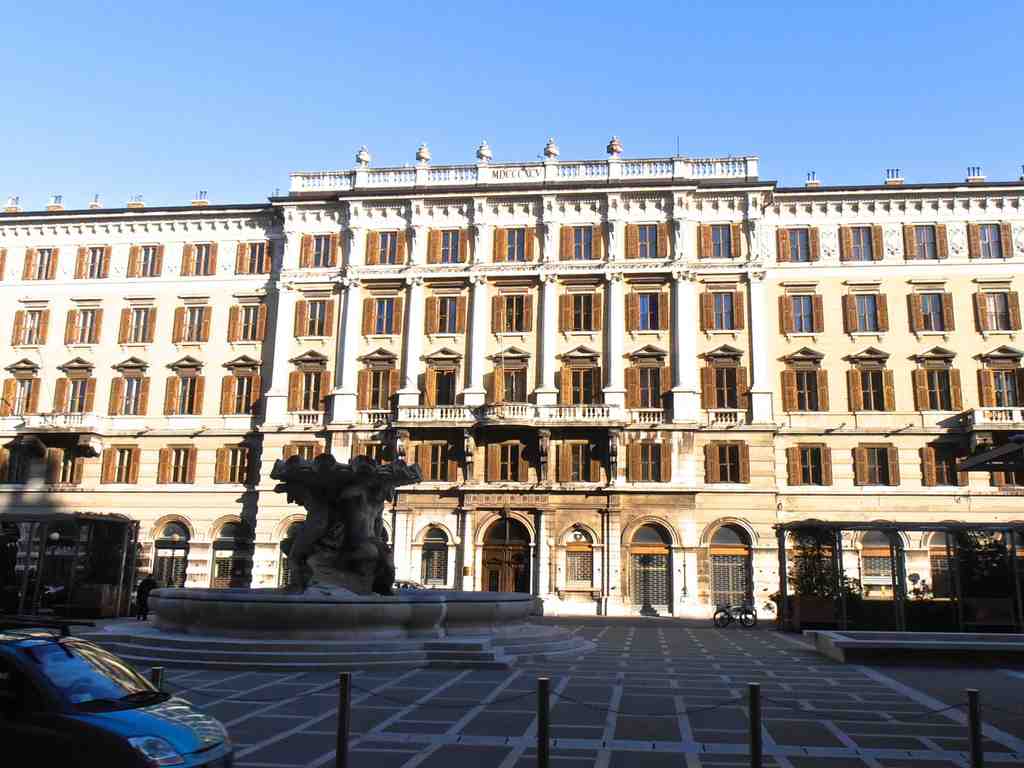
Look for the massive cream-colored building on your right, anchored by rough stone arches at the bottom and dominated by tall white semi-columns stretching up the center of the façade.
This is the State Railways Building, or Palazzo delle Ferrovie dello Stato. It is grand, isn't it? Back in 1895, architect Raimondo Sagors didn't want to build a boring bureaucratic box. He wanted a palace.
Look at the sheer verticality of it. See those massive columns in the center? Architects call this the "giant order," meaning the columns don't just sit on one floor-they soar past multiple levels, tying the whole building together. If you crane your neck and look all the way to the top, right under that roof railing, you might spot something watching you. The stone brackets, or corbels, holding up the balcony are carved with human heads.
But the real magic happened behind these walls. It wasn't just railway clerks stamping tickets. In the Fascist era, the back of this building housed the Teatro del Dopolavoro Ferroviario. That’s a fancy way of saying the "Railway Workers' After-Work Theater." Imagine finishing a long shift on the tracks and coming here for a live show. By 1949, it had transformed into the Cinema Vittorio Veneto. For decades, flickering projectors brought Hollywood glamour to this very block.
Today, however, the reels have stopped spinning. The building has been largely silent, stuck in a tug-of-war of sales and renovations since 2008, waiting for its next act.
Take a second to admire those details near the roofline. When you are ready to move on, our next stop is just a minute away.




