
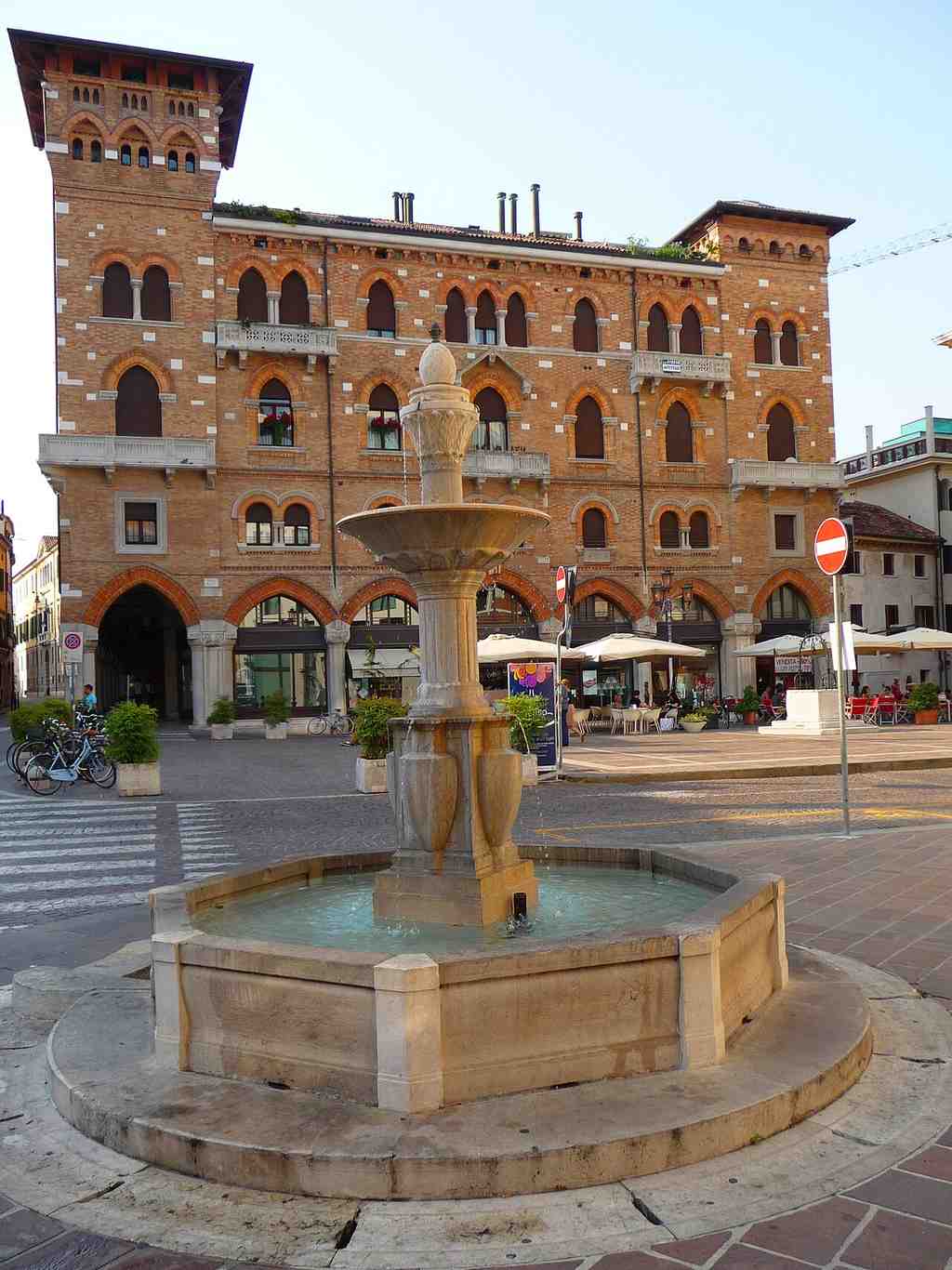
On your left, look for a pale stone fountain with a broad octagonal basin, a round base beneath it, and a squat fluted column in the center ringed by four small carved water creatures.
This is the Fountain of Piazza San Vito, set opposite the portal of the Church of San Vito and Santa Lucia, in a square once called Piazza delle Prigioni... which is a slightly less charming name if you’re trying to sell vegetables. Around nineteen thirty, this whole square became a testing ground for urban plans: new paving, a fruit and vegetable market, even proposals for a new Palazzo Littorio. Local shopkeepers pushed hard for a new fountain, and they paid for it as a thank-you to the city for keeping the market here.
On the twenty-eighth of October, nineteen thirty, the opening turned into a full civic performance. Contemporary reports describe flags everywhere, the Turazza band playing patriotic hymns, officials parading through the square, and then the prefect turning the device that set the water flowing. The jets leaped up, the crowd applauded, and Treviso congratulated itself very thoroughly.
The design looks back to the Italian seventeenth century, with a wide octagonal basin in Verona marble and Grisignana stone. At the center, two steps lift a base decorated with four hydras, little mythic water beasts, supporting a grooved column shaped like bundled stems, topped by a bowl like a water flower and a pinecone symbolizing the unity of the donors. At the foot, a steady spout served everyday needs, from household water to market business.
Like any sensible public fountain, it is accessible all day, every day.
Take one last look at this small burst of civic pride, then continue on when you’re ready.




