
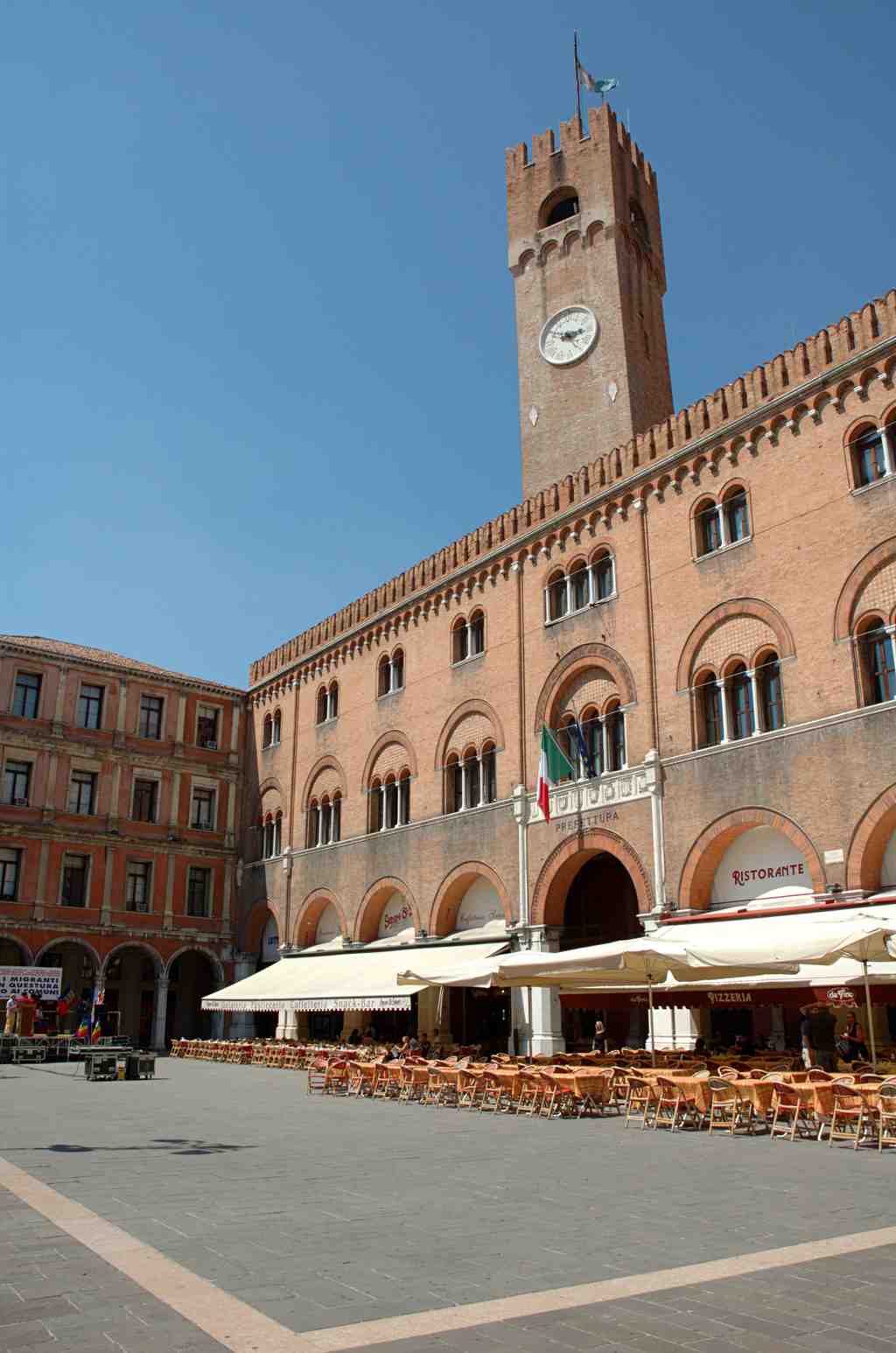
On your left, Piazza dei Signori opens as a broad stone rectangle framed by red-brick civic palaces, tall arched porticos, and the raised loggia of the Palazzo dei Trecento.
This is the central square of Treviso... not just the pretty heart of town, but the place where politics, gossip, ceremony, punishment, trade, and plain old hanging around all learned to share one address. Its current name, Piazza dei Signori, comes from the buildings around it: the Palazzo del Podestà, now the Prefecture; the Palazzo dei Trecento; and the Palazzo Pretorio. In other words, the square took its name from the people in charge. Cities do love a little branding.
The story goes back to the late twelfth century, when the first communal buildings began to rise here. Some historians think this area may overlap with the Roman quadruvium, a four-way crossing created where the main streets met at right angles. That might explain one of the square’s earliest names, Piazza del Carubio, a worn-down local version of quadruvium. Another theory places that Roman crossing nearby instead, so even the name carries a small scholarly argument... which feels appropriate for a civic square.
Over time, Treviso renamed this place with refreshing honesty. It was called Piazza delle Catene, the Square of Chains, and Piazza della Berlina, the place where condemned people were displayed to the public. Not subtle. Later came grander names like Piazza Grande, Piazza del Popolo, and Piazza dei Nobili. Every era left its own label, like a stack of official memos nobody quite had the heart to throw away.
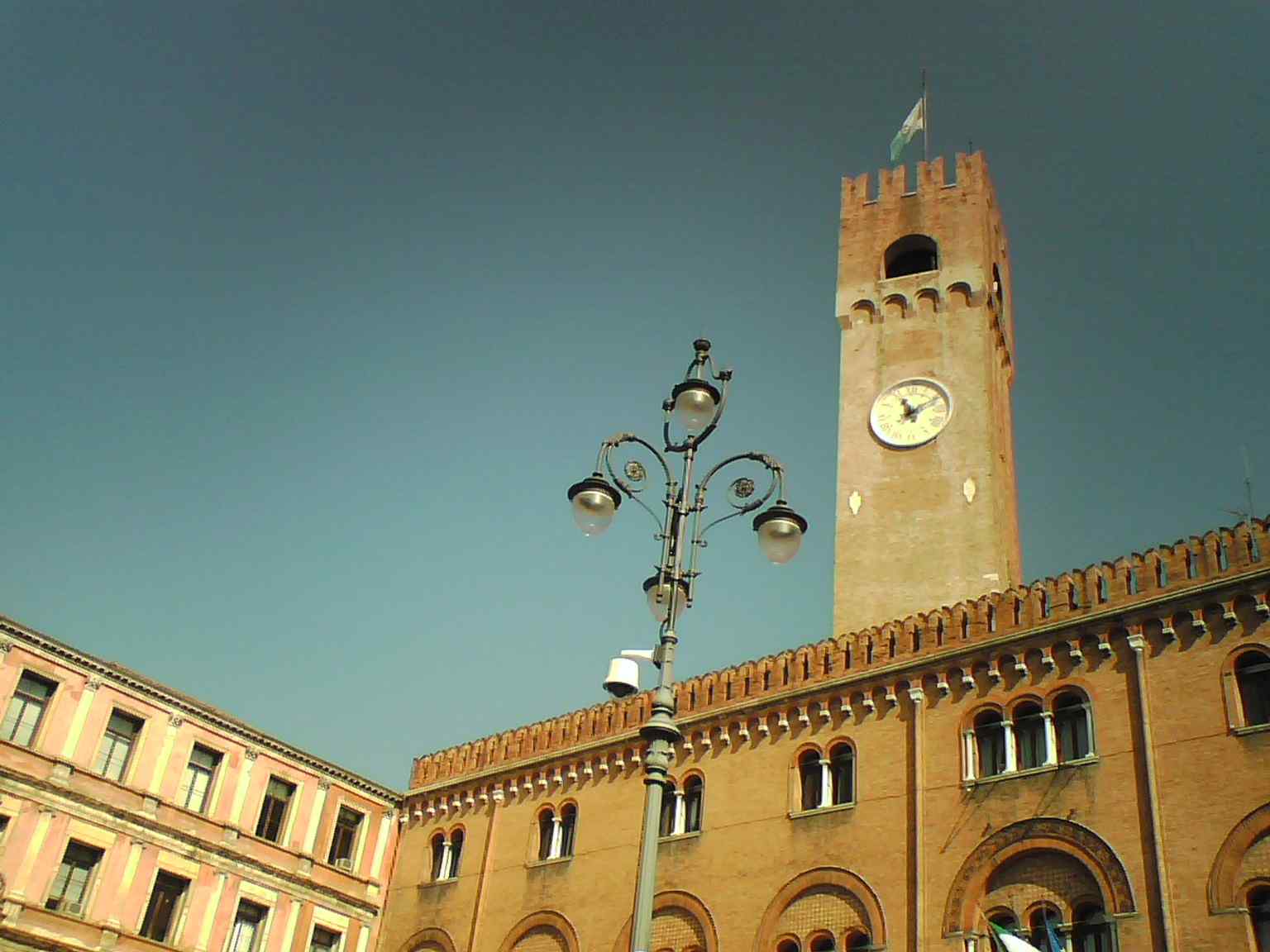
Look at the eastern side and you’re looking at the Palazzo dei Trecento, begun in the early thirteen hundreds after an earlier town hall burned. This was the seat of the Maggior Consiglio, the Great Council of three hundred members. Three hundred politicians in one hall sounds less like efficient government and more like a medieval endurance test. The open ground-floor arcade, the Loggia dei Trecento, came later and gave the building the airy face you see now. If you want a closer look at those arches and openings, check the image on your screen.
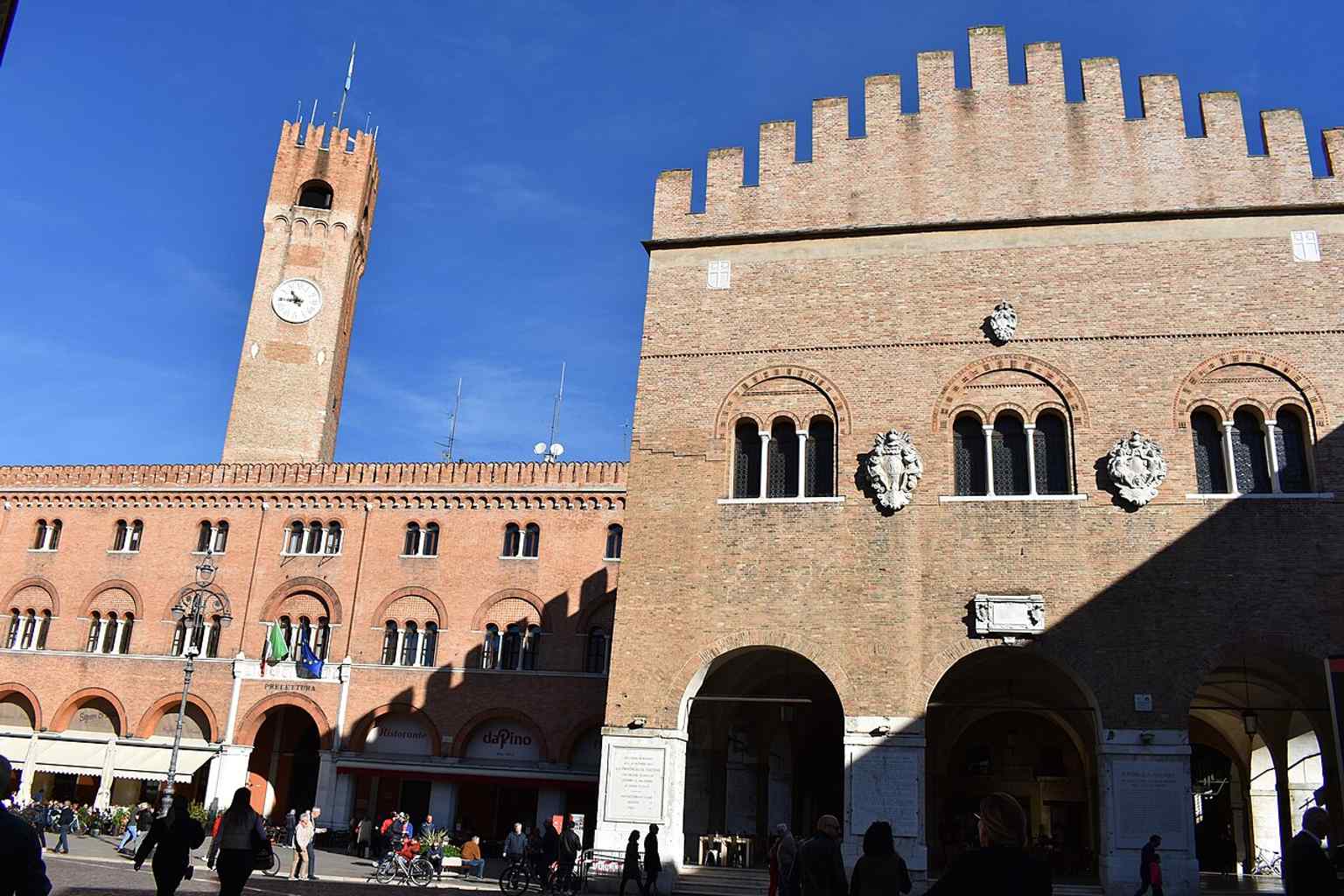
This square mattered for another reason too. The city placed its political center here, on the old Roman forum, and away from the Duomo. That was a very deliberate message: civic power stood on its own feet, thank you very much, and did not need to share a desk with religious authority.
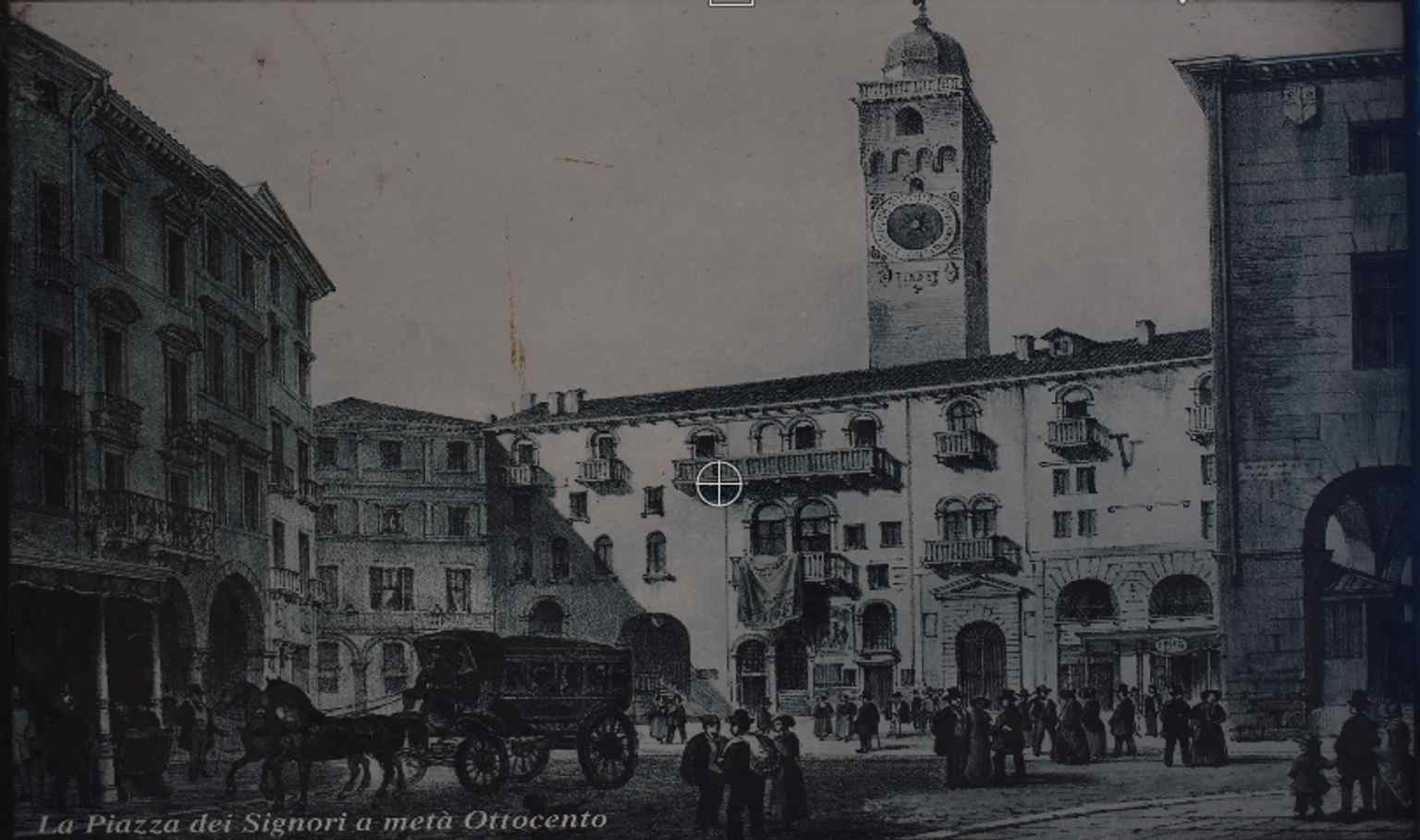
The buildings around you changed over centuries. The Palazzo del Podestà took on its current neo-Gothic look in the eighteen seventies. The Palazzo dei Trecento suffered terrible damage in the bombing of Good Friday, nineteen forty-four, and engineer Ferdinando Forlati led the careful restoration that saved it, even straightening walls that had begun to lean. If you glance at the historical photo in the app, you can see how this square has long carried itself as Treviso’s public stage.
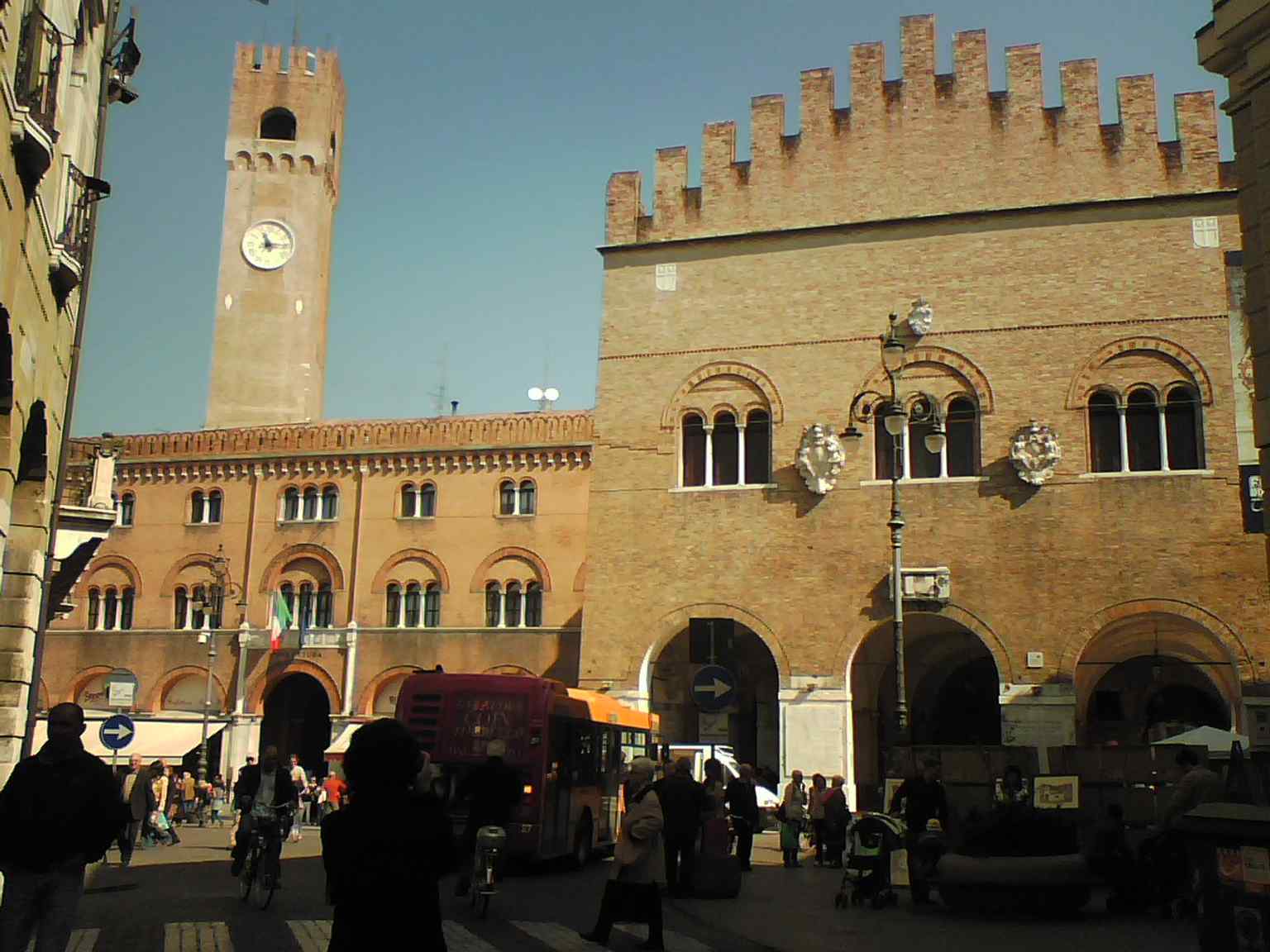
There are smaller details too: lions of Saint Mark carved in relief, their open books recalling Venetian rule; the southern edge opening toward Calmaggiore; and the covered passage between the Palazzo del Podestà and the Palazzo dei Trecento, called the Portico dei Soffioni. That name does not come from a pleasant breeze, but from gunpowder charges once fired there during bull-chase spectacles to rile up the dogs. Medieval entertainment had... fewer safety meetings.
More than a square, this is Treviso’s civic memory laid out in stone. When you’re ready, continue on toward Ca’ dei Ricchi.






.jpg)