
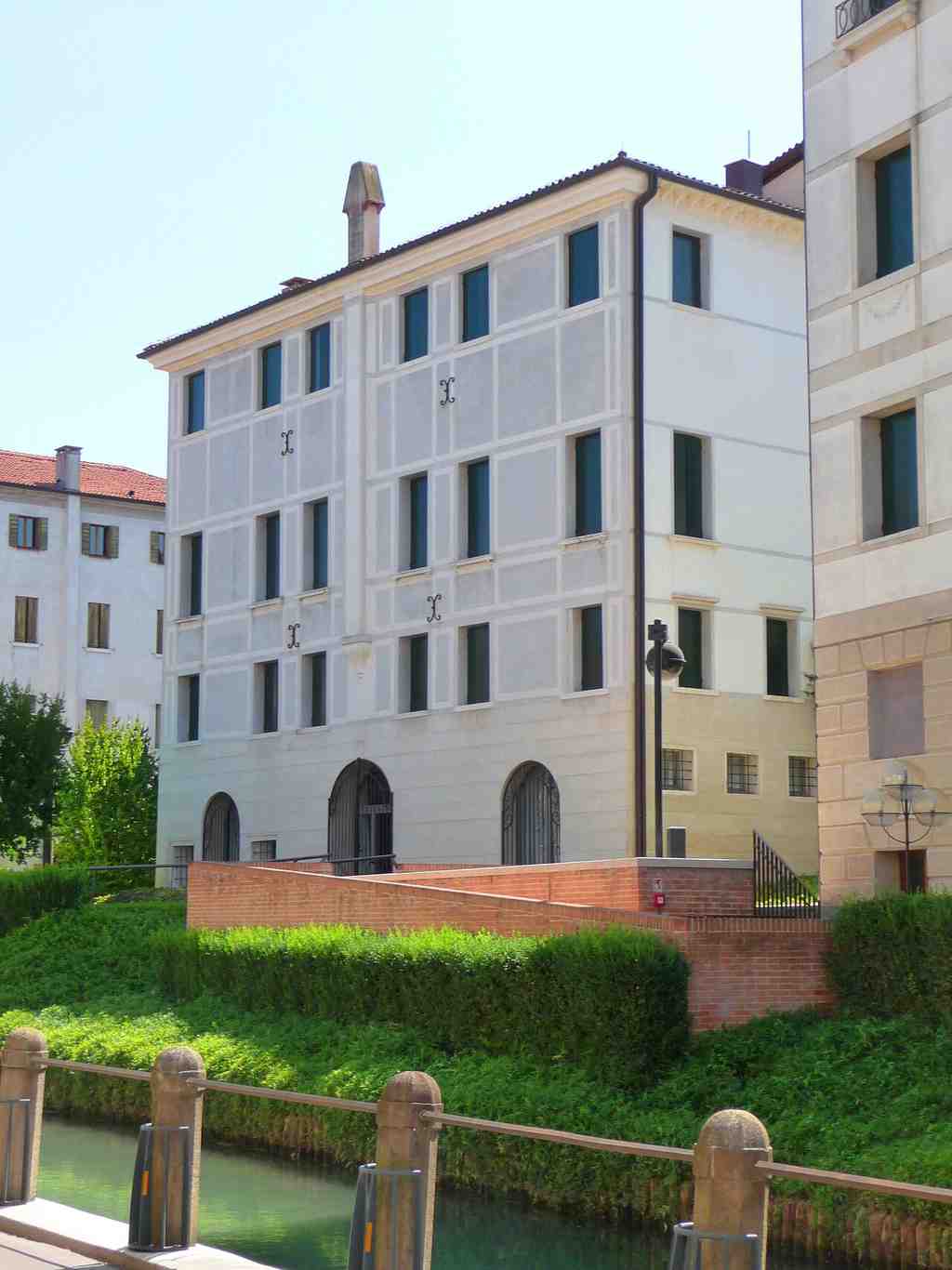
On your left, look for the pale masonry palace with a broad rectangular front, lower side wings, and the footbridge linking the grounds across the Roggia canal.
Palazzo Caotorta has lived several lives... and a few of them were frankly rough. A chronicler named Bartolomeo Burchiellati called this place an ancient and noble residence, and for centuries the cathedral canons lived here - church officials, in other words, with a very respectable address. Then, in the early sixteen hundreds, the Scotto brothers bought up several older buildings and stitched them together into one large palace, keeping parts of the older walls and covering open spaces that faced the Roggia.
By seventeen eighteen, a man named Cristoforo Como owned it. Later in that century, Girolamo Caotorta took over and gave the palace a major overhaul. In the eighteen sixties, workers cut back the smaller neighboring building to open a garden along the canal, and they split the main block into apartments. The Caotorta family stayed in the piano nobile... the grand main floor above street level, where families liked to show they were doing nicely, thank you very much.
Then came the seventh of April, nineteen forty-four. Anglo-American bombing damaged the palace so badly that people abandoned it, and because nobody moved quickly to protect it, more sections collapsed. That could have been the end. Instead, the Benetton Foundation bought the ruin in the nineteen nineties, and architect Tobia Scarpa led a careful restoration. Now it holds the foundation’s library and documentation center, with public cultural programs, while inside, a few painted rooms still survive from the early nineteenth century and later.
If you want to go in, it usually opens Monday through Friday from nine to one and from two to five thirty, and it stays closed on weekends.
Caotorta feels like a rescue story told in brick, plaster, and stubborn memory. When you’re ready, continue on toward Ca’ Sugana.




