
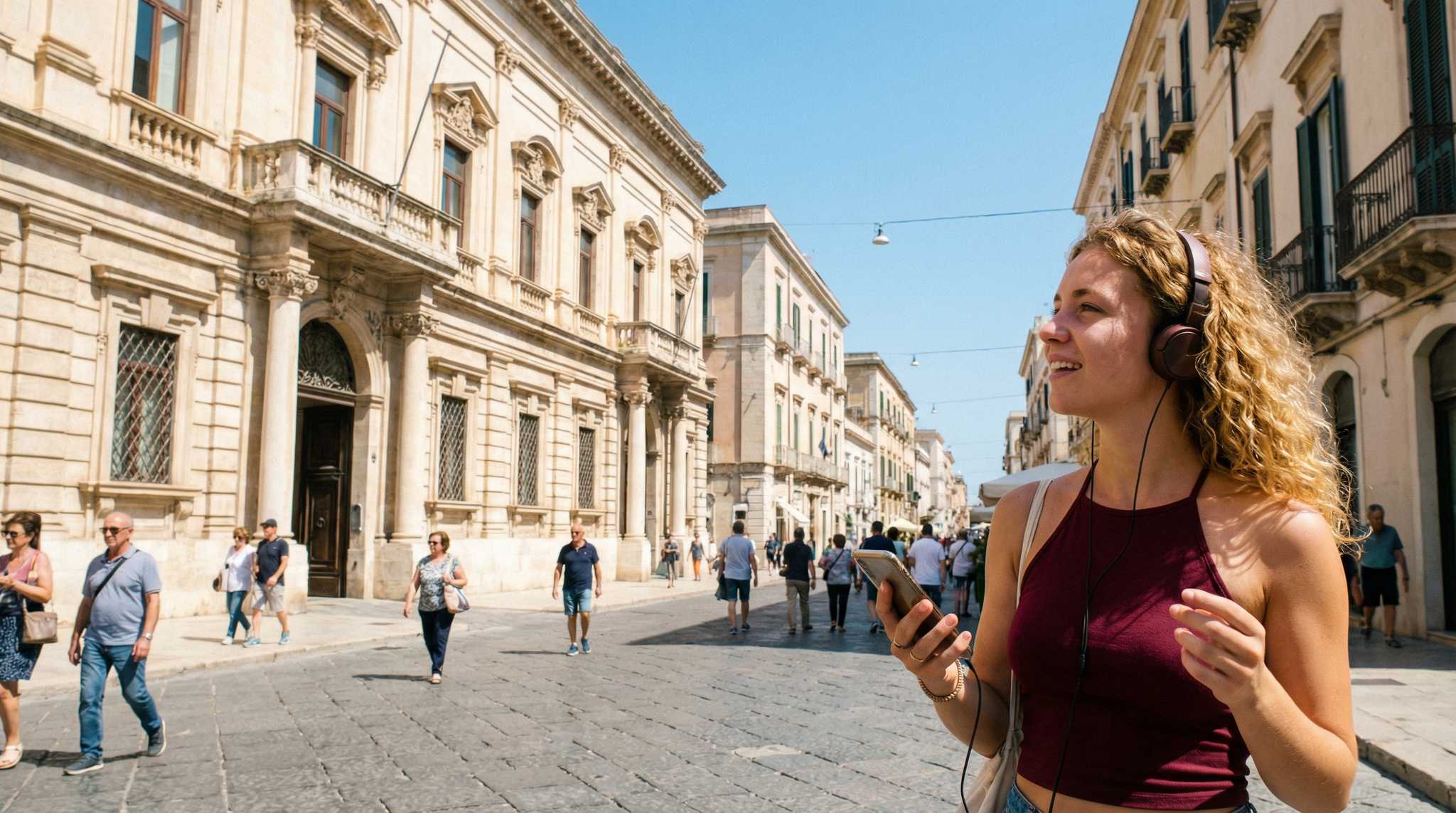
Taranto Audio Tour: Palaces, Towers and Secrets of the Old Town
A hidden tunnel beneath Taranto's streets is said to have once led fiery rebels to mysterious meetings – only a few know the truth. This self-guided audio tour invites you to discover Taranto off the beaten path and delve into the stories hidden between palazzi and church aisles. Here, perspectives open up that most people walk right past. What dramatic plans were forged in the shadow of the Palazzo de Beaumont Bonelli? Who disappeared without a trace after a midnight mass in the Chiesa di San Domenico Maggiore? And why does the Palazzo del Governo conceal a symbol visible only at sunrise? Experience Taranto's dramatic past and walk through streets where whispering rumors and political upheavals have shaped every stone. Every corner holds a surprise, every viewpoint reveals something new. Come along now and discover what truly simmers beneath Taranto's surface.
Tour preview
About this tour
- scheduleDuration 30–50 minsGo at your own pace
- straighten2.5 km walking routeFollow the guided path
- location_on
- wifi_offWorks offlineDownload once, use anywhere
- all_inclusiveLifetime accessReplay anytime, forever
- location_onStarts at Raimondello Tower
Stops on this tour
Right in front of you, a massive, square tower rises - just look for the solid, rather imposing masonry with expressive window openings and the remnants of the adjacent fortress…Read moreShow less
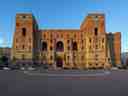
Right in front of you, a massive, square tower rises - just look for the solid, rather imposing masonry with expressive window openings and the remnants of the adjacent fortress walls. Imagine it's the year 1404, the medieval sun beats down on Taranto, and amidst the bustling activity of the port town, something colossal is being built: the Raimondello Tower! The mighty Raimondo Orsini Del Balzo, a man with a beard as impressive as his building projects, had this stone behemoth erected to keep an eye on the city's most important access point, the Ponte di Porta Napoli. A bit of a control freak, this Raimondo - but who can blame him given the location? Initially, the tower was a solitary giant, a large, square mastio at the outermost corner of the city wall. But a tower is nothing without friends! Soon, two sturdy turrets joined it, transforming the area into a veritable citadel. Plenty of space for cannons, soldiers - and probably bad medieval jokes. Years passed, and the complex grew: a huge military courtyard with an extra-thick round tower enclosed the ensemble - not even a nimble marmot could have squeezed in here. But then came 1861: revolution! The Cittadella lost its significance, was disarmed, and after a flood in 1883, the once mighty tower became a crumbling ruin, as shaky as the arguments of a bad house of cards. The people of that era had had enough of walls, battlements, and old rulers - they demanded freedom, air, space! Thus began the demolition: piece by piece, the symbol of tyrannical medieval rule disappeared. Between 1884 and 1893, not only the tower but the entire citadel was dismantled. Almost like a final move, but with fewer boxes and more dynamite! For many years, only memories remained - until the end of the 20th century, when excavations rediscovered the stone remnants of the Raimondello Tower. Even today, very close to the old site of the city gate, you can find the impressive blocks of the north and east walls. A place with history, drama, and a hint of a medieval master builder's mustache!
Open dedicated page →To recognize the Chiesa di San Domenico Maggiore, just look ahead at the elevated facade with its wide, baroque grand staircase - a bit like an old, mischievous stone smile that…Read moreShow less
To recognize the Chiesa di San Domenico Maggiore, just look ahead at the elevated facade with its wide, baroque grand staircase - a bit like an old, mischievous stone smile that challenges you at first glance! Imagine: It's the year 1360. The salty air from the nearby sea mixes with the sound of craftsmen hammering stone and workers building an impressive Romanesque-Gothic church - right here, on the west side of Taranto's old town, where you're standing now. But before this church took its place, an ancient Greek temple stood on the same spot. Over two thousand years ago, the Greeks celebrated their gods here, creating an atmosphere full of mysticism and the scent of incense, underscored by the sound of waves in the harbor. Centuries pass, the Roman Empire sweeps through the streets, and a strange wind of change blows over the hill as Benedictine monks erect their monastery, San Pietro Imperiale. The monks murmur prayers; it smells of damp stone and fresh herbs. Then comes the great shift: In the 14th century, the Benedictines decide to hand over their property to a new group, the Dominicans. I imagine them exchanging a solemn handshake - perhaps even a good wheel of cheese was shared, who knows? The Dominicans brought fresh momentum. They built this stately church with its mighty, baroque staircase, where many an altar boy probably slipped when rushing to Sunday mass. A Latin inscription, carved in stone above the portal, proudly announces its completion around 1360. The buffaloes in the coat of arms commemorate the Taurisano family - don't worry, you definitely won't encounter any real buffaloes here! Let's jump to the 16th and 17th centuries, the city is vibrant: three important brotherhoods pray, help the needy, and adorn the church with magnificent altars in the side chapels. If you could enter now, you'd discover four side chapels on the left - each a small marvel. In the first chapel, from 1751, the Altar of the Madonna del Rosario shimmers. This artwork sparkles in polished marble by Nicola and Francesco Ghetti, framed by mysterious paintings - including one depicting Pius V blessing the victors of Lepanto. I wonder if a little loose change was secretly counted here before the brotherhoods set off with their splendid processions! But drama is also part of it: In the third chapel stands a 'U'Bammine all'erte' - the upright Infant Jesus, solemnly carried through the streets for Epiphany. Imagine the dark wooden altar creaking while the faithful remain reverently silent on procession days, interrupted only by the rustling robes of the Madonna Addolorata in her chapel as she passes through the city for the festival. The choir area holds the tomb of Tommaso de Sarria, once Archbishop of Taranto - I wonder if he sometimes smiles from his stone resting place when the congregation misses a note during the rosary? And above, on the roof of imagination, a small piece of tragedy hovers: in 1717, there was a collectively painted wooden vault here, crowned with magnificent paintings. But on Christmas Eve 1964 - believe it or not - the roof collapsed! That must have been a bang that startled even the sea gods in the harbor. Today, you look up and see simple wooden beams. Lacrima Christi, an archangel must have been on vacation as a carpenter! Around the church once stretched the Dominican monastery. In the 19th century, however, no heavenly apparition moved in, but rather the command of the Royal Financial Guard. The cloister remains to this day a fascinating mix of Romanesque arches and baroque decorations. Not to forget: During excavations in the 1990s, archaeologists found traces of human settlements dating back to the Neolithic period - that's over 6000 years of history beneath your feet! So you're standing here, layered like a lasagna: Neolithic below, an ancient temple above, medieval monastery history in the walls, and finally, a church that connects it all. Fascinating how much Taranto can hide in one place, isn't it? But wait, our journey through the layers of time holds many more surprises!
Open dedicated page →In front of you rises the Palazzo Carducci Artenisio with its robust stone wall, simple, tall windows, and two small balconies - look for the sign to the right of the entrance,…Read moreShow less
In front of you rises the Palazzo Carducci Artenisio with its robust stone wall, simple, tall windows, and two small balconies - look for the sign to the right of the entrance, and you'll know you're in the right place! Imagine it's the year 1650: Taranto smells of the sea, carriage wheels rattle over the cobblestones in the alleys, and suddenly this proud mansion opens up before you. It was built by Ludovico Carducci, a descendant of a noble family from Florence - where the Carduccis were well-versed in both politics and refined manners. But when the Medici came to power, it was suddenly 'pack your bags, off to Apulia!' Did someone drop the delicate Florentine porcelain vases during the move? That remains a secret… The Carduccis were not only welcome in Taranto but were personally appointed to the highest offices by Charles VIII. This might be because they loved to celebrate and, get this, a proud 14 mayors came from their ranks. Who knows, maybe there was even a special mayor's cake in the palace back then? Even today, the house breathes nobility: the courtyard spanning almost 900 m², the old horse troughs, hooks for reins, and the imposing, double-flight staircase let you feel bygone eras. The crowning glory is the heraldic animal above the door - a black double-headed eagle with a crown. On the first floor, sparkling chandeliers, elegant furniture, and even a library with over five thousand books await you! And if you have a penchant for the mysterious: a relic from the cross of Jesus is said to be kept in the private chapel. Finally - and pay attention now - in 1902, the palace even became a hotel for Giuseppe Zanardelli, the Italian Prime Minister. No wonder the Carduccis always kept a few rooms reserved for special guests. Who knows who you might have met on the balcony up here?
Open dedicated page →
Show 8 more stopsShow fewer stopsexpand_moreexpand_less
In front of you, you'll see the Palazzo Amati - look for the rough natural stone with the huge, old wooden gate between two mighty marble columns, framed by small balconies with…Read moreShow less
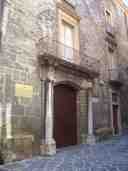
In front of you, you'll see the Palazzo Amati - look for the rough natural stone with the huge, old wooden gate between two mighty marble columns, framed by small balconies with iron railings. Imagine we're now traveling together to the 18th century: Here, the ambitious Baron Giacomo Amati had this enormous palace built from three small houses - yes, you heard right, simply combined! With 37 magnificent rooms and wonderful iron loggias, an elegant marble staircase, and a splendid gallery, he truly outdid himself. Previously, nine Amati children and half an army of servants lived here. And in the cellar? It wasn't messy like my home, but rather clever wells and cisterns, ensuring there was always enough oil and wine on hand. Over the decades, the building experienced wild times: the sweeping sea view remained, but parts were torn down to make way for a new street - as if a piece had simply been bitten off the palace! Later, schoolchildren romped around here, then the building stood empty like a forgotten castle, until, after a grand restoration adventure, it found new life with sports, a university, and finally even a marine museum and the EU Institute for Dolphins and Whales. So: Who knows, maybe you'll see a ghost from the Baron's era dancing on the balconies - or hear the echo of the children who once went to school here!
Open dedicated page →If you see the large red entrance door with golden embellishments and the magnificent stucco ceilings right in front of you, you're in the right place: the Palazzo de Beaumont…Read moreShow less
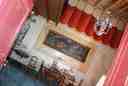
If you see the large red entrance door with golden embellishments and the magnificent stucco ceilings right in front of you, you're in the right place: the Palazzo de Beaumont Bonelli. Imagine standing before this house - in the historical heart of Taranto, with the maritime wind in your nose and a gentle murmur of voices from the surrounding alleys. But what you're looking at isn't an ordinary building; it's a three-level time machine, built on ancient walls whose origins date back to the Spartans over 2,500 years ago. Exciting, isn't it? Back then, the rock was lifted from the ground with muscle power and - who knows - perhaps some ancient magic, to create space for cities and dreams. The Palazzo itself gleams with baroque nobility, but the truly fascinating part unfolds in the belly of the house: the so-called Ipogeo - the mysterious, underground section - extends through four huge halls and reaches 16 meters beneath your feet, deeper than the sea! Can you imagine hiding a treasure here in the past? Feel free to picture it as its own Indiana Jones chapter, only your hat is a cap today and your compass is your smartphone. These caves, excavated 175,000 years ago, breathe history from several millennia. Here, beneath the noble house, you'll find ancient Greek city walls, gnarled medieval water channels, and mysterious tunnels that lead directly into the glittering waters of the Mar Grande. You heard right: there's actually a tunnel that runs directly to sea level - for centuries, an escape tunnel or perhaps an elegant secret passage for nocturnal strolls to the water. Who knows? Down here, stone meets fossils, old meets new - it's as if time wanders crisscross. Now, immerse yourself in the Sala Etra, named after the city founder's wife. Imagine light streaking through the semi-darkness, illuminating ancient stones with fossil imprints, and suddenly you see fragmentary walls that even the Spartans knew. With a bit of luck, you'll hear the gentle lapping of a river beneath your feet, which still flows through these caves today. It captures water from the distant hills - a clever ancient water source that always supplied Taranto with fresh water. No wonder Persephone, goddess of the underworld, received her own massive, deepest hall. But it also gets artistic: Above you, in the restored Palazzo, you'll admire high wooden ceilings, paintings, tapestries, and colorful majolica tiles that almost glow in the sunlight like the ancient sea outside. The 'green hall' with floral ceiling patterns exudes the charm of green meadows, while the 'yellow hall' shines with depictions of Taranto's productivity in the 18th century - framed by female portraits whose eyes watch you across centuries. My tip: If a portrait smiles particularly kindly at you, you might want to hold onto your cookie - the ladies there were known for their sweet tooth. For centuries, the de Beaumont Bonelli family lived here - a true noble lineage whose coat of arms still adorns the hallways today. And when the family died out, the house changed hands, and the new Bellacicco family recently breathed fresh life into it - not with grants, but with much love, manual labor, and a huge dose of courage. Since then, they've opened the doors not only to tourists but also to artists, scientists, and even filmmakers. A famous Italian musician shot his music video here - can you feel the traces of the spotlight? Today, in the underground, you'll find the Spartan Museum of Taranto. There are exhibitions, guided tours, and sometimes the sound of artists reciting poems from ancient times. Thanks to the unique acoustics, even quiet footsteps in the Ipogeo echo like mysterious shadows from the past… So, if you hear soft voices tonight, it's probably the Spartans wanting to tell stories. And don't worry - they are peaceful!
Open dedicated page →In front of you rises the Palazzo Latagliata: Look at the bright, roughly hewn facade with its small balconies and waving flags - you've found it! Imagine it's the year 1750. The…Read moreShow less
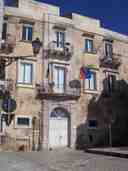
In front of you rises the Palazzo Latagliata: Look at the bright, roughly hewn facade with its small balconies and waving flags - you've found it! Imagine it's the year 1750. The sun beats down on the cobblestones, merchants call out their wares, and from the windows of the brand-new Palazzo, a proud Boffoluti family leans out. No noble titles yet, but plenty of influence - so much so that even the King of Naples, Ferdinand IV, elevated them to nobility. What prestige! This recognition meant the house could be further expanded, and even the view over the sparkling Mar Grande now belonged to them. Although the building isn't directly on the grand avenue, who cares when you have a view? But the Boffolutis' luck didn't last forever: In 1799, a scandal that made the alleys pale! Giovan Camillo Boffoluti got into an argument with a French soldier. First just harsh words, then flashing blades - a thrust, a scream, and the noble dream ended. The family had to disappear into hiding; murder remains murder, no matter how noble the house. Shortly thereafter, the palace was sold to the Latagliata family, who also lent it their name. The palace continued to grow, but an inner courtyard, like so many other noble houses in the Borgo Antico? Not a chance! Instead, there was once an elegant loggia that extended with a small balcony directly over the street. One could say living here was a sport. Later, in the 20th century, the house fell into disrepair until the city of Taranto acquired it in 1983, restored it, and made it the seat of the city administration. Many feudal details were lost - stucco, colorful wood, the loggia, all sacrificed to modernity. What remains is the ambitious character of the palace, which tells stories of power, scandal, and change. So, what do you think: more than a few matchbook covers probably made history here!
Open dedicated page →In front of you, you'll see the Palazzo Galeota, distinguished by its decorative stucco work and baroque shell motifs above the portal - just look at the archway in front of you,…Read moreShow less
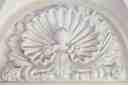
In front of you, you'll see the Palazzo Galeota, distinguished by its decorative stucco work and baroque shell motifs above the portal - just look at the archway in front of you, where this playful relief peeks out as if waving curiously. Imagine we're going back almost 300 years: It's 1728, and Taranto is bustling. The Palazzo Galeota is being built by Don Vincenzo Cosa - a man who was not only a man of God but also quite skilled in lending money. He desperately wanted to climb into high society. His recipe? A magnificent palace and a clever marriage for the family. Presto, they were noble! But life is rarely a straight path: After his death, the palace first went to the Calò family and then, in 1800, to Mayor Luigi Galeota. No wonder you can still see the initials 'LG' on the mighty gate! Of Cosa himself, only a small shrine on the back remains, where he kneels in prayer to Mary - but if you listen very closely at night, it's rumored his ghost still flits as a cool breeze through the abandoned rooms. Inside, the palace conceals a magnificent courtyard, and its architecture is like a colorful mix of Neapolitan and baroque elements. And if you're wondering what happened to all the offices here: Since 1975, the building has belonged to the city and served for a time as a government and cultural palace. Who knows if a bit of old noble magic still haunts somewhere within these walls!
Open dedicated page →In front of you rises an imposing, bright building with many balconies and a striking clock gable centrally on the facade - if you see the small line of cars in front of the…Read moreShow less
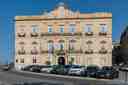
In front of you rises an imposing, bright building with many balconies and a striking clock gable centrally on the facade - if you see the small line of cars in front of the entrance, you're in the right place! Imagine we're traveling to the 19th century: Behind these walls, architect Davide Conversano worked, creating between 1864 and 1869 the new heart of Taranto, where the city is governed today - but previously, the mighty residence of the Capitano stood here, reinforced by four corner towers, like a piece of cake you never quite managed to eat. Back then, getting into the city parliament would have been almost like a casting show: first, 30 of the 'most worthy' citizens were elected, who in turn elected 72 more, from which lists of 24 people each were created. Whoever then ended up on the city council had to contend for a year with complicated resolutions, heated debates, and probably a good portion of pasta! And as a cherry on top, six lucky individuals were chosen for the highest committee. Later, in 1929, the facade received a facelift and an extra floor to place a clock at the very top - perfect for everyone who was always late. And if you're wondering where the grand staircase inside leads: directly to a Hall of Mirrors, where the city's political and fashionable vanities have always been brilliantly reflected!
Open dedicated page →In front of you rises a magnificent, light beige palace with tall windows and striking, projecting balconies - look directly across the street at the elegant balustrades and the…Read moreShow less
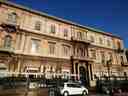
In front of you rises a magnificent, light beige palace with tall windows and striking, projecting balconies - look directly across the street at the elegant balustrades and the prominent double door in the center. Imagine you're in Taranto in 1869. The air is filled with curious murmurs as the newly erected Palazzo Savino Amelio proudly displays itself - then one of the first magnificent buildings in the city's new district! Built by the ingenious lawyer Domenico Savino, this house quickly gained a legendary reputation. Not least because it sits directly on the canal that connects the imposing Mar Grande with the mysterious Mar Piccolo. Suddenly, upon opening an upstairs window, the scent of old books wafts from the library, where today browsing is only permitted on rare public occasions. In the stately salons of the first floor, you can imagine how elegant ladies and gentlemen once enjoyed the rustle of silk and the clinking of glasses - or perhaps even engaged in a heated debate? A little secret: Behind these walls, things have also been buzzing, as the building houses the local seat of the Sovereign Order of Malta and the Melitense Study Center, where research, knightly tales, and a pinch of adventure come together. Who knows what discoveries still await you within the old stone walls? All of Taranto would say: In this palace, the heart of the Borgo Nuovo still beats today!
Open dedicated page →In front of you rises the impressive, massive brick building with elegantly adorned windows and a small clock tower at the top center - just look for the wide facade and the large…Read moreShow less
In front of you rises the impressive, massive brick building with elegantly adorned windows and a small clock tower at the top center - just look for the wide facade and the large gate beneath the porticoed entrance. Imagine it's the late 18th century. You're standing in a bustling square, the murmur of the crowd washes over you, and in the midst of it, an archbishop solemnly lays the first stone for a very special building. Yes, right here in 1791 began the story of the Palazzo degli Uffici, then planned as an orphanage for poor children and soldiers' orphans - proclaimed by royal decree by none other than Ferdinand IV of Bourbon. Unfortunately, the construction stumbled directly into the turbulence of history. Revolutions and changes in government prevented rapid progress, and so the shell remained an unfinished dream of stones for many years. Time passed, governments came and went, and it wasn't until 1872 that the city of Taranto took heart - and the unfinished building. It acquired the site, handed the plans to engineer Giovanni Galeone, and after another 22 years, it was finally ready: The current palace solemnly opened its heavy doors in 1896, with the mayor personally cutting the ribbon! Thus, the Palazzo degli Uffici became the heart of the city: It housed the court, the Nautical School with dreams of wind and waves, meteorologists and seismologists who observed the weather and listened for earthquakes, historians tracing Magna Graecia, and generations of students - including celebrities like Aldo Moro! Who knows what pranks young Moro played behind these thick walls? Do you feel the building's influence? Its square shape, the 'Stile Umbertino' - typical of the late 19th century - quickly became a model for many other buildings in the new district. The lower facade is a powerful statement, with Doric columns, a monumental main portal, and elegantly framed windows. On the upper floors, Ionic columns and no less than 20 finely decorated windows adorn the facade. At the very top, a small, ornate triangular gable with a clock watches over the Piazza - so beware: it's got its eye on you! If your teacher at 'Liceo Archita' caught you by the clock back then, there certainly was no excuse. But the palace holds even more surprises. In 2006, during renovations, ancient Jewish graves with preserved skeletons were found beneath a classroom floor - a real sensation! Even the Jewish community from Rome traveled to help with the excavations and find a dignified solution. And if you're wondering why there are sometimes still scaffolds here: Since 2002, diligent restoration work has been underway to prepare the palace for the future - don't worry, the clock still keeps perfect time, so no one will be late for their next appointment.
Open dedicated page →In front of you rises the Palazzo del Governo with its mighty brown stone facade and two spires - just keep to the huge open square and the monumental arches, and you can't miss…Read moreShow less
In front of you rises the Palazzo del Governo with its mighty brown stone facade and two spires - just keep to the huge open square and the monumental arches, and you can't miss it! Imagine we're taking a leap back in time to 1934. Countless people throng the large Rotonda in front of the palace. A tense anticipation fills the air, as the pompous Palazzo del Governo is about to be inaugurated. Suddenly, the crowd stirs, applause erupts - even Mussolini himself has appeared! It was a huge spectacle, with everyone staring at the new power center of the still-young province of Taranto. But why does this building look so impressive? Architect Armando Brasini had grand plans: the palace was intended to appear like a fortress, almost like a Roman castellum, but at the same time timelessly modern and, above all, so monumental that no one would doubt the city's importance. The facade is made of robust carparo stone; the arches and towers are not just beautiful decoration - they are meant to evoke Italy's power and maritime self-confidence. If you look closely, you'll spot gigantic reliefs with armed figures, huge bronze eagles in the loggia on the front, and - even better - real large bells were even mounted on the towers! They certainly couldn't have been missed when rung for celebrations. A detail to chuckle about (but shhh, don't tell anyone): If you look at the palace from above, its footprint resembles a giant 'B' - a small propaganda trick, as it clearly stands for Benito. The political context was carved into the very masonry back then! During the Fascist era, two almost 20-meter-high fasci littori even stood on both sides of the main entrance - these were later removed, but the traces of history can still be seen today. The interior of the palace is at least as impressive: six floors with impressively furnished halls, frescoes, and old-style furniture. The Salone degli Stemmi, where the Provincial Council meets today, looks like something out of a movie - and in the Salone di Rappresentanza, you can almost imagine important decisions for the region being made here. Even valuable paintings by famous Italian artists were kept here before they moved to the Archaeological Museum. And now, as you stand here on the Rotonda, you can imagine grand concerts and festivals being celebrated here, or international sailing competitions like the SailGP starting. Taranto without this palace? Unimaginable!
Open dedicated page →

Frequently asked questions
How do I start the tour?
After purchase, download the AudaTours app and enter your redemption code. The tour will be ready to start immediately - just tap play and follow the GPS-guided route.
Do I need internet during the tour?
No! Download the tour before you start and enjoy it fully offline. Only the chat feature requires internet. We recommend downloading on WiFi to save mobile data.
Is this a guided group tour?
No - this is a self-guided audio tour. You explore independently at your own pace, with audio narration playing through your phone. No tour guide, no group, no schedule.
How long does the tour take?
Most tours take 60–90 minutes to complete, but you control the pace entirely. Pause, skip stops, or take breaks whenever you want.
What if I can't finish the tour today?
No problem! Tours have lifetime access. Pause and resume whenever you like - tomorrow, next week, or next year. Your progress is saved.
What languages are available?
All tours are available in 50+ languages. Select your preferred language when redeeming your code. Note: language cannot be changed after tour generation.
Where do I access the tour after purchase?
Download the free AudaTours app from the App Store or Google Play. Enter your redemption code (sent via email) and the tour will appear in your library, ready to download and start.
If you don't enjoy the tour, we'll refund your purchase. Contact us at [email protected]
Checkout securely with 


