
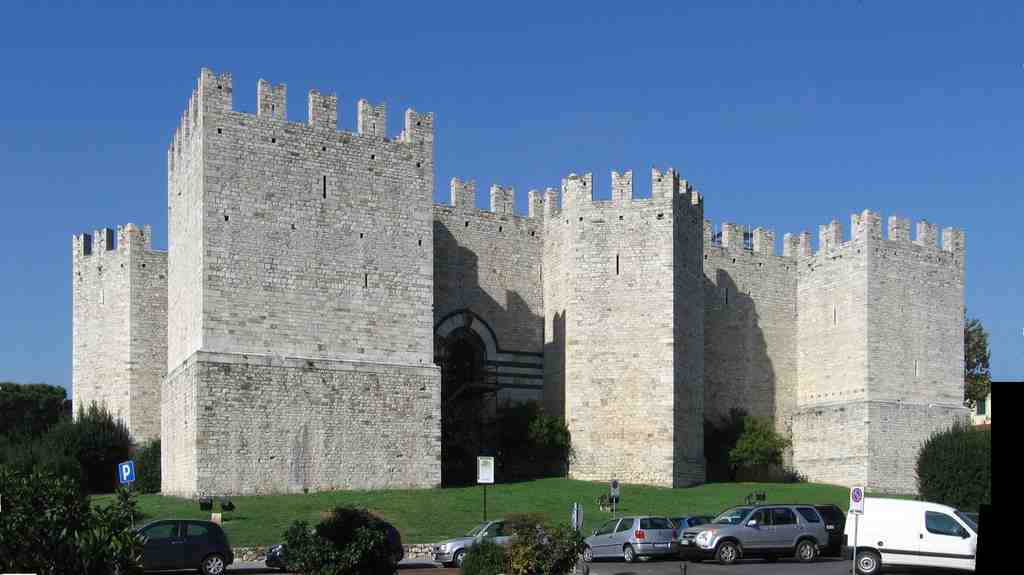
To spot the Emperor's Castle, look to your right for a broad rectangle of pale stone walls, ringed by angular battlements and striking, castle-like towers-standing tall and a bit weathered, as if it’s seen a few centuries’ worth of action (because, well, it has).
So, here we are in front of what’s officially called “Il Castello dell’Imperatore,” and honestly, it’s hard not to feel a bit like you’ve stumbled into a medieval showdown-with the walls, battlements, and a sense of a story just waiting to unfold. Back in the early 1200s, Prato was smack in the middle of a serious tug-of-war. On one side: the Holy Roman Empire, led by Frederick II of Swabia-think Game of Thrones without dragons, but plenty of real swords. On the other side? The Pope, wrestling for power in Tuscany. And right here, Frederick II ordered up this fortress, part military flex, part power move, and maybe a pinch of wishful thinking that he’d be around long enough to throw a housewarming.
The guy put his chief architect, Riccardo da Lentini, on the job around 1240. Construction kicked off, with plans for eight towers, a moat, and lots of symbolism in the design-sort of a “read between the stones” situation. Trouble was, Frederick died before things could wrap up, so the castle? Well, it never really got to host those imperial banquets. Over time, the place has been a hotel for imperial envoys, a fortress, a holding cell, even a housing complex-at one point, houses actually sat inside these walls. Talk about prime real estate with a view.
In the 1930s, the local government wiped away the homes to reveal the ancient shell we see now-just in time for the castle’s darker chapter. During World War II, these walls weren’t much protection: in 1944, it became a prison for locals arrested in an uprising, and later that year, the site of a grim mass execution when the tides of war turned. These are the stones that have seen the heights and nadirs of human ambition.
Fast-forward to today, and you’re more likely to catch an outdoor concert or a summer movie than a medieval skirmish. In fact, in 1980, Italy even put the castle on a shiny postage stamp-400 lire back then, which would be only a couple of bucks today, but undeniably priceless in local pride.
Ready for the Basilica of Santa Maria delle Carceri? Just head northwest for about 2 minutes, and I’ll meet you there.




