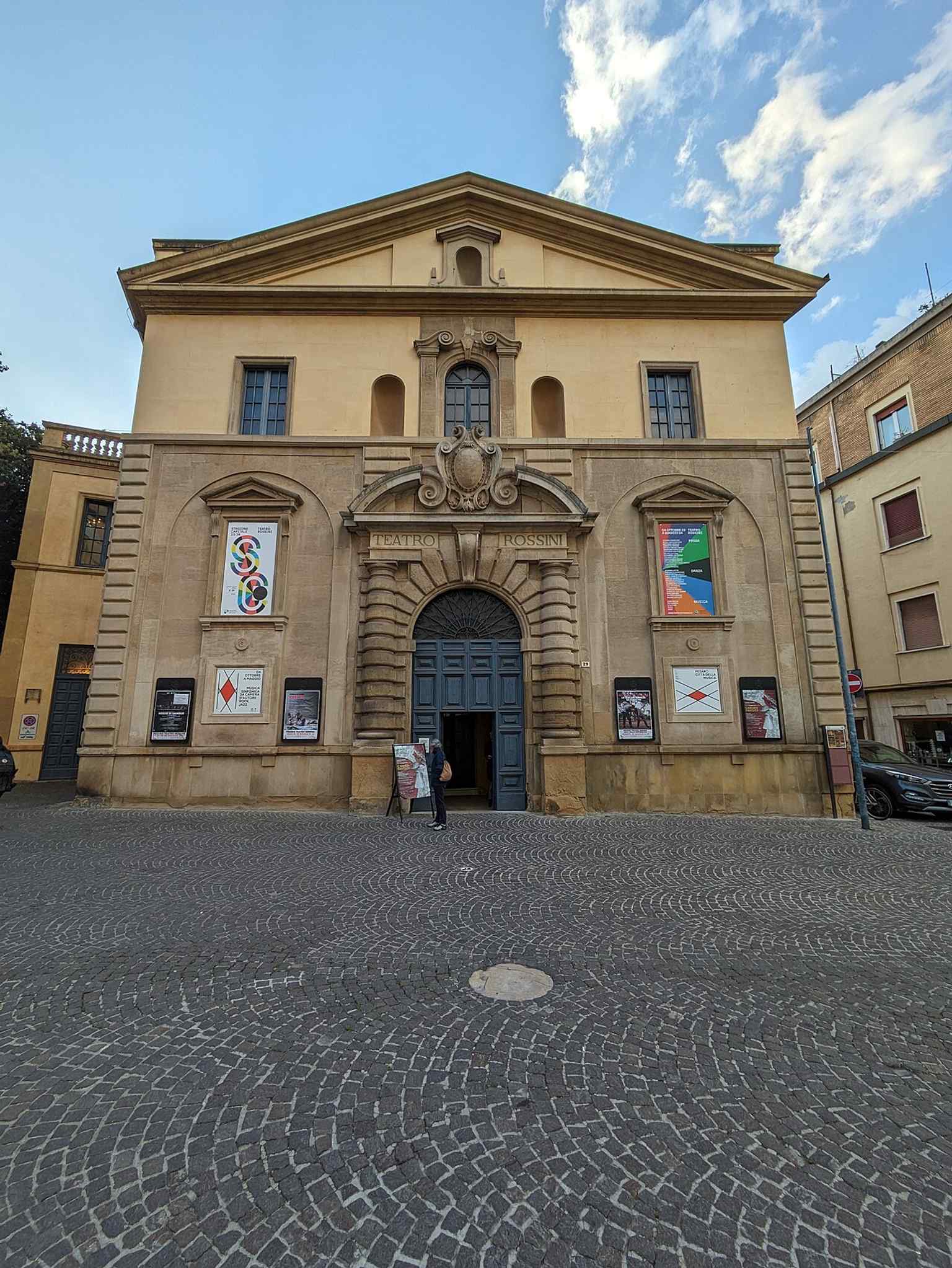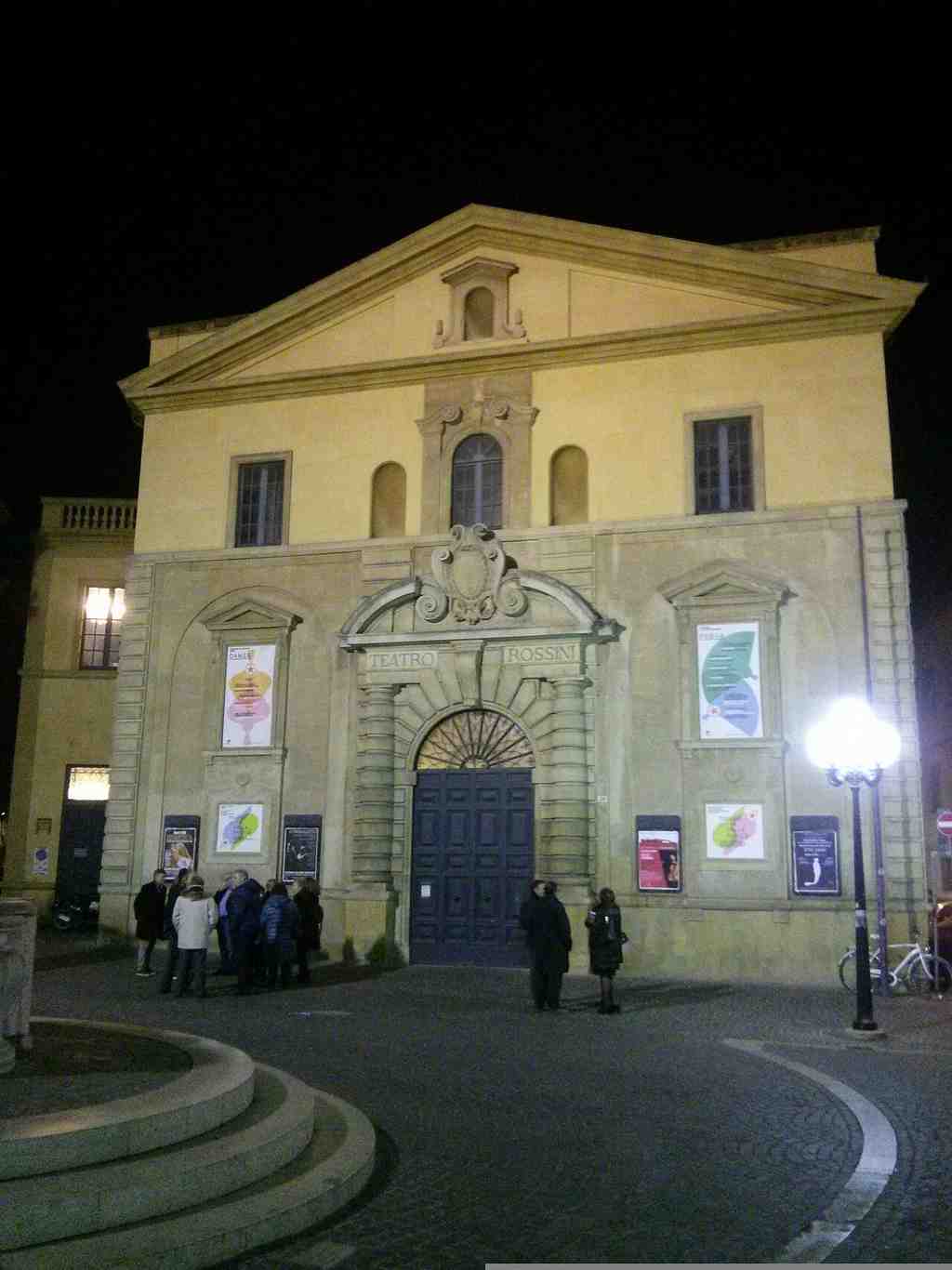
On your left, the Rossini Theatre shows itself as a dignified pale-stone façade with a broad rectangular front, a row of arched openings at street level, and Rossini’s name set proudly across the building.
This is the heart of performance in Pesaro... not only a theater, but a declaration. If Piazza del Popolo offered the city a civic stage, this building gave that public life a voice.
A theater first stood here in sixteen thirty-seven, called the Teatro del Sole. Then, in eighteen eighteen, Pesaro rebuilt it on this same site and called it the Teatro Nuovo, the New Theatre. And for its opening, on the tenth of June, the city welcomed home its own son, Gioachino Rossini. He returned to his birthplace to conduct La gazza ladra himself. That mattered deeply. This was not a distant celebrity passing through. It was a young composer coming back to the streets that formed him, and a city answering, yes... you belong to us, and we belong to your music.
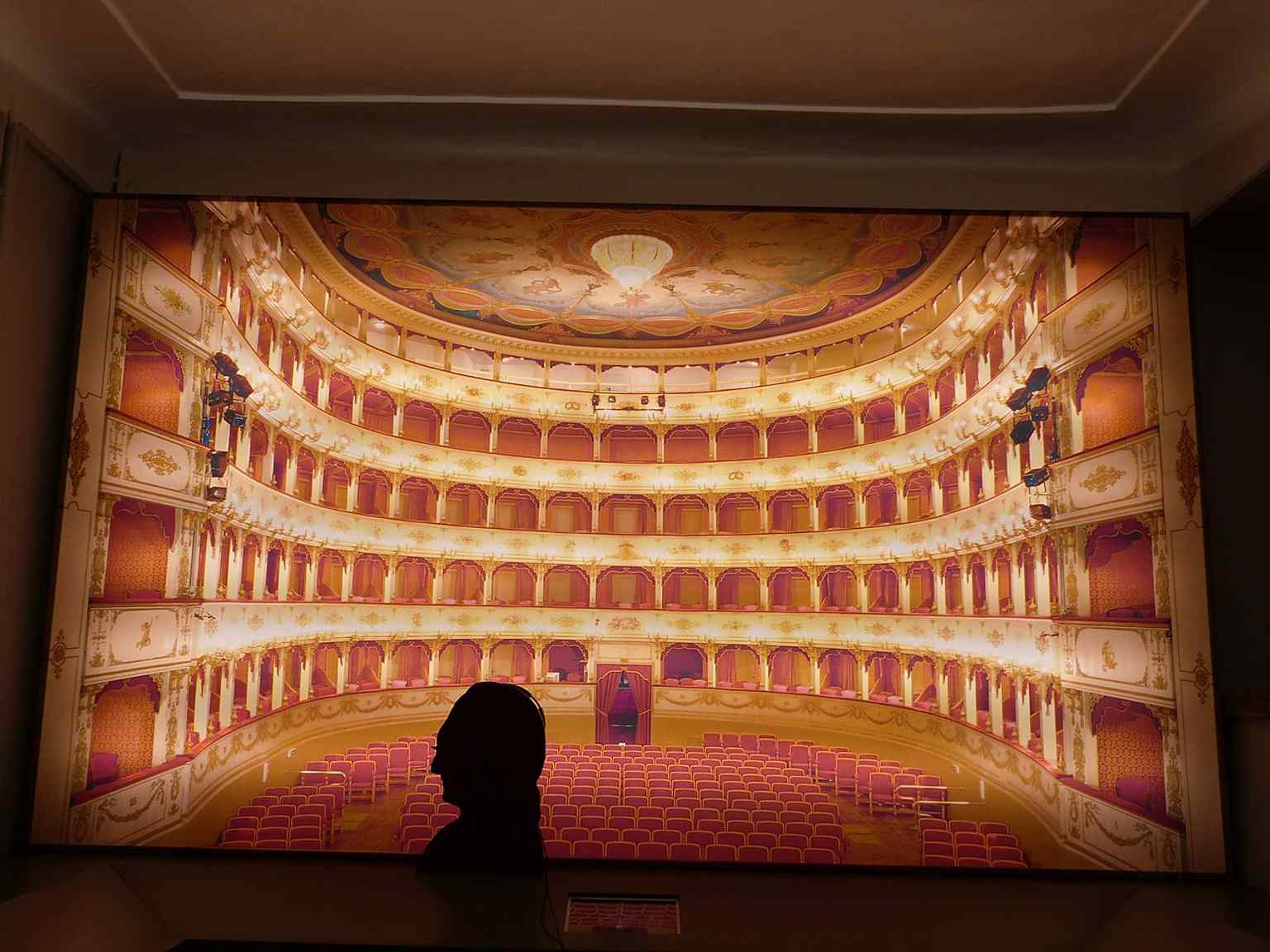
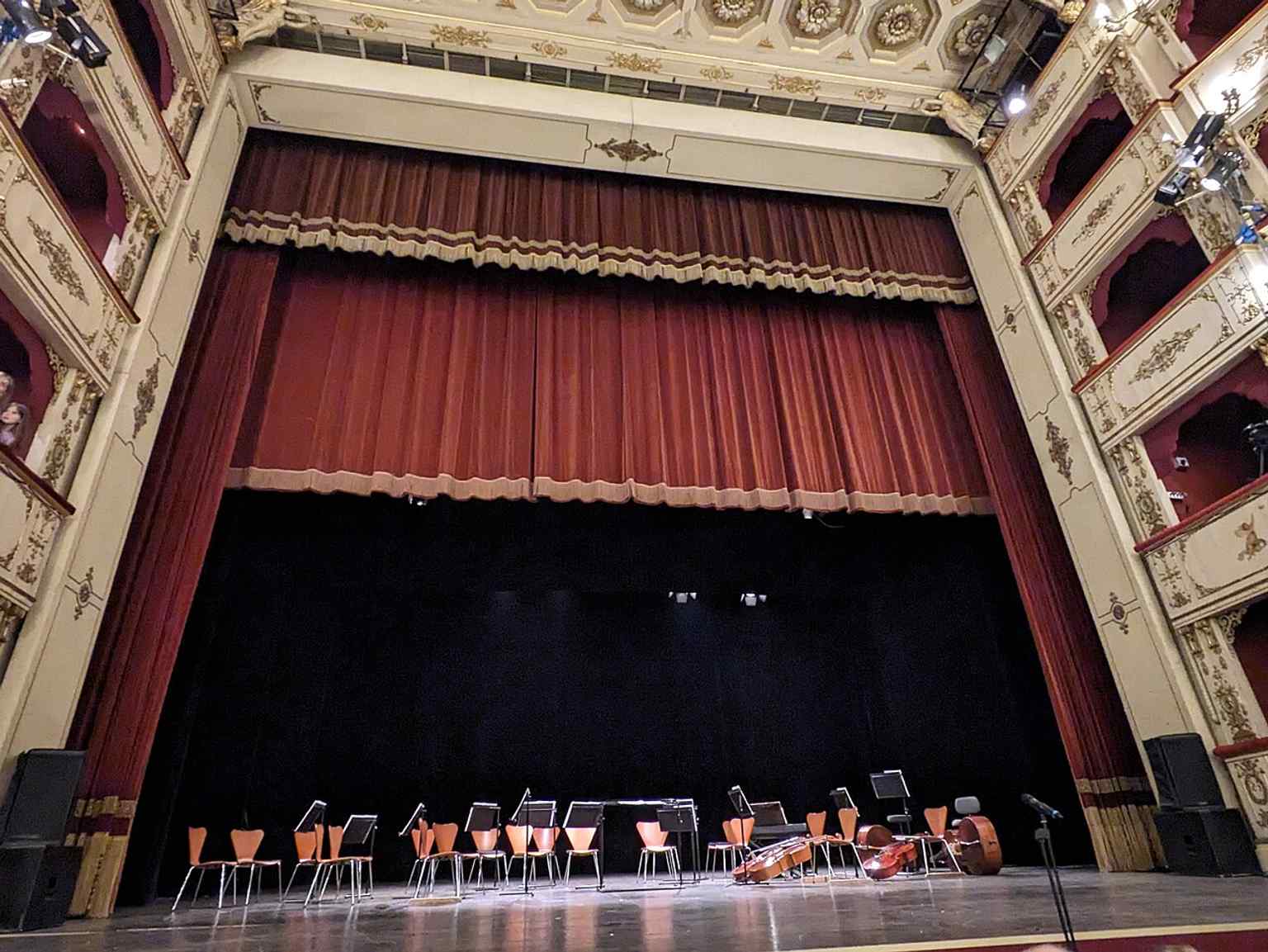
If you look at the image on your screen of the auditorium interior, you can see the classic horseshoe shape - a U-shaped hall designed to wrap the audience around the stage - with four stacked tiers of boxes and room for about eight hundred sixty people. It feels intimate and ceremonial at once, like the whole room leans inward to witness something shared.
In the mid-eighteen fifties, Pesaro gave the theater the name it still carries: Rossini. That was more than a new sign over the door. The city was deciding that this composer would stand at the center of its public identity. You visited his house earlier; here, that private beginning opens into full public scale. A birthplace tells you where someone came from. A theater named for him tells you what a community chose to remember.
And memory here did not survive easily. In October of nineteen thirty, a powerful earthquake damaged the building so badly that years of repairs followed. When the theater reopened in August of nineteen thirty-four, it did so with Guglielmo Tell, one of Rossini’s grandest works. That choice turned repair into celebration. Then came another hard silence in nineteen sixty-six, when cracks in the walls and decaying wood forced the theater to close again. For fourteen years, Pesaro lost its principal stage.
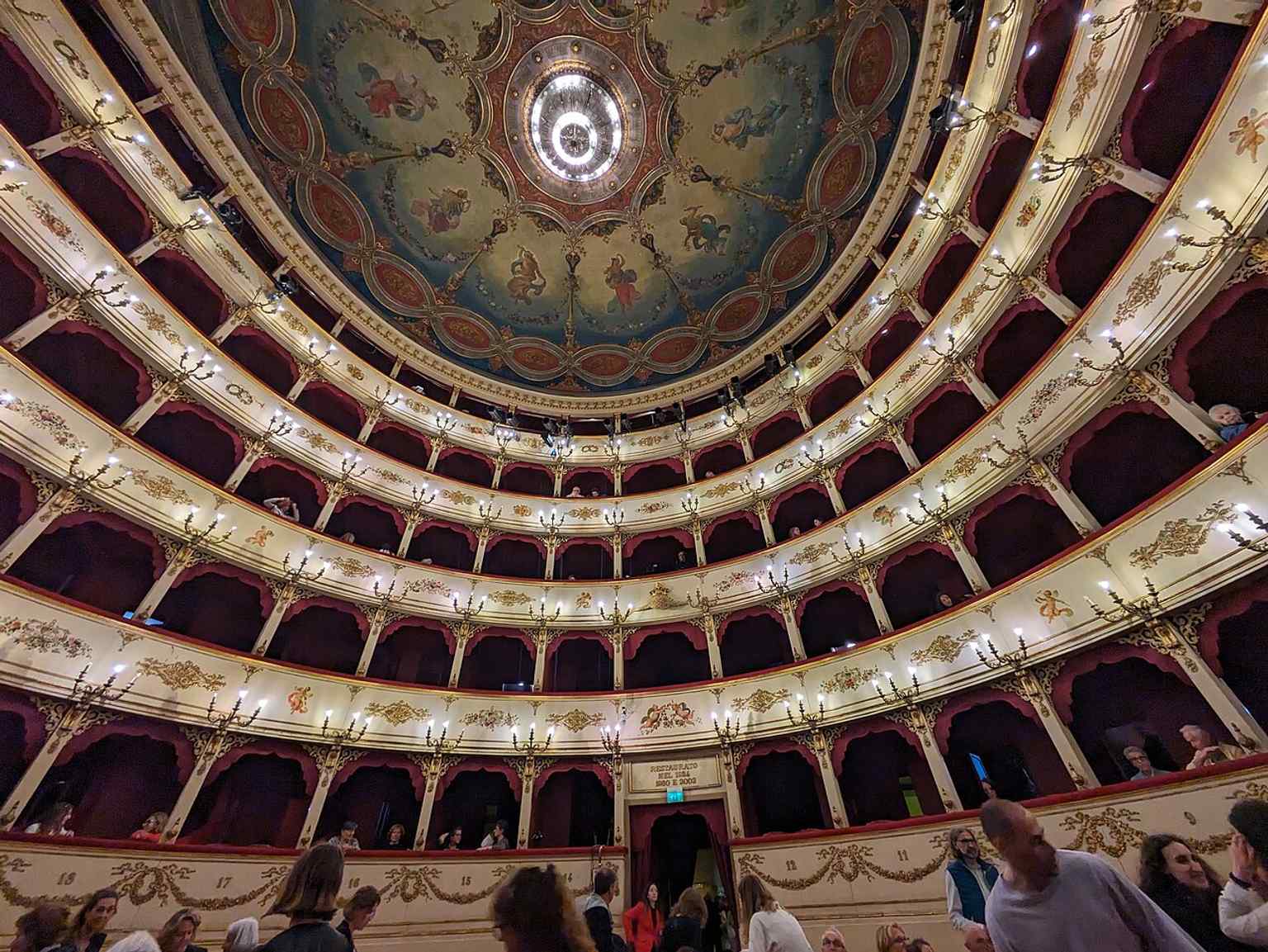
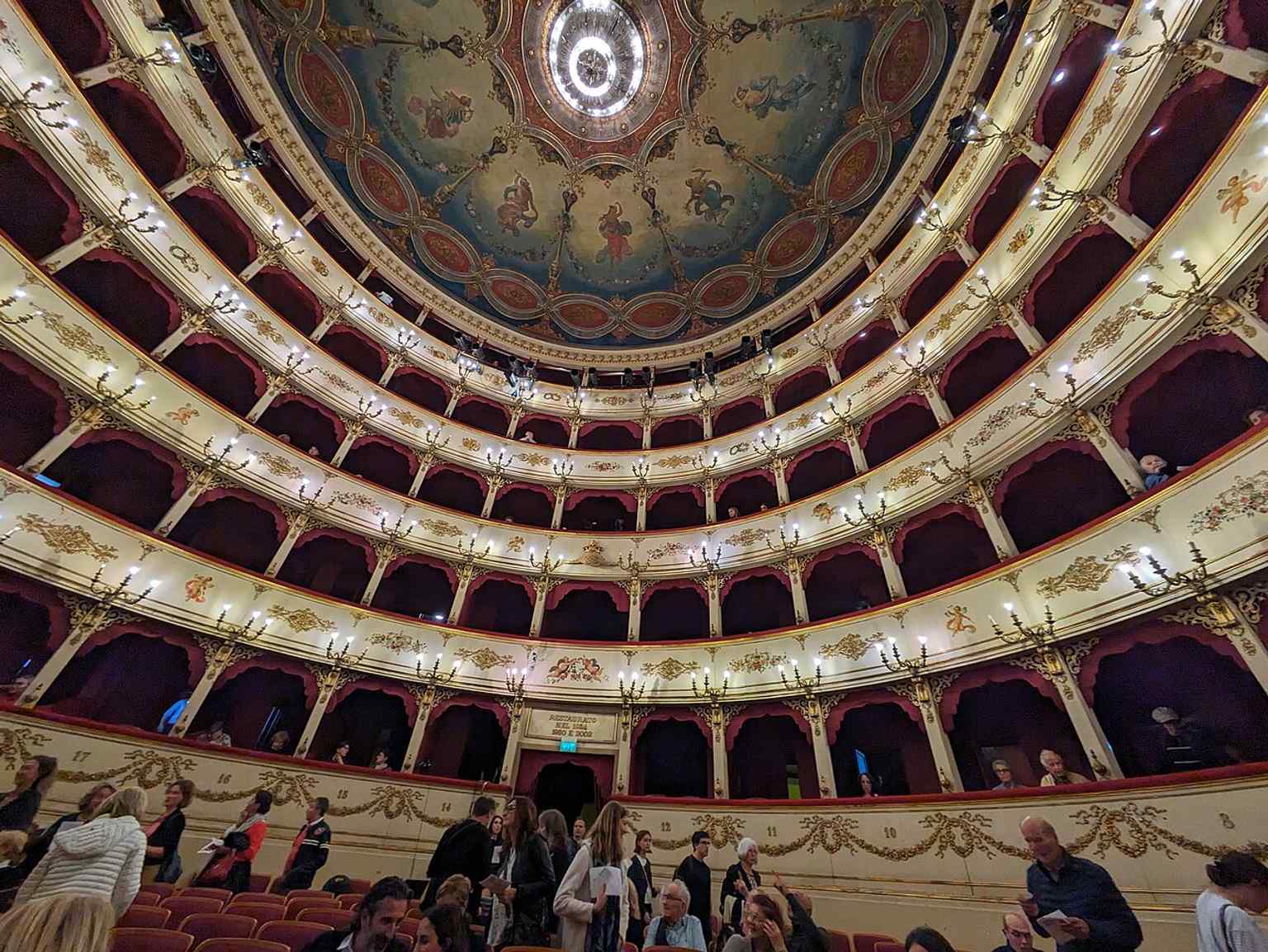
Its return, on the sixth of April, nineteen eighty, carried real courage. Guided by Gianfranco Mariotti, the city launched the Rossini Opera Festival here, not simply to put on beloved favorites, but to recover Rossini works that had nearly disappeared. Singers like Marilyn Horne, Montserrat Caballé, Ruggero Raimondi, Samuel Ramey, and Juan Diego Flórez helped turn this theater into a place opera lovers across the world began to watch closely. And the care has continued, through later restorations, right up to the work completed in twenty twenty-three. If you want another view of that continuing attention, the app has a recent image for you.
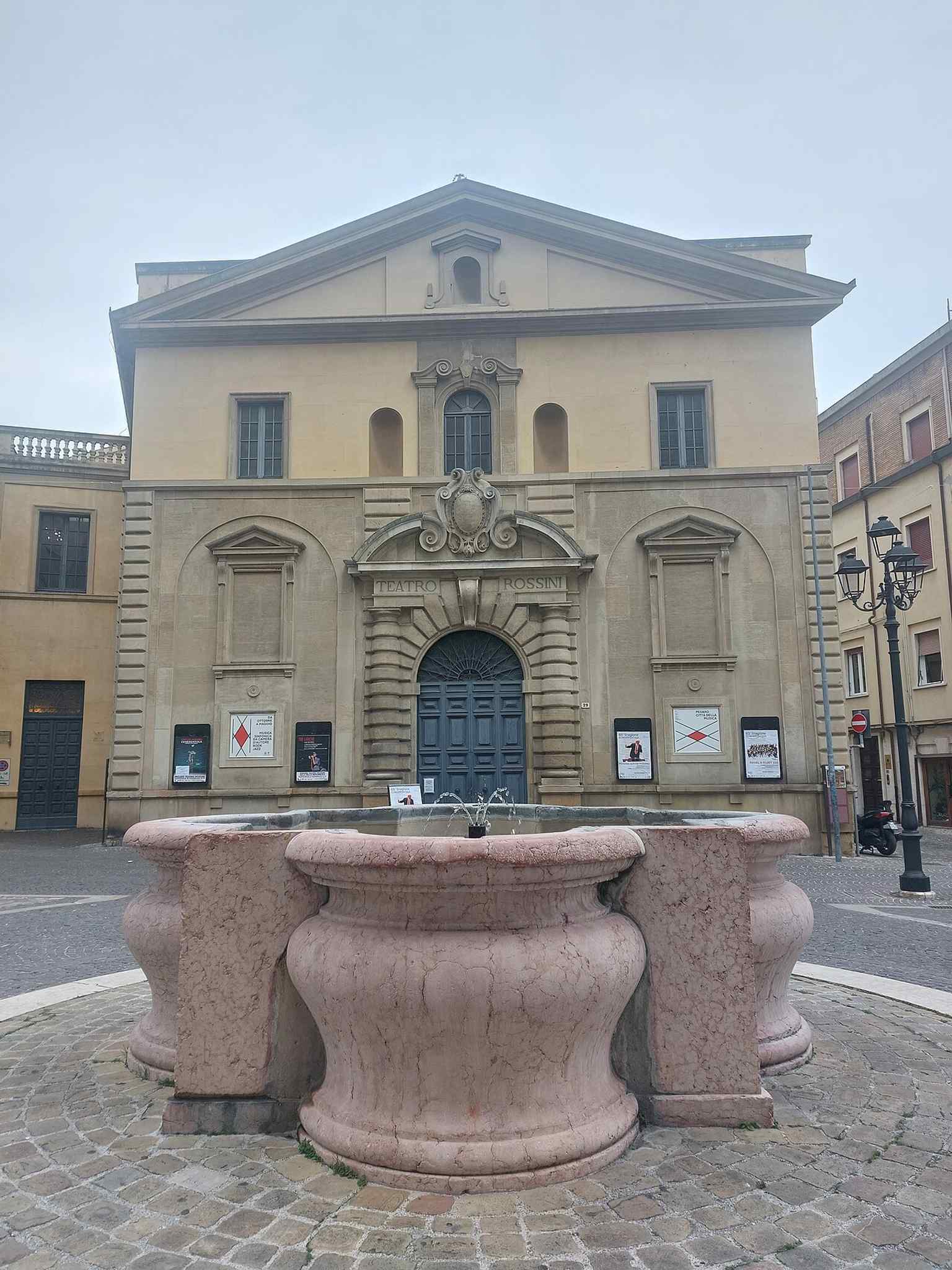
Before you leave, take a moment to look at this façade as a civic monument, not just a performance venue. Can you feel how a whole city chose to place one musician on its public face?
From here, our final walk leads inward, to the smaller Church of San Giuseppe, about six minutes away, where the story gathers itself into something quieter. If you plan to return, the theater is generally open Monday and Sunday from ten to one and five to seven thirty, closed Tuesday, and open Wednesday through Saturday from five to seven thirty.