
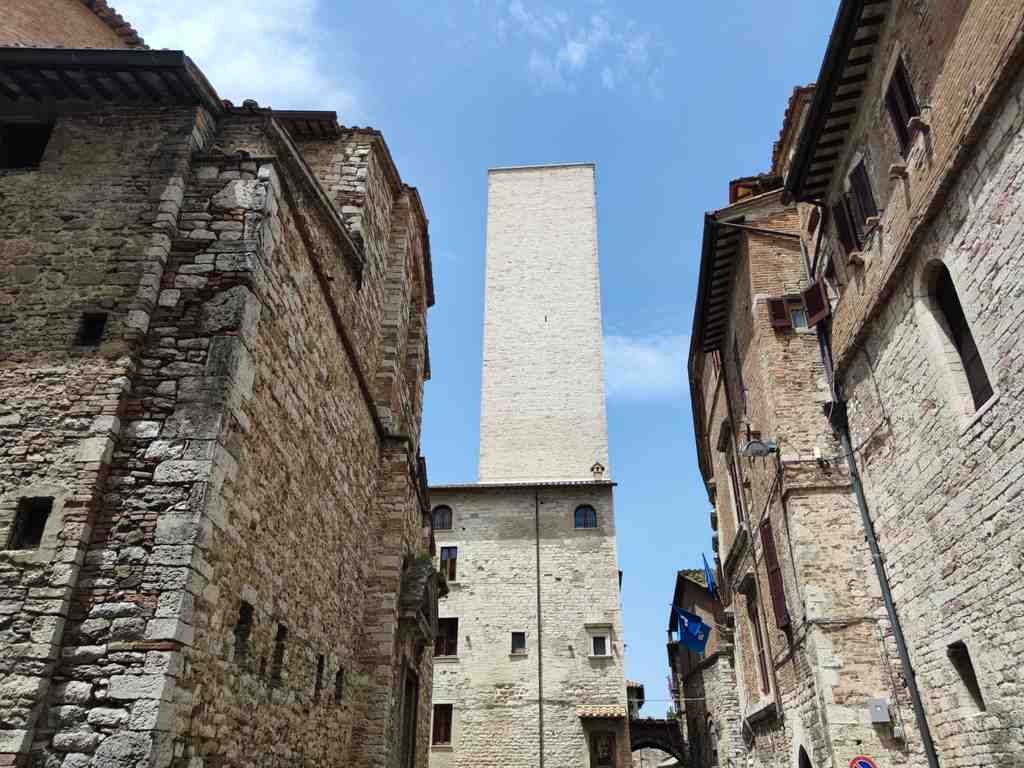
To spot the Tower of the Sciri, just look straight ahead and up-you can’t miss the pale, perfectly rectangular stone tower soaring above the medieval rooftops, standing much taller and brighter than anything around it.
Welcome to the Tower of the Sciri, the only medieval tower in Perugia to survive almost untouched-like the last tall breadstick in a room of hungry Italians. Imagine the 13th century: the bustling Porta Santa Susanna quarter, filled with clangs, shouts, and the echo of footsteps. Above it all, the tower rises-a solid 42 meters of smooth white limestone blocks that almost seem to glow, even on the cloudiest of days. Hundreds of years ago, Perugia was called “the city of towers” because these impressive stone spikes dotted the skyline, each one built by noble families to prove their power or, of course, to keep pesky rivals at bay. It’s not all about prestige though; the Oddi family, the original owners, may have had a little nostalgia. After losing their castle at Pierle on the border with Tuscany-maybe not their finest hour-they seem to have built this tower to remind themselves (and everyone else) of their lost stronghold. If you look very closely at the base, there’s a clue in stone: an old coat of arms with a rooster’s claw on top. That’s the Sciri family symbol, proudly showing off their takeover after the Oddi were booted out in a dramatic showdown with the Baglioni clan in the late 1400s. And just above it, a little tile with a beautiful Madonna and Child, Jesus gently holding a goldfinch, almost as if to say: “Even fortress-builders need a little grace."
In the tower’s later life, it swapped sword fights for silent prayers: in the 1600s, the last Sciri left and the place was handed over to the pious Suor Lucia, who opened a shelter for orphaned girls. The city called these religious women “becchette”-and the tower gained a new nickname: the Tower of the Little Beaks! Seriously, medieval Perugia had a sense of humor. Over time, other nuns moved in, adding generations of whispered secrets to its walls. Fast forward to today, and after a heroic restoration effort powered by European funding (and perhaps a few tired construction workers), this sky-piercing survivor is still standing, welcoming dreamers, historians, and the occasional lost tourist-like you-into the heart of Perugia’s wild, proud past.




