
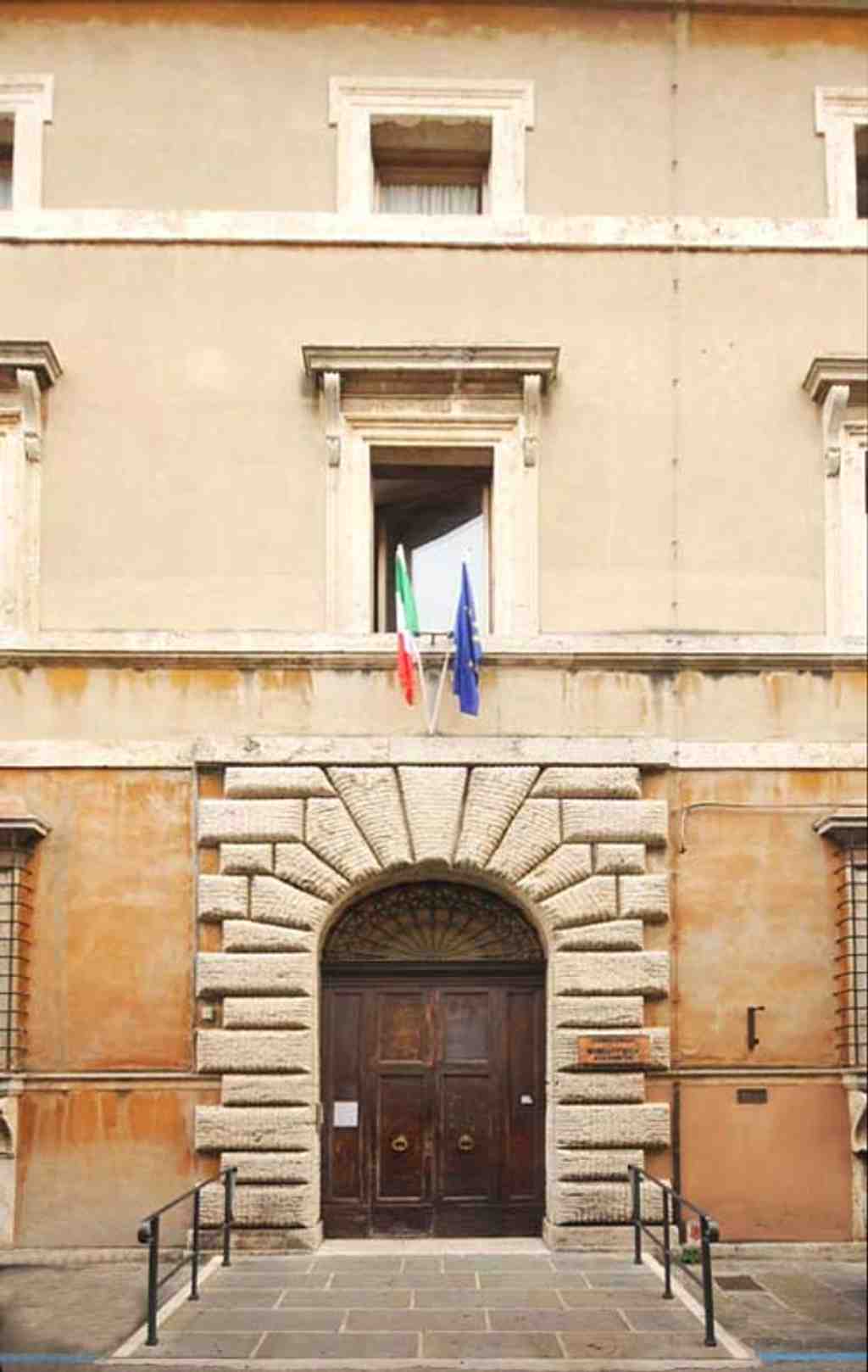
Directly ahead, you’ll spot the Augusta Library by its stately golden-ochre façade, heavy stone doorway, and two flags above the entrance-just look for the sturdy arch and the Italian and European flags waving outside.
Now, close your eyes for a moment, imagine the crunch of footsteps echoing against ancient Perugian stones, and take a deep breath-because you’re about to travel through more than 400 years of bookish adventure! Welcome to the Augusta Library, the most important library in Perugia and a real treasure chest for history lovers and aspiring detectives. Picture yourself standing here in 1582: the city is alive with the whispers of scholars, and the air, thick with the smell of old parchment and ink, feels charged with energy. Here’s where Prospero Podiani, a local humanist who adored books more than his morning coffee, decided to give away his enormous private library-about 10,000 volumes!-to the people of Perugia. Can you hear the creak of those first heavy wooden doors being opened to the public in 1623?
What makes the Augusta so wonderfully special is that from the very beginning, it was destined for everyone. Unlike most libraries around Italy, born from church collections or noble families, this one was handcrafted for citizens by a true book-lover. Over the years, the city did more than just accept Prospero’s generous gift: they protected it-even when Podiani had second thoughts! Imagine him pacing back and forth, torn between letting go or holding tight to his beloved books. The city not only convinced him, but put money and effort into creating a safe haven for knowledge, with an official, paid librarian-the original “keeper of secrets,” if you will.
As the centuries ticked by, the Augusta moved through various magnificent homes, each time growing fatter and happier with new books, manuscripts, and, of course, the odd bit of drama. There was an infamous theft-in 1885, the library’s most precious medieval manuscript was stolen during a hectic move. The shock and outrage were so great, the whole city suddenly realized just how important these books had become, and security tightened like a lion’s jaw.
Now, fast-forward to today’s setting in the grand Palazzo Conestabile della Staffa: a 17th-century palace that once hosted noble salons and scientific debates. The city bought it, built a towering seven-story archive in the back, and opened its doors as a modern landmark with grand reading rooms and light pouring through windows onto centuries-old books. There’s even an old church, Sant’Angelo della Pace, folded into the library’s wings-think of the echo of ancient bells mixing with the shuffling of papers and quiet coughs.
Inside, you’ll find 385,000 documents, nearly 3,500 handwritten manuscripts, more than 1,300 books printed before 1500, as well as an enormous stash of rare newspapers, prints, and maps. And let’s not forget the Augusta’s quirky relatives: the Bibliobus, a traveling library bus, and satellite libraries with collections all about peace, human rights, and intercultural dialogue.
But the real story is told in whispers between the pages: from handwritten civil codes, and monks’ musical scores, to secret letters scribbled by noble families and revolutionaries. The prized items? A Bible from 1471 covered in miniature paintings, the only surviving copies of ancient legal treatises, and mysterious tomes that fueled debates in Perugia’s salons and universities.
So, as you glance up at the strong lines of its portal, listen for the faint echo of turning pages-a world of knowledge, drama, and a few missing treasures waiting just beyond those doors. You’d be surprised: in Perugia, even books have their own adventures!
Curious about the book and documentary heritage, the book collections of the augusta library or the services? Don't hesitate to reach out in the chat section for additional details.




