
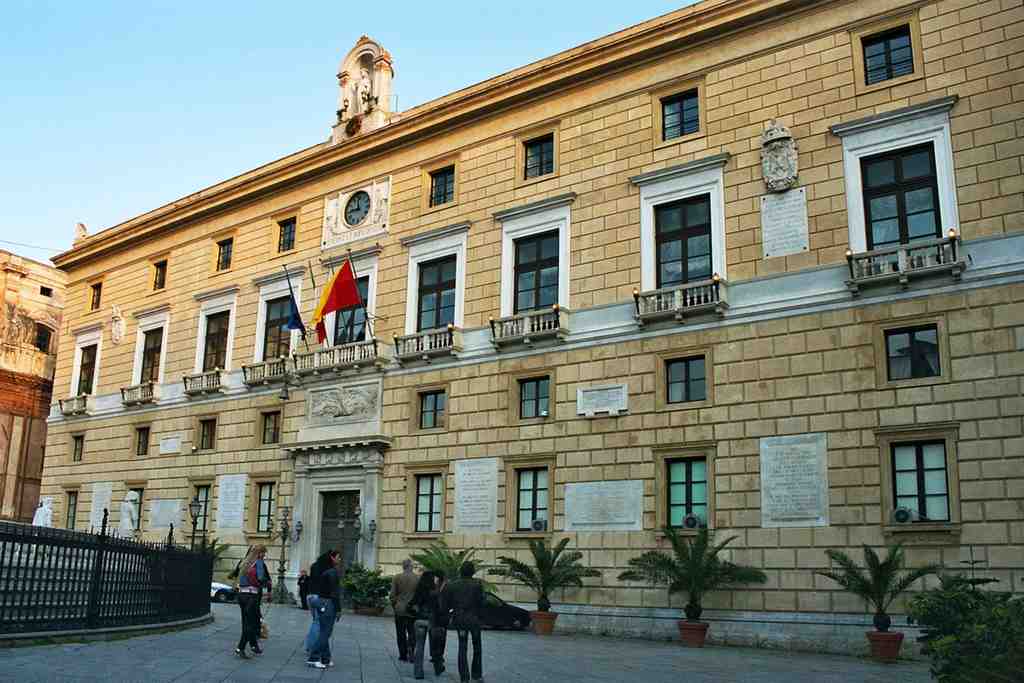
You’re facing a large, imposing rectangular building in light ochre stone, with many grand windows, small balconies on the upper floors, and two flags above a richly decorated front entrance-look straight ahead at the center of Piazza Pretoria, across from the famous Pretoria Fountain, to spot it.
Welcome to the Palazzo Pretorio, or as locals call it, the Palazzo delle Aquile-the Palace of the Eagles! Don’t worry, no talons here, just a wealth of stories waiting for you. Now imagine: it’s the 1300s, and Palermo’s leaders-more used to holding their meetings in chilly churches than cozy offices-finally demand a proper seat of power. Here comes King Frederick III of Aragon to the rescue, ordering a new headquarters for the city’s officials, who back then had grand titles like "pretore" and "bajulo." You can almost hear the clinking of their armor as they start arguing over the meeting room with the best view.
Fast-forward to the late 1400s, when the whole palace gets a glow-up thanks to Pietro Speciale, a powerful lord, with an architect named Giacomo Benfante at the helm. The style competition is fierce-everyone in Europe wants the grandest palace, and Palermo is determined not to be outdone! Over the centuries, as tastes change, the building is continually remodeled. Stubborn towers, loggias, ornate statues and, eventually, a gleaming statue of the city’s beloved patron Saint Rosalia (added in 1661) all make appearances, pouring layer upon layer of history into the walls.
By the 1500s, Palermo’s civic offices-once scattered like confetti-are finally unified here, making the palace a buzzing center of power, politics, and perhaps a bit of gossip. As the bustling city grows, so does the palace, with a showy new entrance built in 1553 and perfect for dramatic mayoral entrances. When the Spanish rule Palermo, the Senate gathers here, flanked by noble officials wielding titles like “maestro razionale” (I still don’t know what that means, but it sounds important, doesn’t it?). Come the 1700s, Emperor Charles VI bestows even loftier honors on Palermo’s municipal senate, and more marble medallions and regal memorabilia are added to the walls.
Every period leaves its mark: on one hand, the magistrates are given supreme powers by King Charles III in the Bourbon age; on the other, the building needs expansion after an earthquake shakes things up in 1823. During the upheaval of the 19th century, Garibaldi himself storms in, making the palace the nerve center of his revolutionary government during the 1860 capture of Palermo. There’s even a plaque to remember the day the hero of two worlds (as Garibaldi was known) addressed the city from the palace’s balcony-doesn’t that give you chills just imagining his voice echoing across the piazza?
By the late 1800s, the palace gets yet another makeover, this time in a trendy neo-Renaissance look, thanks to architect Damiani Almeyda. The ochre exterior you see today, with its noble rows of windows and the fearsome eagle over the door, dates to this time. On either side of the grand staircase stand two marble sphinxes-no riddles required to enter, though. Inside, your journey would take you past the Sala delle Lapidi (Hall of Inscriptions), filled with marble plaques commemorating centuries of city councils, and the dazzlingly red Sala Rossa, where the mayor still works today.
There’s something magical about this place: from secret subterranean air-raid shelters built during World War II (yes, there’s a hidden world underfoot!), to art treasures like Murano chandeliers and baroque statues. If you listen closely, you might even hear echoes of heated debates, laughter mixing with urgent voices, and the footsteps of Palermo’s rulers through a city always teetering between the ordinary and the extraordinary.
So next time you pass beneath the watchful gaze of the eagle, remember: you’re standing where centuries of drama, dreams, and downright quirky history have played out. And don’t forget to wave upward, just in case Saint Rosalia is keeping an eye out for any stray eagles-or enthusiastic visitors!


