
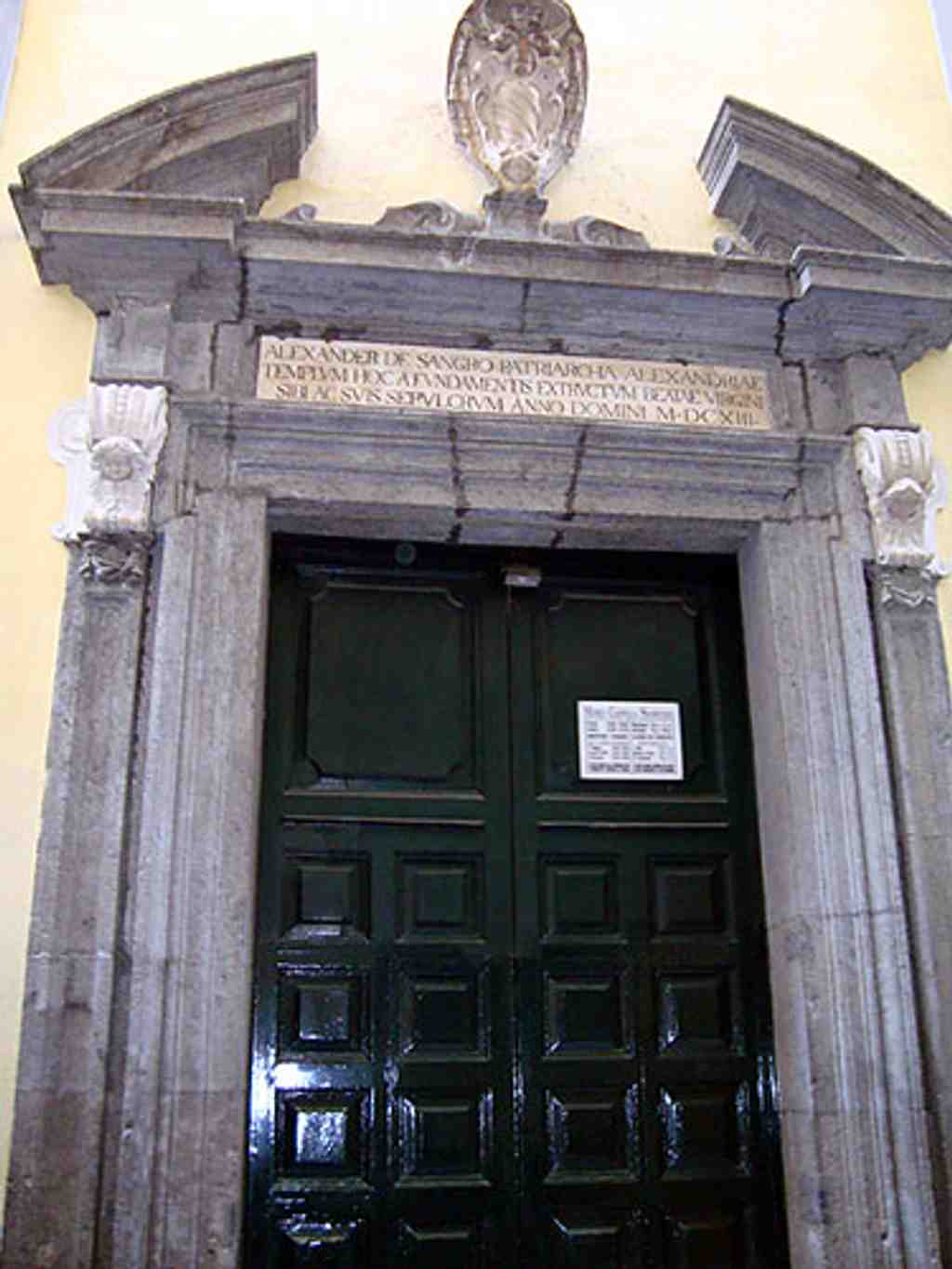
Notice the tall dark paneled double doors framed by heavy gray stone, topped with a carved Latin inscription and a broken pediment holding an oval crest. This is the Cappella Sansevero, though locals once knew it by a gentler name... the Pietatella.
Its origin is rooted in a story of miraculous justice. An innocent man, being dragged to prison past this very spot, saw a section of the garden wall collapse, revealing a hidden painting of the Pietà, the classic image of the Virgin Mary cradling Christ. He prayed to the image, promising to build a shrine if his innocence was proven. He was soon released, and true to his word, he built the small shrine that eventually became this grand family burial chapel.
But the chapel's reputation soon shifted from divine miracles to dark rumors. In the eighteenth century, the chapel was reconstructed by Raimondo di Sangro, the Prince of Sansevero. He was a brilliant, eccentric inventor, but his genius spawned a terrifying Black Legend. Whispers spread through Naples that the Prince was a sorcerer. Locals claimed he murdered seven cardinals to craft macabre chairs from their bones and skin.
Inside rests his crowning commission, the Veiled Christ. Look at your screen to see the astonishing detail of its face. The marble veil appears so delicate, so impossibly sheer, that a myth arose claiming the Prince used dark alchemy to turn real fabric into stone. In truth, the sculptor Giuseppe Sanmartino carved it all from a single block of marble... though the legend insists the Prince later blinded Sanmartino to ensure he could never create another masterpiece.
The Prince's reputation for the macabre reaches its peak in the chapel basement. Take a look at your app for a glimpse of the anatomical machines. These are human skeletons encased in a complex web of what look perfectly like human blood vessels. For centuries, people believed the Prince had injected a metallic substance into the veins of two living servants, preserving their circulatory systems in an act of murder for science. Modern analysis has proven the veins are actually crafted from beeswax, wire, and silk, but the chilling stories remain.
Here we find devotion and sinister rumor completely tangled together. A shrine born from an innocent man's prayer was transformed by a notorious prince. It shows how this city holds onto its miraculous belief while embracing its darkest shadows, carrying its cultural soul intact through endless cycles of ruin and reinvention.
Even the Prince's death is wrapped in gothic horror. The story goes that he ordered himself hacked to pieces and locked in a chest, promising to resurrect himself at a specific hour. But his family panicked and opened the chest too soon. His partially reassembled body let out one final agonizing scream before collapsing into a heap of lifeless flesh.
Step back out into the light, leaving the shadows of the Sansevero family behind. Proceed toward the intellectual hub of San Domenico Maggiore, just a two minute walk away. And if you plan to venture inside the chapel, it is open daily from nine in the morning until seven in the evening, except for Tuesdays when the doors remain closed.




