
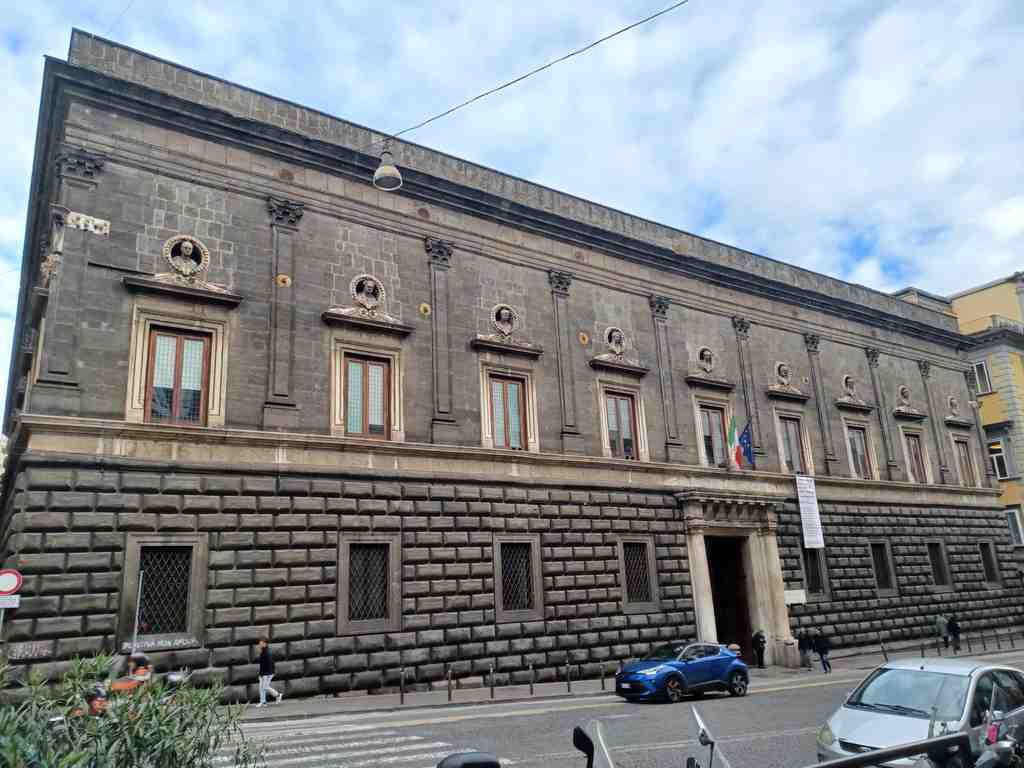
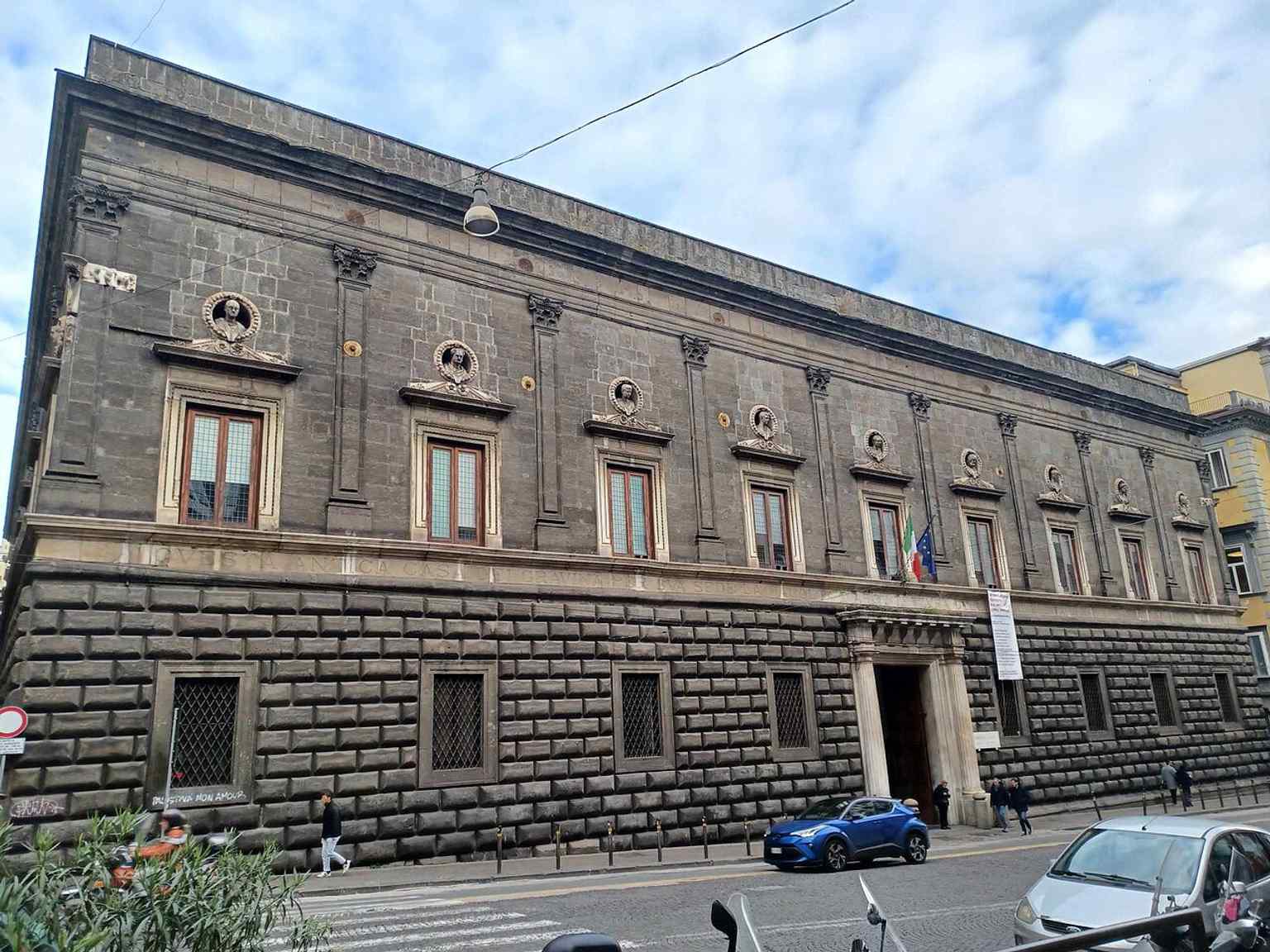
Notice the imposing, dark gray piperno stone facade on your left, characterized by its heavily textured, pillow-like rectangular blocks on the ground floor and the distinctive circular medallions containing marble busts above each window. Take a look at your screen to see a close-up of these features in the first image.
Ferdinando Orsini, the Duke of Gravina, bought this land in 1513 for just over a hundred ducats, roughly a few thousand dollars today. But keeping it proved to be a high-stakes game of survival. During the Siege of 1528, French forces tried to wrestle control of Naples from the Spanish crown. The Duke made a calculated gamble and secretly aligned himself with the French, hoping to secure even greater power if the city fell.
The French failed. The Spanish crown immediately declared the Duke a traitor and seized all his assets, including the half-built walls standing right in front of you. He avoided execution and managed to save this palace only by paying a crushing financial penalty and begging for the personal clemency of the Holy Roman Emperor.
Once his pardon was secured, the Duke poured his remaining resources into making this building a Renaissance triumph. That dark volcanic rock on the lower level is carved into what architects call cushion rustication... stone blocks cut so their faces bulge outward, mimicking the softness of pillows, yet projecting an impenetrable fortress-like strength.
Look closely at the circular medallions above the windows. These hold the busts of the Orsini family line. The originals were carved by master sculptors, but many were lost when the building was transformed into rental apartments in the nineteenth century. Purists were naturally outraged to see a princely home reduced to boarding rooms for commoners.
But the building was soon engulfed in far worse violence. In 1848, it became a headquarters for liberal rebels plotting against the Bourbon monarchy. The king's troops did not hesitate. They blasted the roof with cannons and incendiary bombs, reducing the Duke's masterpiece to a smoldering shell just to flush the rebels out.
Yet, the palace was stubborn. It was rebuilt. It later housed state telegraph workers, where a young Matilde Serao worked long, grueling hours before becoming one of Italy's greatest journalists. It endured yet another occupation during World War Two, when American military vehicles used its elegant interior courtyard as a parking lot, destroying a priceless seventeenth-century fountain in the process.
Today, it is home to the city's architecture students. They study the very walls that survived so much political fire and reinvention.
Let us keep moving to Santa Maria La Nova, where explosive accidents changed the landscape forever. It is a brief three-minute walk away.





