
You are looking at a massive corner building defined by its striking orange and grey plastered walls, punctuated by wrought-iron balconies and an ornate marble plaque curving around the masonry edge. Before the stones were laid, these grounds were fertile orchards with names that sounded like poetry. One plot was called Biancomangiare, after a popular sweet white pudding, and another Carogioiello, meaning dear jewel.
In the sixteen fifties, this serene land became a weapon of architecture. Just years earlier, the violent Masaniello revolt had torn through Naples. The aristocratic Carafa family was a primary target of the mob. Their brother was murdered in the uprising, and their former family seat was looted and burned. Buying this immense property from a wealthy Flemish banker in sixteen fifty-six was their way of fighting back. The Carafa family's aggressive reclamation of this site stands as a perfect mirror for Naples itself. This is a city defined by an endless cycle of destruction and rebirth, where ruin is never the end, but merely the brutal foundation for the next spectacular era.
They hired Cosimo Fanzago, a master architect, to design a theatrical declaration of their dominance. Check your screen to see the original grand portal he created. He built it using marble and piperno, a dark, porous volcanic rock unique to Neapolitan construction. Fanzago knew the ground beneath Naples was volatile, so he drove the foundations seventeen meters deep into the earth. This ensured their newfound opulence would survive the seismic tremors that routinely fractured the region.
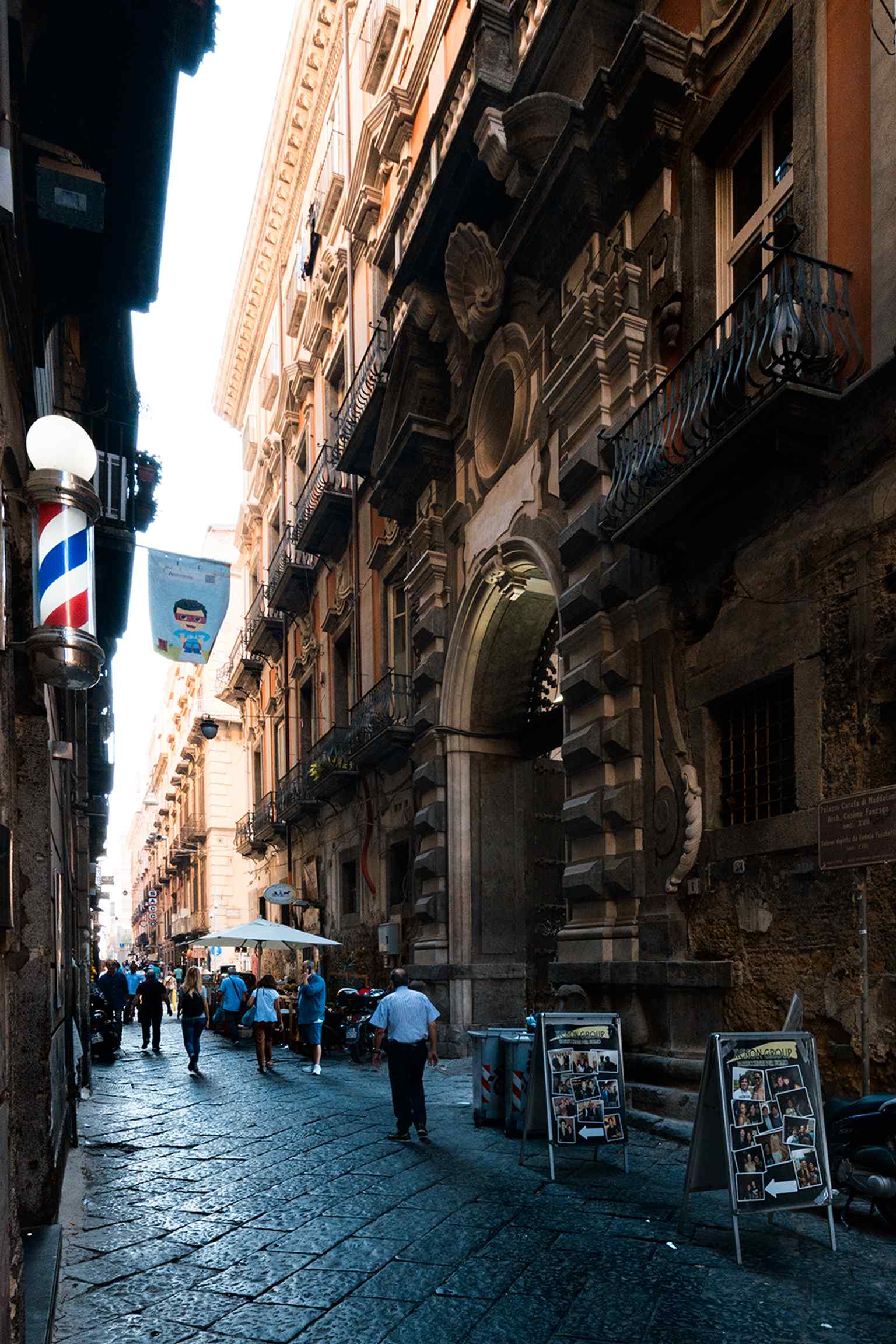
There is a profound tension woven into these heavy walls. Behind these polished baroque facades and elevated balconies adorned with stucco eagles, the nobility sought to isolate themselves from the raw, unpredictable violence of the city outside. Yet the intertwined dark lore and faith of the Neapolitan streets always found a way to seep through the thick wooden doors, proving that no amount of aristocratic wealth could truly wall off the chaos of human nature.
Nowhere was this clearer than in the magnificent Sala Maddaloni inside. It was a vast, frescoed ballroom dedicated to music. The legendary composer Giovanni Battista Pergolesi spent time here, creating sacred music funded by the family's religious devotion. But the palace also harbored deep scandals. When the infamous adventurer Giacomo Casanova visited in seventeen sixty-one, he attempted to seduce the Duke's young, beautiful ward, Leonilda. The pursuit abruptly ended when Casanova met her mother, a former lover of his, and realized the girl he was trying to romance was his own daughter.
The family's immense wealth eventually evaporated. By eighteen oh six, the last Duke was entirely consumed by debt. The palace was auctioned off in a humiliating public spectacle, ultimately carved up into confusing, isolated islands by rival princely families. Today, it remains a fractured giant, with beautifully restored exteriors hiding abandoned, forgotten ballrooms within.
As we leave the secular ambitions of the nobility behind, we will find that the religious sanctuaries of Naples hold their own intensely dramatic narratives. Our next stop is Sant'Anna dei Lombardi, just a three-minute walk away.





