
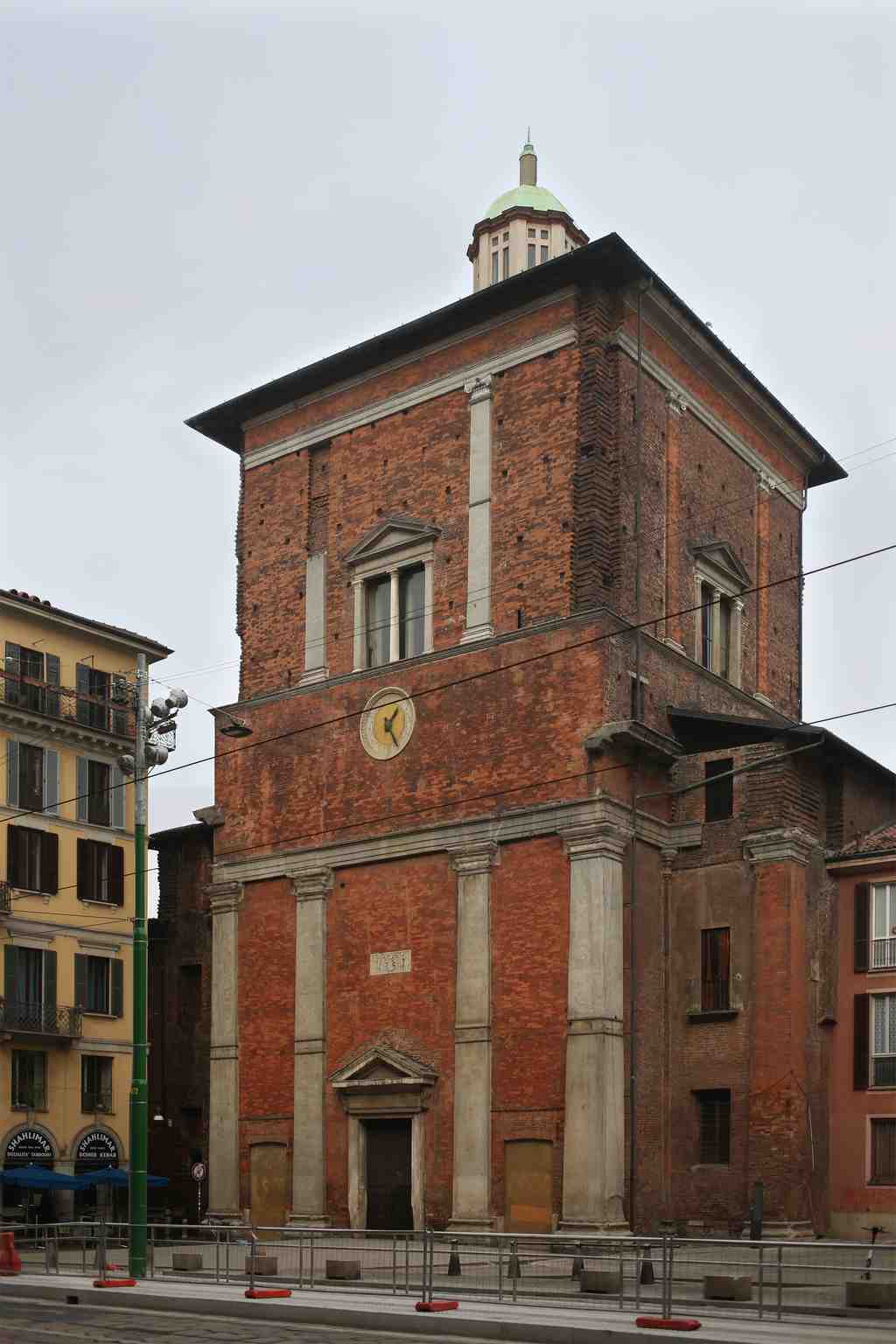
Look ahead and you’ll spot a powerful block of red brick with pale columns and a dusty old clock, topped with a curious little octagonal lantern peeking above the roof-this is the Basilica of San Nazaro in Brolo.
Now, let’s imagine Milan in the year 386. Instead of the rumble of trams, you’d be hearing sandals slap against ancient Roman stone, while Bishop Ambrose, one of Milan’s most legendary figures, is deep in thought about two big topics: how to celebrate the resurrection of Jesus… and perhaps, how to stop his toga from getting caught in the wind. Back then, Ambrose decided to build a church so bold, so new, that to enter it was to walk straight into a symbol-quite literally-of faith, laid out in the shape of a cross. This church, the Basilica of San Nazaro in Brolo, became the oldest “Latin cross” church in Western art, its shape chosen to honor the resurrection.
When the walls first rose, Milan was the proud capital of the Western Roman Empire. The basilica stood beyond the protective city walls, right alongside the Via Porticata, a grand, column-lined road marching all the way to ancient Rome. Out there, travelers would spot a row of columns-one of which survives, built right into the basilica-with four more standing out back, like ancient sentinels, quietly reminiscing about Roman days gone by.
But Milan is a city that loves drama, and so did this basilica. In 1075, a massive fire swept through and left these stones charred and shaken. Like a phoenix in Romanesque style (well, with a lot more scaffolding and fewer feathers), the church was rebuilt with solid vaults, a mighty octagonal dome, and sturdy bell tower. And as all good Milanese buildings seem to do, it changed with the fashions: Renaissance nobles came along, slapping a brand-new hat on the church-the grand Mausoleum Trivulzio designed by Bramantino-in the 1500s. If you’re wondering why the original church seems a little shy, well, that mausoleum covers its original face like an elaborate Venetian mask. It’s a marriage of Renaissance elegance and old Roman stone, and if these walls had in-laws, they’d probably be arguing about who gets credit for the architecture.
The name “Brolo”? That’s a leftover from Milan’s medieval municipal politics: the basilica took its name from the Broletto Vecchio, the city’s original seat of government, which once sprawled just beside it, before palace politics moved on elsewhere.
Inside, you’d find treasure upon treasure: the right transept holds a vivid scene of the Crucifixion, carved by Bonino da Campione in the 14th century, and just opposite, Bernardino Lanino’s Renaissance vision of the Last Supper. A staircase takes you to the beautiful Chapel of Saint Catherine, glowing with Renaissance art and a ceiling dome inspired by Brunelleschi and Bramante-two architects who never met a dome they didn’t like.
The basilica is layered with secrets-walk the cloister-like shadows and you’re tracing the footsteps of Roman funerals, medieval bishops, kneeling emperors, and all the saints whose relics Ambrose tucked beneath the altar. In the ground under the basilica, archaeologists have uncovered ancient stones and mosaics dating back to those earliest days. There are even glimpses of frescoes from the 7th and 8th centuries-tiny time machines painted right onto the walls.
You’re standing in front of nearly 1700 years of religion, politics, art, and even a touch of Renaissance family drama. Don’t forget to ponder the old clock and those somber bricks-they’ve seen more chapters of Milanese mischief and miracle than you could fit in a dozen guidebooks. And if you hear the church organs practicing, that’s just the next echo of a building that’s been performing history for centuries.


