
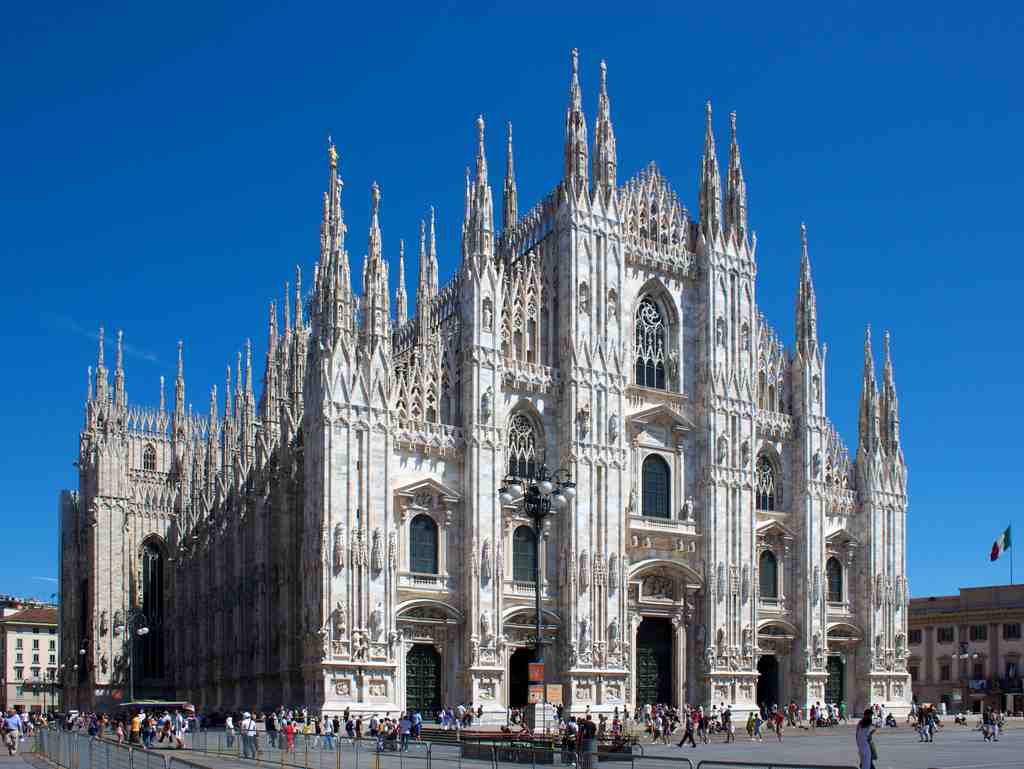
The construction of the Milan Cathedral spanned over six centuries, beginning in 1386 and finally completing all the intricate details in 1965. Its immense size makes it the largest church in the Italian Republic, only second to St. Peter's Basilica in Vatican City. In fact, it's the third largest cathedral in the world.
The location of the cathedral is quite significant as well. The streets of Milan radiate from or encircle the Duomo, which indicates its central position in Roman Mediolanum, where the public basilica faced the forum. The first cathedral, dedicated to St. Thecla, was completed by 355, and a baptistery dating back to 335 can still be visited today beneath the cathedral.
In 1075, a fire damaged the existing cathedral and basilica, prompting their reconstruction into the magnificent Duomo we see today. Archbishop Antonio da Saluzzo initiated the construction in 1386, coinciding with the rise to power of his cousin, Gian Galeazzo Visconti. The cathedral was meant to reward and uplift the noble and working classes who had suffered under the previous Visconti ruler.
The enthusiasm for this grand project spread among the population, and large donations were collected to support its construction. The Fabbrica del Duomo, a management organization comprising 300 employees led by chief engineer Simone da Orsenigo, oversaw the regulation and progress of the work. Architects from France, such as Nicolas de Bonaventure and Jean Mignot, were brought in to contribute their expertise in Gothic architecture.
The use of marble from the Candoglia quarry, generously granted by Gian Galeazzo, added to the grandeur of the cathedral. However, tensions arose between the Visconti family and the management of the factory overseeing the construction. Gian Galeazzo wanted to transform the cathedral into the mausoleum of the Visconti dynasty, which met strong opposition from both the factory and the people of Milan, who wanted to emphasize their autonomy.
Despite these challenges, the construction of the Milan Cathedral persevered, and today we can witness its stunning beauty and architectural brilliance. So, let's take a closer look at this awe-inspiring masterpiece and continue our journey through Milan's rich history and culture!




