
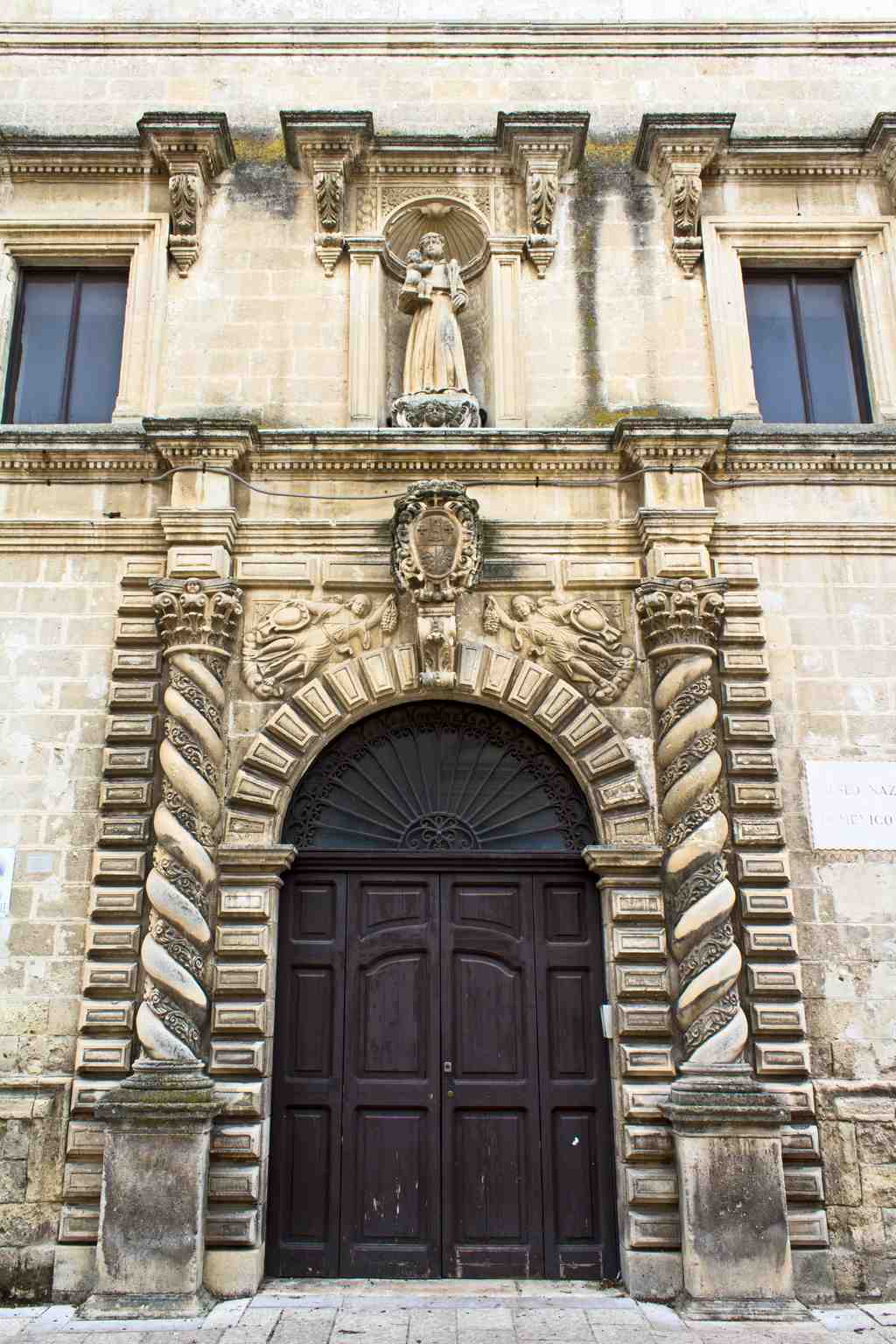
The Domenico Ridola National Archaeological Museum stands before you with its impressive stone facade, twisted columns, and a statue above the dark wooden entrance-just look for that elegant doorway wrapped by spiral-carved pillars.
Now, imagine you’re standing at the doorstep of centuries of mystery and discovery. Behind these solid doors, history isn’t just hiding in the shadows-it’s on glorious display, thanks to Domenico Ridola, a local doctor with a serious archaeology obsession. This place was once a convent dedicated to Santa Chiara, but in 1911, it transformed into Basilicata’s oldest museum, all because Ridola donated his personal treasure trove of ancient artifacts to the state. I bet Luca, the security guard, still hopes each visitor is the reincarnation of Ridola himself-always on the lookout for another lost coin or prehistoric spearhead.
The museum holds five main rooms crammed with objects found right here in Matera’s hills and valleys. The first room alone could make Indiana Jones jealous: think stone-tipped arrows, javelins, and axes, many from mysterious caves like the Grotta dei Pipistrelli-or as I call it, “Bat Cave,” minus the caped crusader. Here’s a surprise: in the Neolithic era, people were finally settling down, trading in wandering for agriculture, and making quirky ceramics with brown paint and crazy geometric patterns. Picture it-pots covered in zigzags and triangles, fresh from lively Stone Age pottery parties.
But wait, the plot thickens. The next rooms tell stories from the valleys of the Basento and Bradano rivers, spotlighting items from ancient villages like Pisticci and Montescaglioso. You’ll catch sight of mysterious Roman necropolis finds, warrior tombs from the Iron Age, and red-figured vases painted by the “Painter of Pisticci”-who was probably much less grumpy than his nickname suggests. There are prized funeral treasures, glittering coins, and even delicate bronze statues that have stubbornly survived since the 4th century BC.
One particularly powerful room is devoted to finds from Matera itself. Here, you’ll sense ancient lives captured in burial goods, Roman bronzes, and-if you peer closely enough-perhaps even a tiny Hercules with his club at the ready. Nearby, treasures from Timmari flash with the armor of forgotten warriors, and enormous red vases demand attention like the divas of ancient dinner parties.
Finally, there’s the Ridola Room: imagine old letters, yellowed manuscripts, and mementos from Ridola’s lifelong hunt for secrets buried in Matera’s soil. After Ridola died in 1932, other heroes like Eleonora Bracco picked up the torch, ensuring the quest for ancient truths never faded. All these memories, mysteries, and marvels-right here, in the heart of Matera.




