
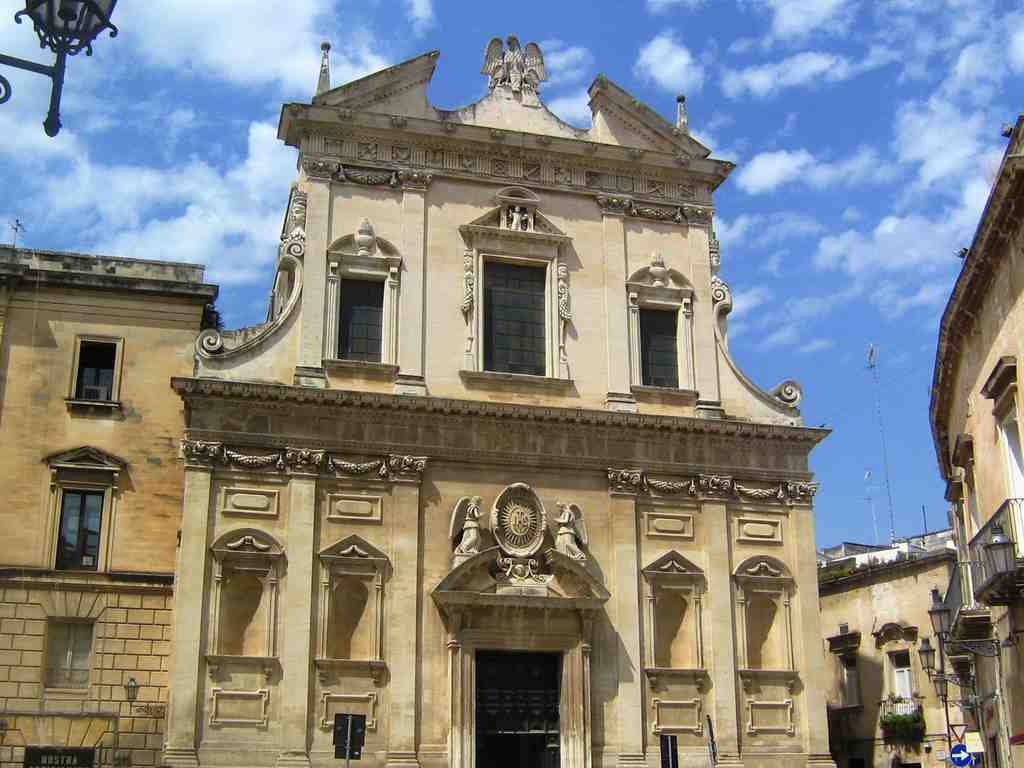
Right in front of you stands a grand, creamy stone church with a two-tiered, symmetrical façade, elaborate scrolls on each side, and a broken pediment over the central door-just look for the powerful pelican sculpture perched right at the very top!
Welcome to the Church of the Gesù, sometimes called the Church of the Madonna del Buon Consiglio. Imagine yourself here in the year 1575. The narrow streets hum with rumors: the Jesuits have arrived in Lecce! These newcomers, led by the soon-to-be saint Bernardino Realino, brought with them an energy and ambition that would reshape the city. As you stand before this impressive façade, try to picture a much smaller church once standing here-the old San Niccolò dei Greci, beloved by local Greek-Orthodox worshippers. It was swept away to make room for something much bigger, inspired by their “mother” church in Rome. And as bold as the project was, work began almost immediately, though with a few hiccups: the church opened for worship in just two years, but the construction would stretch on for decades-a classic case of church-while-you-wait!
Now, squint a bit and admire the building’s clean, balanced designs. The two levels are tied together by sinuous stone “volutes”-those spiral shapes at the sides-tipping their hats to grandeur but staying graceful. Look above the main portal, where the emblem of the Jesuit order sits flanked by two adoring angels, as though they’re keeping a secret. Up higher, a central window is squeezed between stone curls and crowned by a niche holding a statue of the infant Jesus. But my favorite touch? Way up top, the pelican with its chest pierced, feeding its chicks. It’s a bit dramatic, but it’s meant to symbolize Jesus’ self-sacrifice-though imagine the stonemason’s face when he realized what he had to sculpt!
Step inside-if you can, in your mind at least. You’d find a single, wide nave, crossed by short transepts and ringed by four chapels, each carving out silent corners heavy with over three hundred years of prayers. Above, a coffered wooden ceiling bursts with paintings celebrating the triumphs of the Jesuits, painted by Giuseppe da Brindisi. Walk down the right side and you’d pass altars dedicated to stories as shimmering as their golden candles: the Assumption, the Adoration of the Magi, and more. One painting features not just the Virgin and Child but also three Jesuit superheroes-Ignatius of Loyola, Stanislaus Kostka, and Aloysius Gonzaga-crafted by Serafino Elmo in 1752. And to your left, treasures continue, including statues, paintings of saints, and a swirling echo of Lecce’s long artistic history.
In the heart of the church, in a beautifully carved choir, you can imagine monks and priests singing through the centuries-first the Jesuits, later replaced by the Benedictines. And tucked within the chapels and beneath the altar, saints rest, martyrs are remembered, and the art of Lecce’s most talented minds still tells stories to anyone willing to look closer. Now, go ahead-give that stone pelican a nod of respect before we move on!




