
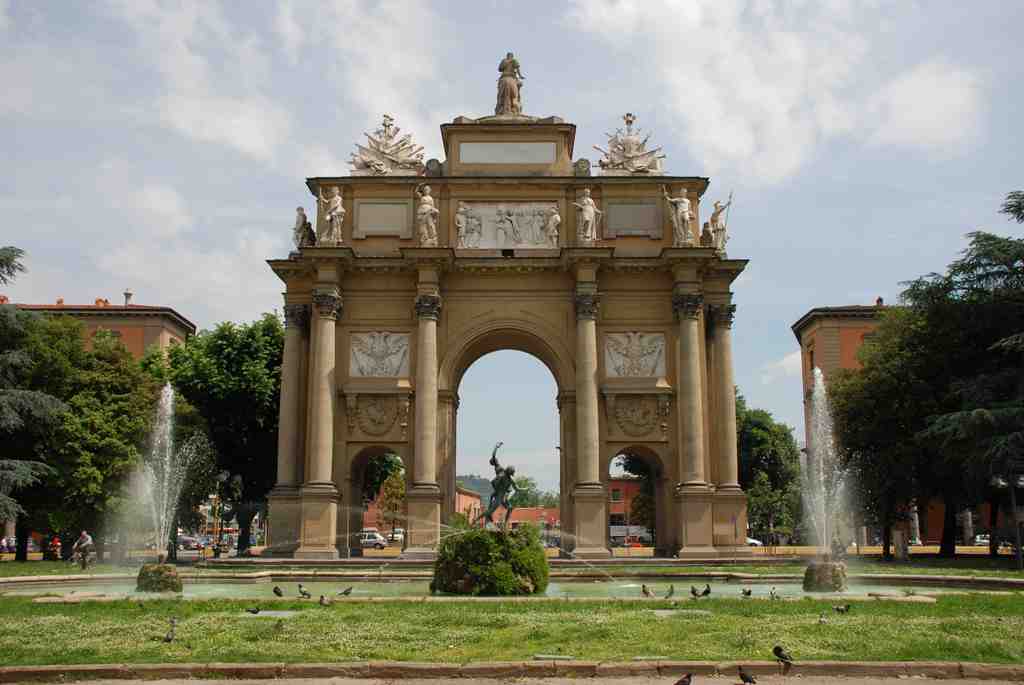
If you’re searching for the Triumphal Arch of the Lorraine, just look straight ahead for a grand stone arch with three passageways and rows of statues and columns, rising from the middle of a park surrounded by elegant porticoed buildings-pretty hard to miss with fountains and sculptures greeting you right out front!
Take a moment where you stand, surrounded by the gentle spray from the fountains and the rustling leaves -because you’ve just arrived at one of Florence’s most dramatic stages of history. Imagine it’s the chilly January of 1739, and Florence is buzzing with anticipation. Banners flutter, tapestries hang from every balcony along Via San Gallo, and the air is thick with the sound of horses and marching feet. Out from the north rides Francis Stephen, soon to be Holy Roman Emperor, making his grand entrance under this very arch-his new dynasty, the Habsburg-Lorraînes, about to begin its chapter in Florence.
The arch itself was designed by a newly arrived Frenchman, Jean Nicolas Jadot, eager to show off with dramatic flair. Its ten soaring Corinthian columns, reliefs of imperial flags and weapons, and layers of local statuary all proclaim a grand entrance fit for an emperor. But the story doesn’t stay so triumphant. Not long after, Francis Stephen hightailed it to Vienna to grab the emperor’s crown, leaving Florence behind like a half-finished love song. Years later, his son Leopold sweeps in with his Spanish wife-one of those rare moments when Tuscany gets a dose of Viennese and Spanish drama all at once!
If you look up, you’ll see an equestrian statue said to be Francis Stephen himself, caught eternally marching out-or maybe, sneaking away from all the tense family reunions? Around him, a cast of almost besieged mythological figures seem to be holding the fort, their stony faces watching traffic swirl below as if guarding the last bit of imperial dignity in a world that’s rushed right past them. In 1859, when Duke Leopold II fled through this very arch on his way to exile, the crowd even called him “Baby Leopold”-surely, the arch has seen kings arrive in glory, and leave in something a little less than royal style.
So as you stand under the stone gaze of emperors and eagles, surrounded by splashing fountains and spinning city life, picture the park alive with banners, secret politics, and comic royal exits. After all, when Florence throws a welcome party, nobody ever truly forgets the way you came-or the way you left!




