
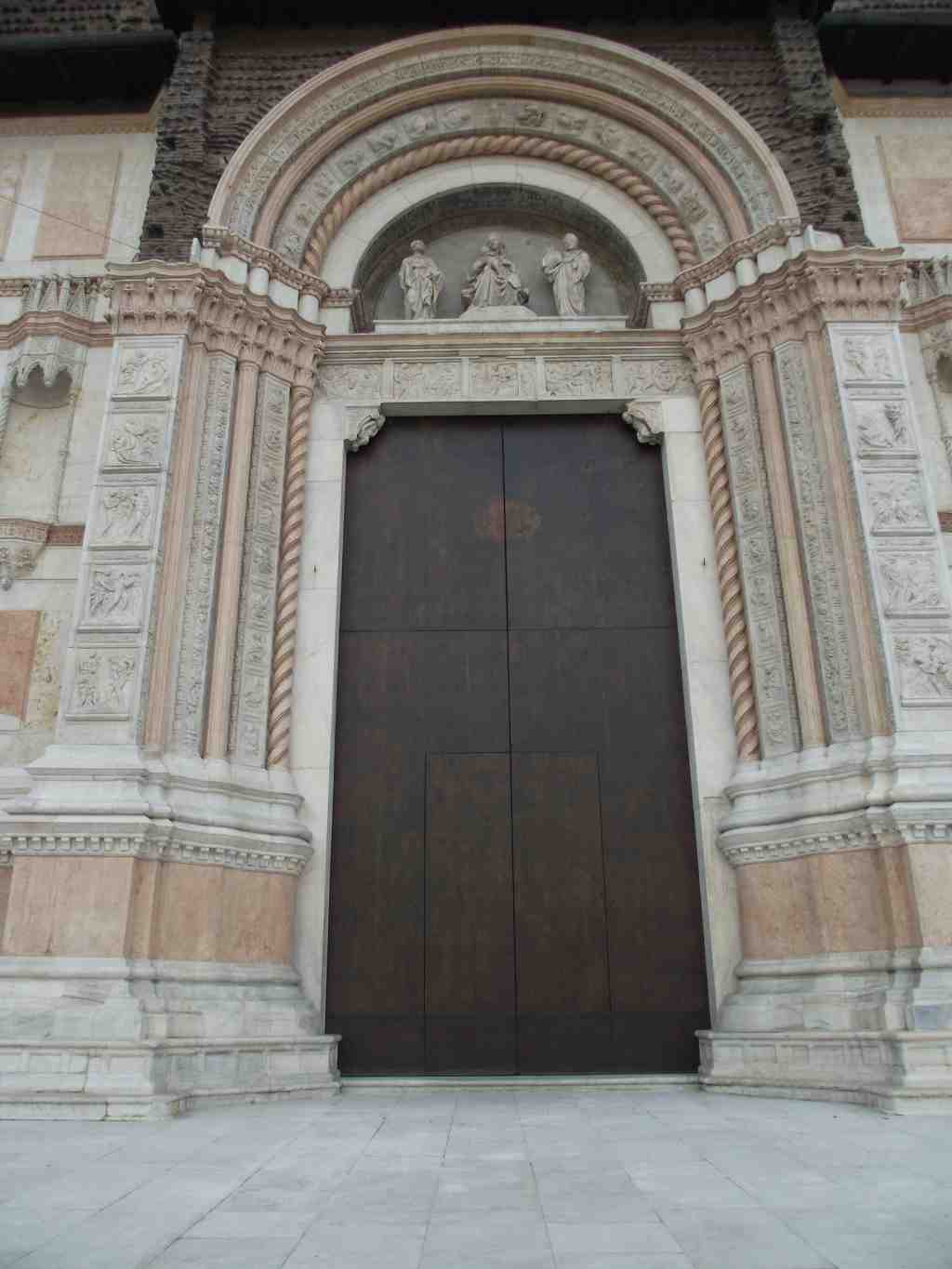
Look straight ahead for a towering dark wooden door framed by richly sculpted, pale stone columns and archways-spot the statues tucked above the entrance and the detailed relief panels that practically beg for your attention.
Now, as you stand before the Porta Magna, imagine yourself back in the early 1400s. The square is bustling, merchants are chatting, and a few folks are craning their necks to admire this brand-new masterpiece: the magnificent main portal of San Petronio. This, my friend, is Bologna’s answer to a dramatic red carpet entrance, crafted by none other than Jacopo della Quercia, a sculptor from Siena whose hands seemed to work actual magic in marble.
Started in 1425, this portal is a sensation, draped in a parade of statues and carvings that would have set the whole city whispering-and probably a few jaws dropping. Della Quercia’s work was so bold, so full of movement and energy, it actually became a classroom for a young Michelangelo, who would come here to soak it all in before towering over Italy with his own masterpieces. See all those figures filling the panels? Those are stories from Genesis, and they’re so lively, you half expect Adam to step out for a breath of fresh air, or for Noah and his crew to start looking for dry land in the Piazza!
And talk about drama-the project hit a snag in 1434, almost as if the portal itself was playing hard to get. Della Quercia passed away before it was finished, and so the grand arch above was left incomplete, a bit like a delicious cake missing its cherry on top. In 1510, the whole doorway was edged forward-almost as if it couldn’t wait to greet the Bolognesi and their visitors.
But the suspense doesn’t end there! Each time you sweep your gaze over the reliefs-ten vibrant Genesis scenes, the Madonna lovingly cradling her child, bulky prophets perched in the arch, and scenes from the New Testament-you can feel the push and pull of drama in every carved line. The people aren’t just frozen in marble; they burst with gestures, as if something big is always about to happen. Della Quercia didn’t just tell stories, he gave his figures muscular, rustic energy, packing a punch that would inspire artists for centuries-especially Michelangelo, who claimed the Madonna right here was the most beautiful of the entire 1400s.
So, as you’re standing here, take in the dynamic poses, the deep contrasts, and the drama. For one moment, imagine yourself as young Michelangelo, sketchbook in hand, eyes wide and heart pounding, thinking, “Someday, I’ll try to top this!”




