
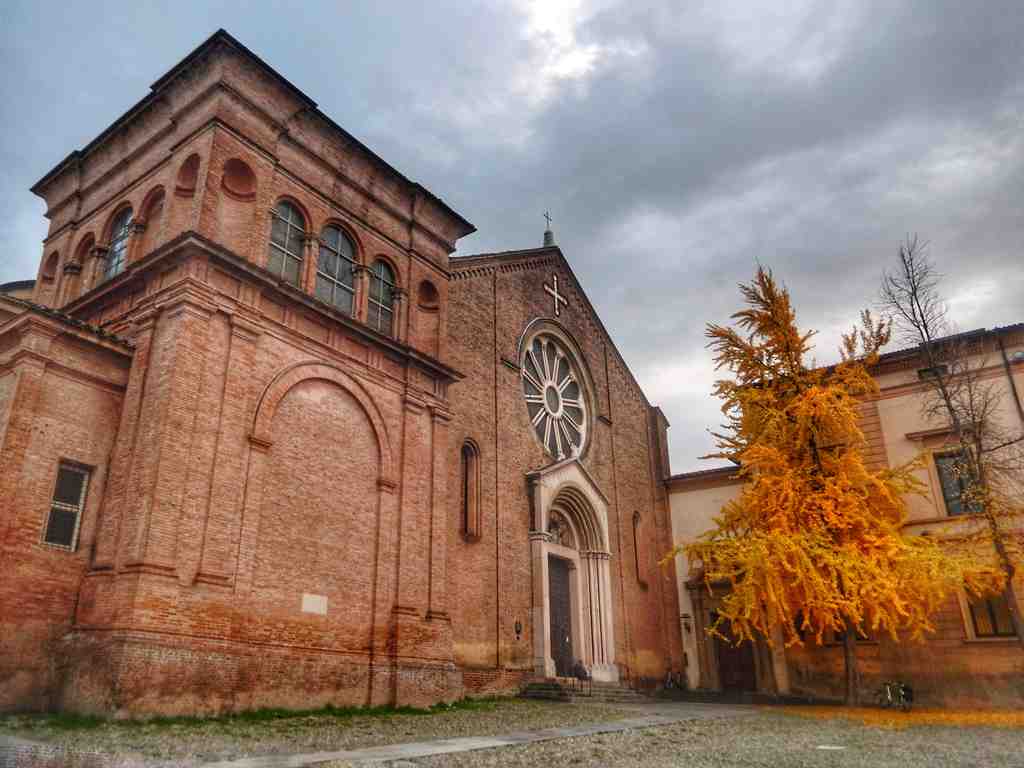
To spot the Basilica patriarcale di San Domenico, look for a large, reddish-brown brick building with a pointed roof and a striking, round rose window right above a single arched entrance, standing next to a vivid yellow-leaved tree.
Imagine yourself stepping onto cobblestones that have echoed with footsteps for centuries, with the scent of rain lingering in the air and the soft light filtering through those tall, arched windows. Here you stand in front of the Basilica of San Domenico, the final resting place of Saint Dominic himself-a man whose story runs through the very stones beneath your feet.
Let’s step back to the year 1218: Bologna is buzzing with scholars and merchants, and in trots a humble friar named Dominic de Guzmán. His mission? To found an order that would preach, teach, and-if necessary-out-talk anyone who opposed him. The first convent was a modest affair tucked outside the city walls, but Dominic soon realized his brothers needed more room. In 1219, he set up shop right here-well, minus the fancy cappuccino bar you’d expect today!
No sooner had Dominic begun gathering crowds than Bologna agreed: these preaching friars needed a grander home. Construction of the basilica began; you can probably imagine the banging of hammers and the clatter of stones as the building rose. By 1240, the main structure was done. Not even 20 years had passed since Dominic’s death, but already, people traveled from far and wide to pay respects at his tomb, and the story of the “Arca di San Domenico” was just beginning.
Picture his marble tomb glowing in candlelight. It’s a who’s who of Renaissance art-Nicola Pisano, Michelangelo (yes, the Michelangelo, in his early days!), Alfonso Lombardi, and more all contributed to this masterpiece. On the Arca, spot scenes from Saint Dominic’s life: legends of fiery books that wouldn’t burn, children resurrected, and miracles on every marble panel. Above, festoons of fruit symbolize the earth, angels carry the sky, and dolphins leap for the seas. Even God himself crowns the monument, holding the universe in his hand, keeping Dominic close to his heart.
With so many visitors, the basilica was often a lively-and sometimes crowded-place, right down to the sermons booming across Piazza San Domenico. That square was once walled in and packed with people, feet crunching on river stones as Dominican friars preached about faith, hope, and charity.
Fast forward to the Renaissance, and this became Bologna’s model Dominican church. Noble families commissioned chapels along the sides, each one a mini-stage for rival pride. Don’t miss the Ghisilardi Chapel on your left-built after the owner secured his inheritance from the Pope by promising (honestly!) to build a beautiful chapel here. Just imagine what your parents would have said if you tried that trick at home.
Inside, light streams through tall windows, illuminating intricate intarsia woodwork in the choir-fra Damiano da Bergamo spent eight years on those inlaid biblical scenes, with an eye for detail that would make any Instagrammer jealous. There’s even a musical legacy: the basilica contains not one but three grand organs, and one of them was played by none other than Wolfgang Amadeus Mozart, struggling with his scales under the watchful eye of his teacher.
Drama didn’t stop with the Middle Ages. The basilica’s look changed every century-arches rebuilt, porticoes added and demolished, facades restored by ambitious architects who feuded over every brick. That glorious rose window was restored in the early 1900s, trying to recreate the original medieval effect, and whenever thunder rolls over Bologna, the clanging of the five bronze bells from the tall Gothic campanile still shakes the air.
Take a moment as you stand here. Imagine yourself among the throngs of pilgrims, the clatter of hooves, the cries of traders in old Bologna, the chanting of monks. If you listen closely, you might almost hear the whispers of saints and the distant echo of a young Mozart practicing inside. Not bad for a building that started out, quite literally, as a bit of holy real estate on the city’s edge! Keep your eyes open-there are mysteries, relics, and masterpieces tucked around every corner inside. History here isn’t just ancient; it’s alive, and it’s waiting for you to step inside.




