
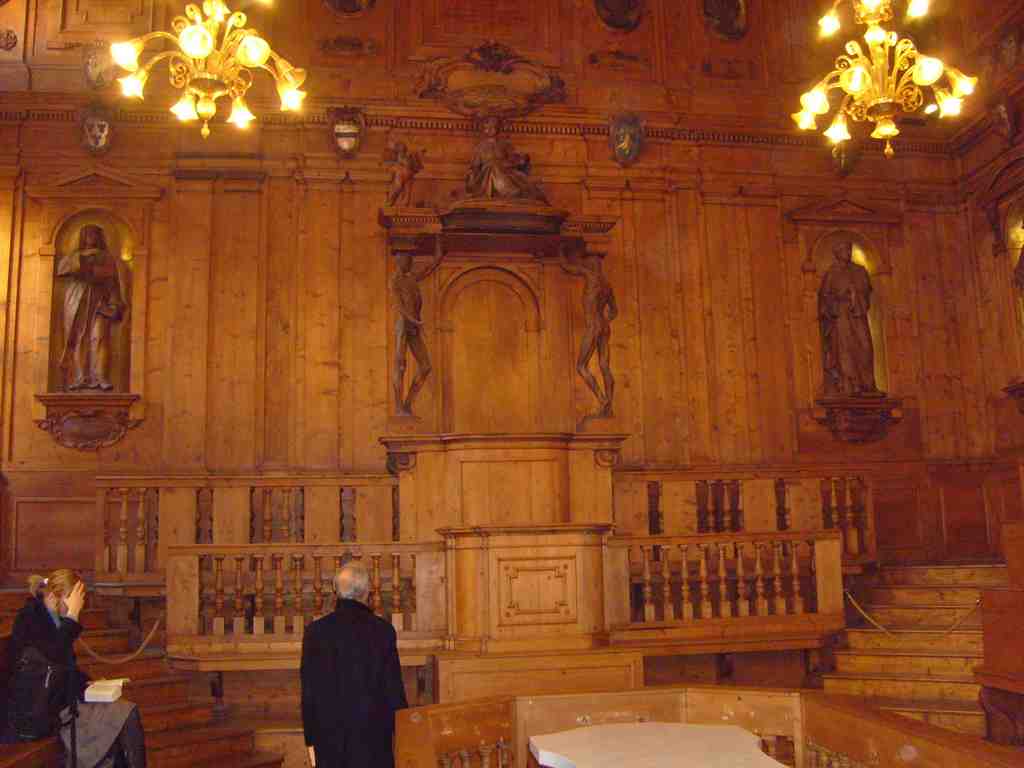
To spot the Anatomical Theatre of the Archiginnasio, look for a grand wooden hall filled with carvings, ornate statues perched around the walls, and a strange white table at its center-just ahead and hard to miss thanks to its warm, glowing chandeliers and striking old-world atmosphere.
Now, step closer and imagine standing here in bustling seventeenth-century Bologna. The air smells faintly of polished wood and maybe, just maybe, a little bit of mystery. This wasn’t just any classroom; this was the very beating heart of Bologna’s world-famous medical school. Doctors-in-training would crowd these tiered benches, craning their necks to get a good look-and hoping not to faint! Right in the middle, a white marble table waits, where real dissections once took place. It’s a good thing you’ve already had lunch, right?
Look up-where the eyes of Apollo, carved on the wooden ceiling, seem to gaze down as if judging everyone’s knowledge of bones and organs. Around you, wooden statues of history’s most important doctors keep watch: Hippocrates, Galenus, even the bold Gasparo Tagliacozzi-and yes, he’s holding a nose, since he was one of the very first to try plastic surgery. I wonder what his patients said: “A little more off the top, please”?
But the most startling figures are the “Spellati”-two impressive, but also slightly spooky, statues of flayed men. These wooden gentlemen lost all their skin but still stand tall, each one holding up the teacher’s chair to remind students: in medicine, you need strong nerves…and a stronger stomach!
Imagine a cold day in 1944, when a bomb nearly erased all of this history. After the war, people dug through the rubble, rescued every wooden figure and fragment-and lovingly rebuilt the theatre, piece by piece, as you see it now. This place is a testament to science, survival, and just a pinch of guts (literally!). Ready to continue, or do you need to check for goosebumps first?




