
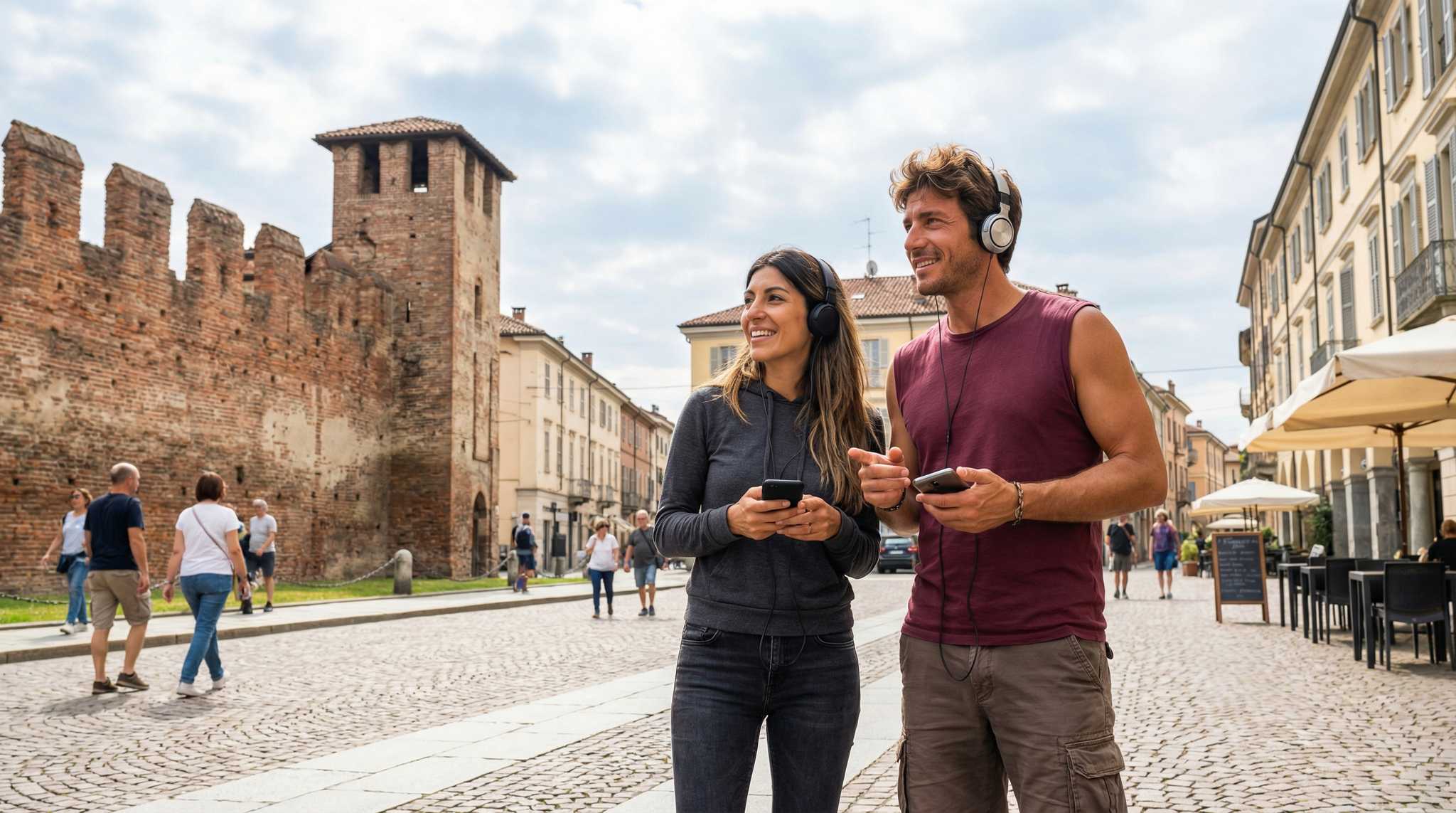
Asti Audio Tour: Treasures and Secrets of Palaces and Towers
Discover the enchanting charm of Asti on this fascinating tour! Wander through its historic heart and admire the imposing City Palace, a magnificent example of medieval architecture. Visit the beautiful Cattedrale di Santa Maria Assunta, where art and spirituality converge in a breathtaking interior. Explore the ancient city walls that surround Asti's rich history and let yourself be carried away to bygone eras. This tour offers a perfect blend of culture, history, and authentic Italian atmosphere. Don't miss it!
Tour preview
About this tour
- scheduleDuration 40–60 minsGo at your own pace
- straighten3.3 km walking routeFollow the guided path
- location_on
- wifi_offWorks offlineDownload once, use anywhere
- all_inclusiveLifetime accessReplay anytime, forever
- location_onStarts at Palazzo Catena
Stops on this tour
Look to your right along Via XX Settembre: you'll see a stately medieval building with a striking checkered arch of alternating white and red, and above it, a beautiful row of…Read moreShow less
Look to your right along Via XX Settembre: you'll see a stately medieval building with a striking checkered arch of alternating white and red, and above it, a beautiful row of brick arches just below the roof. Ah, welcome to Palazzo Catena! As you stand before these massive walls, imagine yourself traveling back to Asti in the Middle Ages. The street smells a bit of damp earth and freshly baked bread from a nearby shop - but a thousand years ago, this place was bustling with knights, merchants, and noblemen. This spot is unique because what now appears as one palazzo is actually a kind of centipede, formed from three different structures. Do you see that corner there, where the tower leans against the house? That used to be a true 'giant' tower, the kind you couldn't easily miss - just a bit bigger than the average medieval count's ego, you might say. The oldest core of the building, from the 13th century, can be recognized by the brick block perpendicular to the street. On the ground floor, there are still pointed arches with beautiful white and red borders. Later, at the end of the 13th century, someone decided: “Why don't we add a wing?” and voilà, Palazzo Catena grew steadily - like a neighborhood dispute where everyone builds a wall. But to whom did all this actually belong? Well, historians still disagree. Some say: the Catenas! Hence the name! Others exclaim: “No, it was the Partitás!” and yet another points to the Monte family, old feudal lords with castles and stories full of mystery and perhaps more gossip than truth. And to top it all off, around 1600, even the Alfieris of Magliano held sway here, a family not averse to a bit of bravado. And then that facade! Do you see that imposing ogival (pointed) entrance there? Imagine: a distinguished lady in silk, perhaps Iginia d’Asti, the tragic heroine from Silvio Pellico's play, shuffling under that arch - her heel getting stuck between the cobblestones, but she still tries to maintain her dignity. Venus on the facade, stars, zodiac signs, and mysterious figures guide your gaze upwards. Everything you see here is unique: the brick-sculpted friezes with symbols that once offered protection against evil spirits and misfortune - a medieval bless-you, you might say! Walk gently towards the wrought-iron gate of the old fondaco (warehouse) above that entrance. This was once a dark, semi-underground space where wine and grain were traded, and the coats of arms of forgotten families still adorn the ceiling. Imagine: thick sacks of wheat, rosaries, the voice of a merchant negotiating a little too loudly, children secretly peeking through a window. Over the centuries, the tower you see has been “flattened” so it wouldn't stand out too much among the block of houses, but it was once the proud stronghold that defined the street's appearance. In the 15th century, someone thought: let's not draw too much attention, and poof, down went the tower! A matter of fashion, right? You know how it goes: one period tall towers are hip, the next everyone just wants uniform gutters… And so, the story of this palace is a bit like a treasure hunt full of secrets and quirky choices. Sometimes it was a home for the poor, then for nobles, and always there was a shadow of mystery or a bit of drama, just like in a good Italian opera. So take another good look: who knows, you might feel a gentle breeze and for a moment think you see Iginia disappearing along that arch… Fascinated by its origins, structure, or the tower? Let's chat about it
Open dedicated page →Straight ahead, you see an explosion of energy: riders in colorful outfits lean tensely over their galloping horses, tearing across the sand bareback; if you pay attention at the…Read moreShow less
Straight ahead, you see an explosion of energy: riders in colorful outfits lean tensely over their galloping horses, tearing across the sand bareback; if you pay attention at the edge of the square, between the stands and the cloud of swirling dust, you can practically hear and smell the spectacle of the Palio di Asti. Imagine: you're standing here in the beating heart of Asti, where the air vibrates with tension and the crowd is so full of anticipation that it seems the whole city is holding its breath... The Palio di Asti, or as the Astigiani used to call it, the Palio Astese, is not just a horse race - no, this is an ancient festival with roots that pierce through medieval dust. Once started as an exuberant celebration for patron saint San Secondo - quite a while ago, around the year 1000 - this race has grown into the moment when every district, village, and neighborhood can show who has the fastest legs and the loudest mouth. The sound of thousands of spectators swells, and imagine: - the roar of hooves on the sand has echoed for centuries between Asti's buildings. And proud they are, those Astigiani! Unlike Siena - where they only see their Palio as a horse party - the people of Asti have fought for generations to hold their Palio, with a passage about their sacred race in every treaty. Because whoever doesn't participate, doesn't belong! It all began outside the city walls, on the “curriculum,” the old, circular course over what is now Piazza Alfieri. Then came Gian Galeazzo Visconti, the great builder, who thought the city could use a fortification in that spot. A Dutchman would say: “what a shame about that beautiful racetrack,” but the Astigiani thought: “then we'll just race through the city!” And so it happened that the Palio was run across the Contrada Maestra - today's Corso Alfieri - until the 19th century, past houses, markets, and astonished donkeys. What makes this Palio in Asti so special? First of all, the riders gallop bareback - that requires quite a bit of courage, balance, and, let's be honest, a good dose of craziness. The winner? They receive a palio: a long, dark red velvet cloth, originally intended as a kind of Roman “mantle,” but eventually growing into the coveted symbol of honor, courage, and neighborhood pride. In the Middle Ages, for second place, you got... a live rooster! Yes, a real one. Fancy coming home with feathers on your head and chickens in your arms? In the sixteenth century, prizes like silver coins and, for third place, a pair of shiny spurs were added. For the very last - the most unfortunate “loser” - there is only a salted anchovy. Yes, you heard right: whoever finishes last gets “the inchioda,” a symbol of dishonor and a hearty laugh from the neighbors. But the festival is so much more than just that crazy race. Days in advance, the city is in an uproar: grand historical parades wind over the cobblestones, flag-wavers, music, children dressed as little knights and damsels. On the day itself, drums beat, trumpets blare, and everyone processes towards Piazza Alfieri. There, before your eyes, the battle begins: three heats of seven participants, all buzzing with nerves, each horse gleaming in the morning sun, each rider wearing the colors of their district. The mayor can only officially open the race - and believe me, he does so solemnly, with a puffed-out chest, because this is serious business here. Then the starting signal sounds - “Mossa!” - and moments later, the first clumps of sand fly into the air, the cheering rises, everyone rooting for their own district. And oh, that Palio lives! So lively, in fact, that besides the horse race, there's a separate show for the flag-wavers every year - the “Paliotto.” And if you're lucky, you might even spot the medieval sendallo, the hand-painted banner depicting San Secondo proudly on horseback: a symbol of hope, freedom, and perseverance. Not everything is always rosy - sometimes there are discussions about animal welfare and fair play, but the city now provides thick layers of sand, strict veterinarians, and safe corners in the course. All for the horses, all for the heart of Asti! So look around you, taste the energy of the crowd, feel the sand of the racetrack under your feet. Here, where tradition, competition, and popular enjoyment come together, the Palio di Asti is still very much alive. Who knows, you might soon be shouting “Viva il Palio!” just like the rest. But beware: if you cheer too loudly and your district doesn't win, you might get that funny salted anchovy with your salad at home... For a better understanding of the etymology, the Palio di Asti in detail, or the “Paliotto,” contact me in the chat section below.
Open dedicated page →To your left, directly next to the path, you'll see a long, red brick wall with arched passages-those are the famous medieval walls of Asti, hard to miss! Imagine: it's the…Read moreShow less
To your left, directly next to the path, you'll see a long, red brick wall with arched passages-those are the famous medieval walls of Asti, hard to miss! Imagine: it's the twelfth century, and life in Asti is anything but boring. Here, where you stand now, an impressive fortification system once rose from red brick-a kind of medieval 'super castle'-protecting the city from enemies, who might have pounded on the gates as hard as an Italian on a coffee machine on a Monday morning. But let's start at the beginning, with the ancient Celts and Ligurians. A long time ago, they built a walled hillfort here, the famous 'oppidum'. “Strategy!” they would say, “And a view of the neighbors!” Then came the Romans and-of course-everything had to be bigger and more systematic. Asti got straight streets, Via Maestra (now Corso Alfieri) as its main artery, and the city increasingly exuded Roman self-confidence. But the glory years took a break when the Roman Empire collapsed. Asti shrank, inhabitants drifted away, and a modest wall was hastily built to protect against barbarian invaders. These walls probably went up as fast as espresso prices do today! During this time, around the fourth century, the focus was mainly on the prestigious neighborhood around the decumano, where buildings proudly stood. And those walls, though smaller than before, were built so sturdily that they are still visible in certain places today, nestled among modern houses. Jumping a few centuries ahead, we see that power increasingly shifted to the church and government. In the Castel Vecchio, then a kind of medieval 'headquarters', lay the center of power for the city and bishop. And all of this surrounded by walls that were sometimes up to ten meters high! These walls were reinforced and expanded again and again over time. And with expansion comes bragging: if you couldn't see your city walls from the other side of the city, you were clearly doing something wrong. In Asti's golden age, the twelfth and thirteenth centuries, builders worked tirelessly until more than seven kilometers of wall stood, divided into two rings. The inner ring-“the nobles' enclosure”-protected the wealthy elite, their towers, and palaces. Everything neatly in brick, arches like jaws, and towers like teeth. The gates were decorated; those entering would see statues of Mary above the doors, flanked by St. Secondo and the patron saints of the district. Today, only Porta di San Giuliano remains, hidden within the Santuario della Madonna del Portone. But there was an even greater ambition: a second, outer wall to give the growing suburbs (and their markets and artisans) a sense of protection. As if Asti was putting on a second, thicker coat against the cold of war and chaos. The outer wall had lower towers and fewer gates but was essential during the frequent sieges and skirmishes-not infrequently, residents had to seek the nearest gate for shelter or trade. In the fourteenth and fifteenth centuries, with the arrival of the Visconti and the Savoia, the game changed again. New citadels, forts, and bastions arose near the Tanaro river, while other parts of the walls crumbled under the force of cannons or were repurposed for reinforcement. But then came Napoleon-and he thought: “Away with that old-fashioned stuff!” Entire fortifications were torn down, and later, in the nineteenth century, several sections of the wall were transformed into leafy promenades. Today, a part of that once impregnable fortress can still be admired on this side of the city. The brick sometimes smells a bit of history, with green ivy fighting its own battle. It feels like you're walking on a timeline: the echoes of struggle, power, daily worries, and perhaps even sleeping guards who missed the sunrise-something that surely happened here now and then. So look closely, listen to the silence that was once filled with hoofbeats, loud laughter, and perhaps a curse from a failed defender… Because behind every piece of wall lies a story that even the thickest brick cannot hold back! Intrigued by the Celtic-Ligurian oppidum and Roman expansion, from the late empire to the early Middle Ages, or the municipality? Go to the chat section and I'll gladly give you more information.
Open dedicated page →
Show 12 more stopsShow fewer stopsexpand_moreexpand_less
Look straight ahead at the striking, tall square brick tower with wide arched windows and a pointed roof with a metal spire: that's the Troyana Tower, easily recognizable next to…Read moreShow less
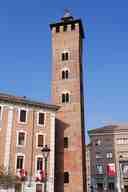
Look straight ahead at the striking, tall square brick tower with wide arched windows and a pointed roof with a metal spire: that's the Troyana Tower, easily recognizable next to the palace on the edge of Piazza Medici. Imagine, you're now standing at the foot of the sturdy 44-meter-high Troyana Tower, also known as the Torre dell’orologio, or the clock tower. Yes, exactly: here in the heart of the city, this brick giant has seen and heard everything for centuries. Rich families once built these towers not to dry their laundry, but to show who was in charge! And at the end of the twelfth century, the construction of this tower began. Well, the first owners have disappeared into the mists of time-or maybe they just don't like empty bricks... Initially, the tower probably belonged to an influential patrician family, but it wasn't long before the banking family Troya used their fortune - no, not in bitcoins but in hard cash - to complete the tower. Around 1250, they added those beautiful large arched windows, and between 1260 and 1280, the tower got its impressive battlements at the top, as you see now. A bit of showing off prestige, you might say. You're actually looking at a kind of medieval "skyline statement." But wait, the story takes another twist! In the fifteenth century, this tower became the property of the Asinari family. They decided to install the clock mechanism, a bit like a modern smartwatch, but for the whole city. The clock was the boss: it indicated when the city should go to bed, when schools opened, and when shops had to close. Imagine everyone here simultaneously starting to pack up their market stalls when that clock moved! In the Middle Ages, the heavy bronze bell rang loudly over the streets of Asti, sometimes the only noise in the quiet evening air. But it didn't stop there… Public punishments were even carried out in the square here, while the clock marked the rhythm of day and night. So be careful if you arrived late in the square-you'd rather not catch a punishment here. Throughout the centuries, the tower's function constantly changed. After the arrival of the Dukes of Orléans, it became the center of power in the city - the governor spoke to the people from its windows above, while below, merchants hastily sold their last wares. In 1560, Emanuele Filiberto of Savoy definitively donated the tower to the city of Asti, so when you call your friends later to say you're in the Troyana Tower, you can proudly say you're part of the city's heritage! Let's not forget: the bell in this tower is a true giant. With a diameter and height of 1.20 meters and a weight of almost 1,400 kilos, it is not only old (from the sixteenth century) but also the oldest still active hourly bell in Piedmont. So every hour, you get a piece of history for free here. The bell features beautiful Gothic inscriptions, as well as images of Archangel Michael, the Madonna with child, and the coat of arms of the city of Asti. Believe it or not, even now its tone rings clearly over the rooftops of Asti, keeping everyone in line. In the twentieth century, our tower finally received some love: the arched windows were reopened after centuries of being bricked up, and the walls have been solidly restored-as if your grandpa finally got to go to the spa. So, as you stand here, look up at that proud tower. Imagine that every chime not only marks time but also drives centuries of stories, scandals, market fun, and medieval tension through the streets. A piece of Asti that has seen everything for almost a thousand years... and heard everything. Perhaps you'll hear the bell ring soon - and if you're not paying attention, you might even get a surprise from the Middle Ages yourself! For more insights into the architecture, construction, or the bell, feel free to navigate to the chat section below and inquire.
Open dedicated page →Straight ahead, you'll see an impressive white palace with balconies full of colorful flags and a large clock on the facade - so look especially at the stately building with the…Read moreShow less
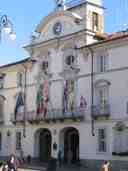
Straight ahead, you'll see an impressive white palace with balconies full of colorful flags and a large clock on the facade - so look especially at the stately building with the elegant decorations above the doors, right on the square. Imagine what it must have been like here centuries ago, when galloping horses and rattling carts filled the cobblestone square, and market vendors raised their voices above the hubbub. You are now at the City Palace of Asti, or as they call it here: Palazzo Civico, the beating heart of the city. But, honestly: once this building was anything but imposing - it even started in the twelfth century with a modest house for a couple of city consuls. Can you see them already, in their thick cloaks, nervously meeting in a drafty room with rough stone walls? Slowly, the building grew. In 1197 - yes, Asti was quite ambitious - a 'larger' hall had to be added, because the city council could no longer fit everyone in one room. In 1295, it was so lively here during a city council meeting that more than 300 inhabitants gathered. The building was thirty meters wide, almost as big as a large chip stand... or rather, a very long row of them! The building always stood directly next to the pride of the city: the San Secondo church, dedicated to Asti's patron saint. Everything here revolved around city administration, markets, intrigue, and political maneuvering, of course. Thanks to commercial spirit and clever know-how, they built porticoes, arches, and vaulted ceilings around it - like miniature cathedrals - which are sometimes still visible, hidden in the palace's basement. But, as in good stories, it wasn't always rosy. In the fourteenth century, a real tower was added, complete with the very first city clock. But on a fateful winter evening in 1680, a booming crash suddenly echoed... The tower collapsed, stones flew, and part of the city hall disappeared into dust - literally. After that, the palace fell into disrepair. Imagine: the proud city heart slowly became a parking oasis for donkeys, mules, and even horses. Instead of city administration, you heard hoofbeats and the cheerful shouts of stable boys. And the only thing that disappeared faster than its grandeur was the hope of quick recovery… because the city didn't even have enough money to repair everything. Then something almost fairytale-like happened: the Duke of Savoy, Emanuele Filiberto, was well-disposed towards Asti and in 1558 donated the city palace back to its inhabitants. The shopkeepers who had attached their businesses to the northern part of the building had to help with maintenance in return. A win-win avant la lettre! But Asti was not blessed with much luck again. During financial dramas, lawsuits over expensive palaces, and a major economic crisis in the eighteenth century, the mayors wondered: how will we ever get out of this? Fortunately, there were such things as brilliant architects. And who appeared like a baroque superman? Benedetto Alfieri. Not only a jurist, but also a self-taught master of concrete and brick. In 1740, Alfieri drew up the plans for the new city palace: with a monumental staircase (4 staircases! Feel free to count them when you enter), stately halls, and of course, the balcony for when the mayor has something to announce. Notice the facade: it's sleek, cool, almost a bit German… but the windows have typically playful decorations that perfectly suit elegant Asti. Inside, there are frescoes on the ceiling by Paolo Arri, paintings of famous local heroes, and even an ancient measuring table that was once used to check if bricks were truly brick-sized. Yes, Italian bureaucracy has deep roots! As you wander further through the palace, you can spot four large medallions in the stairwell, dedicated to Asti's most famous sons: architects, writers, artists, and - not to forget - master cabinetmakers. The palace is full of pride and stories; even the old market plan from 1682 is painted on the wall. Here, the past literally clings to every stone. So, if you hear the soft whispers of debating city administrators, the clatter of hooves on old pebbles, and the hum of centuries of gossip, then you know: you are in the true center of Asti's history. What a place, huh? If those walls could talk… wait, I think they already are a little bit! To delve deeper into the sources, the building's decay, or the donation from Savoy, leave your question in the chat section and I will provide more information.
Open dedicated page →The Palazzo del Podestà is a striking medieval building of red bricks, with tall windows in white and red arches: just look straight ahead where the two streets meet, and you'll…Read moreShow less
The Palazzo del Podestà is a striking medieval building of red bricks, with tall windows in white and red arches: just look straight ahead where the two streets meet, and you'll immediately see this proud, rectangular palace! Imagine: you are now at the crossroads of Via dei Cappellai and Via Incisa, in the medieval heart of Asti. The Palazzo del Podestà has towered over the streets here since the thirteenth century, like a silent guardian of brick and time. You might hear the soft hum of the market - imagine for a moment you're back in the Middle Ages. People hurry back and forth, the air smells a bit of fresh bread, spicy wine and, well, maybe not always so fresh - it was the thirteenth century after all! Now, a fun detail: this palace has been called Palazzo del Podestà for centuries, but did you know that was actually a mistake? Yes, astrologers, uh… historians like Gabiani thought the city podestà (who was something like the city boss) used to live here, but that poor man just lived with people or next to the Collegiata di San Secondo. This building was more Asti's third town hall, the center of practical matters. A kind of city hall, but with less paperwork and much more medieval drama! The building itself is a true labyrinth of times and stories. In its early days, it was a practical little palace, close to the San Secondo market; you only had to run down the street if you forgot to buy bread. From 1254, it was even recorded with the mysterious name “volte del Santo.” And by the end of the thirteenth century, a “palacium novum comunis” appeared for the first time - time for the grand life, for the new city palace was born! For years, even centuries, the busy city administration bustled around here, and people whispered about secret plans for parties, trade, and - who knows - a little intrigue. Inside, should you ever get a glimpse, you'll find an impressive quadrangular brick pillar that, like a sturdy dancer, supports all the vaults. The vaults are trapezoidal, connected by stone keystones. One of them bears a sculpted crowned eagle: whether that was mere decoration, or a secret reference to a medieval office job, let's leave that open for now! Another keystone shows a massive cross shape, a crossing of faith and power. Further beneath the building is an old cellar, once filled with salt or grain - no wine cellar, unfortunately! But imagine citizens, sheltering from the rain, descending into the cool dark to fetch the precious municipal salt. For salt was as valuable as gold in those days… and tastier on fries, besides. The palace was used as the city's headquarters until the sixteenth century. After that, the notary's office moved in, and in 1810 it became the property of Mr. Fautrier Pietro - apparently the first inhabitant who managed to pay the energy bill on time. Towards the end of the nineteenth century, the gas lighting officials settled here, and the palace briefly buzzed with electrical enthusiasm. So as you stand there now, look up and imagine how generations of Astigiani, market masters, clerks, and perhaps even a stray chicken have walked through this door. This palace has survived everything: misunderstandings, market relocations, and even the era of the gas lamp! And you, well, you just have to smile - you've seen it now!
Open dedicated page →Look straight ahead: you'll see a stately, salmon-pink building with tall windows, sturdy stone columns by the door, and - not to be missed - a beautifully speckled fence that…Read moreShow less
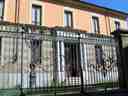
Look straight ahead: you'll see a stately, salmon-pink building with tall windows, sturdy stone columns by the door, and - not to be missed - a beautifully speckled fence that strictly guards the entire property, as if it's already asking you: “Do you have a ticket?” Welcome to the Synagogue and Jewish Museum of Asti, a place where history lives not only in books but also in walls, scents, and memories. Imagine standing here in the 17th century, smelling freshly baked bread - not from a baker, but from one of the Jewish families who lived in the narrow streets. Most Jews came to Asti in the 16th century, fleeing after the great exodus from Spain in 1492. Some came from France, others from the cold Rhine region, all seeking a place where they could live their lives peacefully and, as they surely thought, simply keep their tea warm without the neighbors interfering. This neighborhood, Via Ottolenghi, was once the beating heart of the Jewish community. Think of lively conversations between streets, secret recipes passed down from mother to daughter, and children playing tag in the alleys. In the middle of this district, a synagogue already stood - not just a house of prayer, but the epicenter of all life. Here, people not only prayed, married, and comforted, but also argued and laughed. “Hey Benjamin, you still haven't returned my candlestick!” could easily have been a cry there. The first official mention of the synagogue dates from 1601, when the Bishop of Asti loudly complained that the building was very close to the churches. Well, what is close? From that moment on, the synagogue began to claim its place in city life, built from the contributions of families like the Artom and the Ottolenghi, who not only donated money but also their hope for a safe home. Now, in your mind, step inside. Behind the simple neoclassical facade - four elegant Ionic columns, a sober portal, as you can see directly now - a world full of details unfolds. A wide vestibule leads you to the small temple, where the walls are adorned with memorial stones, each with its own story. Turn right, and there's the staircase to the ‘matroneum’ - the special gallery for women, because mixing during service was really not allowed back then; a little privacy was necessary. Take another step and you're in the main hall, divided into three naves with barrel vaults and a small dome in the center. Try not to sit on the benches without looking at the nameplates! Each solid walnut bench had its own brass plate - yes, whoever wanted something had to pay. The sold bench was one of the sources of income: an early kind of ‘regular customer’ discount, you might say. But the most beautiful piece is at the back, the presbytery. There stands the Aròn, the sacred showpiece. Imagine a wall cabinet of gold and wood carvings, eight panels each with its symbol: the seven-branched menorah, the Ark of the Covenant, the table with twelve loaves, the altar with an eternal flame. Even a hand pouring water into a bowl appears - enough symbolism to marvel at for a whole morning. And then, next to the synagogue, the small, rich museum. Here lies a collection of special objects: the Chanukkiah, with its cheerfully sparkling eight (plus one) flames, the imposing ram's horn ‘Shofar’, and the ‘Ner tamid’, an ever-burning silver lamp that marks the eternal presence of the divine. Don't forget the ‘Tevah’, the magnificent lectern on which the Torah was unrolled. Each object tells of celebration, sorrow, expectation. A special feature here is the ‘ritual of Asti’ or the Appam ritual. It owes its name to Asti, Fossano, and Moncalvo - three cities, three communities, one melodious sound. Unique prayers and melodies were sung here, so special that Leo Levi recorded them in 1955, fearing they would otherwise disappear, like a bread roll in the synagogue after a long service. So, as you take another step, know that you are not just looking at a building, but at a place where centuries of searching, hope, gathering, and even struggle resonate. And should the heavy door creak when you look inside: that's not the wind, but perhaps an echo from the past greeting you kindly with “Shalom!” Curious about the Jews in Asti, the synagogue in detail, or the museum? Feel free to discuss it further in the chat section below.
Open dedicated page →To your right, you'll see the imposing, dark red brick tower soaring high above the street-this is the Gazzelli Tower, unmistakably recognizable by its sturdy, closed walls and…Read moreShow less
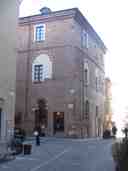
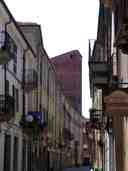
To your right, you'll see the imposing, dark red brick tower soaring high above the street-this is the Gazzelli Tower, unmistakably recognizable by its sturdy, closed walls and sparse windows. Imagine, you're standing here in the heart of Asti, where the voices of market vendors, the sounds of horse hooves on cobblestones, and the laughter of noble families once echoed through the street. The Gazzelli Tower and the palace next to you, on the corner of Via San Martino and Via Quintino Sella, together form a place full of mysteries, stories, and a good pinch of noble allure. But beware, the tower has been looking sternly over the city for centuries - according to local legend, its shadow could even predict the time... or well, that's what they like to tell the children here. This building, as you see it now, is the result of centuries of adaptations. Originally, they were separate medieval houses - think of small, robust buildings from tales of knights and secret passages. Over time, these houses were merged into one large palace, and only after 1726 did it acquire its baroque appearance thanks to the Cotti di Ceres family. Before that, it was actually a kind of “architectural puzzle”: everyone added a piece. Inside, you'll still find the splendor of the eighteenth century: beautiful wooden paneling with gilded frames and impressive ceilings. But the real gems are the paintings in one of the grand halls, which, as it were, make Asti's heart beat. There you'll see sixteen scenes of the Palio di Asti - the legendary horse race for which Asti is famous! You'll see the tension before the race, the festive revelry of victory, the fireworks in Piazza San Secondo, and even the proud winners offering their prize to the church. Imagine the cacophony of drums, the cheering of the crowd, and the scent of incense. It's almost as if you're back in the year 1758, when the Cotti di Ceres family won first prize with their horse. Is it a coincidence that the paintings were made in precisely that year? Or was it just vanity? Oh, let's say: a healthy dose of aristocratic pride! And that's not all: the restored tower you're looking at now was built around 1280. With a base over eight meters wide and hardly any windows - except for a small gate with bricks and tuff stone - it's like a medieval defense machine. The decorations of dark and light bricks are typical ‘Asti flags’. If you look closely, you'll see the decorations applied to the tower like shields, meant to distinguish friend from foe. Over time, various noble families, including the Pontes and later the Gazellis (from 1840), have left their mark here. Even who the very first owner was remains a mystery to this day - a delightful medieval enigma you can fill in yourself. And now, imagine passing through the wrought-iron gate towards Asti's only historic botanical city garden. Suddenly, from the bustle of the street, you find yourself in an oasis of calm: a square garden with a trompe-l'oeil painting in the center, a mature cherry tree, a red spruce, and a majestic sophora. Around it are fragrant flowering shrubs - roses, calycanthus, forsythias, and lilac - and two trimmed boxwood hedges. If you inhale deeply, you'll smell the perfume of blossoms mixed with old stones and history. Here, between walls where secrets were once whispered and fireworks watched, the palace can perhaps best be summarized: a place of triumph and mystery, where beauty, tension, and tradition converge. So take your moment, snap a photo of this proud tower, and who knows - maybe you'll still feel a bit of old Asti trembling in the air! Want to know more about the origin, the palace, or the tower? Leave your questions in the chat section and I will provide you with the details you need.
Open dedicated page →You now see an impressive church emerging before you, with its bright red brick walls, cheerfully contrasting white columns, and multiple domes piercing the sky like gray…Read moreShow less
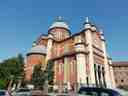
You now see an impressive church emerging before you, with its bright red brick walls, cheerfully contrasting white columns, and multiple domes piercing the sky like gray helmets-to spot it well, look at the large building on your right, with statues of saints atop the facade and the words ‘PORTA PARADISI’ proudly displayed. Welcome to the Santuario della Beata Vergine del Portone, or as the locals affectionately call it: the Madonna del Portone! Brace yourself, because this sanctuary is full of bizarre stories, ancient feuds, and a good dose of mysticism. Imagine yourself walking through this neighborhood in the Middle Ages, where the scent of fresh bread wafts from the streets and occasionally the whinny of a horse sounds. You're walking along a city wall here-yes, where you stand now, the second defensive wall around the city of Asti ran in the fourteenth century. Every district, or ‘borgo’, had its own gate to the city, and above each gate proudly displayed an image of Mary, flanked by patron saints. Here, at the Porta di San Marco, you would have seen a beautiful fresco of the Madonna with child between Saints Mark and Secondo. The people of Asti were so fond of that fresco that it quickly became a pilgrimage site. People from all over Piedmont came to pray, light candles, sometimes with the idea that a little Marian magic never hurts. You should know: the traffic of pilgrims brought a lot of life to the brewery! In the 17th century, the brilliant idea arose to build a wooden balcony so you could get even closer to the sacred image. Because who wouldn't want to share a selfie with Mary on Instagram, right? Unfortunately, Instagram didn't exist then. Then, in 1689, the city council decided that such a beautiful image deserved its own sanctuary, a real little temple! Sounds good, but the Carmelites from the neighborhood were not happy: imagine, yet another church in their backyard! They ran to the mayor and to the papal nuncio of Turin: “This will only cause nuisance!” A quarrel ensued that lasted months, with inspections, squabbling, and, yes, secret glances over fences. But one morning, disaster struck: an unknown person vandalized the fresco of the Madonna and child. What a shock! The whole city was in an uproar, and the Carmelites were immediately suspected. To calm things down, they gave up their resistance, and the city finally allowed the sanctuary to be built. In 1690, a chapel stood, and a few years later, it grew into a full-fledged rectangular sanctuary, complete with four windows-two of which you still see today. The walls were covered with votive paintings: you could spend a whole day looking at them all! Around 1900, during the Holy Year, it was decided that it was time for an upgrade. All of Asti was invited to contribute-not with likes as today, but with hard cash-and voilà, the new, grand sanctuary arose under the direction of an engineer from Bologna. In 1912, this place was solemnly consecrated. It was a big celebration; the following Sunday, more than seven thousand (!) communions were distributed. You'd almost think free ice cream was being handed out. And did you know that Pope John Paul II visited here in 1993? Since then, an almost magical atmosphere has lingered. The architecture you now admire breathes a mix of Romanesque and Byzantine, with three naves, imposing domes and chapels, and of course, that tall, golden statue of Mary Assunta atop the roof-as if she watches over the city. Don't forget the mysterious stone either! Behind the church is a staircase, once part of the old city gate, where halfway up you see an ‘Ecce Homo’-and nearby, an ordinary little stone. Legend says that a blasphemer once threw that stone at Mary's image. But Mary thought: “Not on my watch!” and returned the stone to the wall, where it still sits today. So, should you ever be tempted to throw your own stone... perhaps better to light a candle! And should you be tired after all that adventure: behind the church is a quiet park where a lifelike replica of the Lourdes grotto shines. Here ends our story at the Madonna del Portone, a place full of history, drama, miracles, and a touch of humor. Keep walking, more treasures await you! For a better understanding of the sources, the grand sanctuary, or the architecture, contact me in the chat below.
Open dedicated page →Look straight ahead, at the soft yellow building with an impressive, richly carved sandstone arch: this is the Malabaila Palace, easily recognizable by its stately portal and the…Read moreShow less
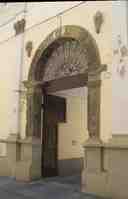
Look straight ahead, at the soft yellow building with an impressive, richly carved sandstone arch: this is the Malabaila Palace, easily recognizable by its stately portal and the details in the stonework above the wooden door. Imagine… You're standing here, on an ordinary day in Via Mazzini, and suddenly it feels as if you're pulled five hundred years back in time. Behind these thick walls once echoed the laughter and murmurs of dukes, kings, and perhaps some nervous servants dusting tables. This palace, named Malabaila-or for friends: ‘Malabayla’-is not just a house, but the largest Renaissance palace in all of Asti. Construction began in 1494, a year when Asti suddenly filled with chic people and French plans. Alessandro Malabaila, a clever and ambitious man with quite royal connections, wanted to offer Luigi XII-yes, the future King of France-five-star accommodation. So he bought a whole lot of medieval houses, piled them up, and built a palace that would make your jaw drop. And yes, Luigi XII apparently liked it: when he had set his sights on the nearby Duchy of Milan, he used this palace as a luxurious base. Seems pretty relaxed, just chilling in a French armchair in Asti between battles. Pay extra attention when you look at the portal, with its curly ironwork and artfully carved sandstone columns. Above it once proudly displayed the French king's coat of arms, supported by two angels, and Luigi XII's mascot-a tough, spiky... hedgehog! Yes, a hedgehog. Not exactly the animal you'd expect in a royal coat of arms, right? I imagine the conversation went something like this: “Luigi, how about a lion?” “No, I want a hedgehog. Nice and spiky, everyone stays away from me…” He had humor. Now, these symbols have unfortunately disappeared, but if you look closely, you can still see the Malabaila family crest carved in stone next to the gate. The grandeur of this building, by the way, extended beyond what you see on the street now. Behind the main building once lay a long gallery with double Renaissance arches, supported by sturdy stone columns, and further back there was even a tower where servants scurried up and down spiral staircases. In front of the palace was an Italian garden full of fragrant herbs and cheerful flowers, while behind the building various houses and stables were hidden. On busy days, it could swarm with noble visitors-from the lords of Mantua to the dukes of Ferrara and even ambassadors from all over Italy. Chronicler Jean d’Auton describes how Luigi XII held his court here in 1502 and 1507. The next host was Gerolamo Malabaila, Alessandro's nephew, who took over after his death. It is said that even King Francis I-fresh from the battle of Marignano-stepped over the threshold here. But not everything remained rosy. After the fall of French power and financial ruin for the Malabailas, this palace also slowly began to deteriorate. Luxurious furniture disappeared, ceilings with twisted initials were dismantled, and by the time the eighteenth century arrived, Malabaila Palace had even become a barracks for a while. Eventually, it was sold to Giacomo Valpreda, a local landowner who subjected it to a ‘thorough renovation’. Often, that meant: beautiful ornaments and symbols, poof, demolished. Yet, and I find this magical, when you stand before the gate now, you still taste the grandeur of old Asti-with that Bramante-like facade, large windows with cross-mullions and shell motifs at the top, all little winks to the Parisian fashion of the time. The portico is actually a work of art in itself, with candelabras and plant motifs in the sandstone, for those who still appreciate a bit of medieval drama. So if you ever want to play king, or are just curious about that touch of French glory in the heart of Asti, you absolutely must stop here… And who knows: perhaps, if the wind is just right, you might still faintly hear the whispers of old palace walls full of stories. For a better understanding of the construction, royal residences, or the palace's decline, contact me via the chat below.
Open dedicated page →Look straight ahead: you'll recognize Palazzo Alfieri by its long, stately facade, which stands out in grayish-white against the street, with tall windows and an elegant balcony…Read moreShow less
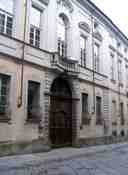
Look straight ahead: you'll recognize Palazzo Alfieri by its long, stately facade, which stands out in grayish-white against the street, with tall windows and an elegant balcony above the heavy wooden door - almost as if the building itself wants to declaim a hymn! Imagine yourself back in the 18th century. The streets of Asti echo with horseshoes on the cobblestones, the air smells of fresh rolls from the baker around the corner, and in the middle of this boulevard towers the impressive Palazzo Alfieri. But beware, for behind this undulating facade lies a true story that is not as static as it first appears! This building once began as a group of medieval houses, cobbled together, almost like a student house that hasn't been renovated for too long. Then, around 1696 - the year of wigs and powder, remember - the Alfieri family enters the scene. They buy the property and decide in 1736 that it's time for a makeover. They do it so thoroughly and chicly that even an architect with the fantastically dramatic name Benedetto Alfieri is brought in. Yes, a relative of... none other than Vittorio Alfieri, the famous poet! He was even born here, in a room that can still be visited - imagine if those walls could talk, they might whisper some of his sonnets to you. Inside, it's like walking into a theater: first an atrium like the foyer, then a monumental staircase to the right, and to the left a wing a good 22 meters long! And the best part? After the atrium, you suddenly find yourself in a spectacular courtyard, with walls that converge in a kind of mini-amphitheater. The faint echo of footsteps inside makes it almost magical. Also curious: there were secret doors, one to the side wing, and one to the garden. You'd almost expect a poet to be dreaming away somewhere... Vittorio Alfieri spent his first five years here - imagine little Vittorio running past the tall windows, perhaps even secretly stealing sweets from the kitchen in the cellar. In the cool vaulted cellar, there was not only a kitchen but also a famous wine cellar, simply called "the white wine cellar." The bricks had stories to tell! But time moves on, and the palazzo changes owners and appearance, especially in the nineteenth and twentieth centuries. The Colli di Felizzano family lived there, after Marianna Cristina Canalis, daughter of Vittorio's sister, married a count (yes, it all sounds very Downton Abbey-ish). Later, it became municipal property, thanks to Count Leonetto Ottolenghi - this man felt that Asti deserved something special and donated the building, on one condition: make it a place for culture, study, and remembrance. Fast forward to now: after countless renovations, the palazzo is a museum, dedicated to - who else - Vittorio Alfieri. You'll find his original furniture, prints, theater costumes, and even a lock of the poet's hair, preserved by his beloved Contessa d’Albany. Yes, even a poet sometimes wanted to keep a lock of hair to remember a loved one. In the museum rooms hang famous portraits of Alfieri and his family. In the salon, you'll see a painting of the Contessa with her dog Pirro - imagine, even dogs ended up on canvas! And if you listen closely, when it's quiet in the palazzo… you might hear the voices of former residents, the soft rustle of theater costumes, or a poet rhyming even in his sleep. Because if these walls could talk, they would tell you about lost love, loaded pens, and wine that flowed freely. So, take one last look at those tall windows and the elegant balcony. Who knows, maybe this place will inspire you to write your own sonnet. Just be careful not to start declaiming to the postman! Interested in a deeper dive into the building, the Alfieri museum, or the restorations? Join me in the chat section for an enlightening discussion.
Open dedicated page →To your right, you'll see a mysterious, underground structure with brick arches and ancient columns with ornate capitals, where light subtly reflects on the sandstone pillars - if…Read moreShow less
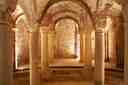
To your right, you'll see a mysterious, underground structure with brick arches and ancient columns with ornate capitals, where light subtly reflects on the sandstone pillars - if you look at the ground, you'll see the entrance to one of Asti's oldest secrets. Welcome to the crypt and museum of Sant'Anastasio! Imagine: we're going back in time to the early Middle Ages, when there were no modern buildings here, but sacred grounds full of stories, legends, and... well, if you're very quiet, you might still hear the whispers of ancient monks. This crypt was built deep beneath a church that has long since disappeared. Church enthusiasts among us would be amazed, because the original church was unfortunately demolished in 1907. Above it was an old Benedictine women's monastery dating back to at least the year 1008. It was also said that its founder, King Liutprando - yes, a real king - once traveled here as a pilgrim, searching for places dedicated to the Persian martyr Anastasio. Would he have thought: “Let me build a little cellar full of mysticism here?” Perhaps, because Asti at that time was teeming with Lombards and important religious life. So this place truly bursts with history. And then the architecture! Three small spaces with heavy vaults, supported by columns, some of which were borrowed from, yes, real Roman ruins. Imagine a gang of builders thinking: “Those old stones are still lying here, why not make a beautiful new temple with them?” Sometimes even old Romans have to do their part! And also notice the sandstone pillars: sturdy, robust, yet elegant, as if they secretly practiced for a column modeling competition. Walk a little further, and you'll come across remnants of Roman floors, medieval tombs, and even remains of the first church wall from the seventh century. So literally centuries are layered on top of each other here! And strange, isn't it, that it all actually came to light when the old school, which was built later, was also demolished again - as if the history of Sant'Anastasio simply didn't want to be forgotten. Let's dive into the time machine that this museum actually is: first of all, you'll see the most beautiful sandstone capitals here, directly from the Romanesque church of the twelfth century - an inspiration from Genoa and Milan, so nicely Italian, but with a good dash of local flair. Then walk past Roman tombstones, old church ornaments, mysterious cornerstones of towers, and carved arches that once provided a safe home for the wealthy of Asti. I always have to look closely myself to see if there isn't a secret staircase to a hidden treasure chamber somewhere. Haven't found it yet, by the way, but never give up! What makes it extra exciting: on the west side of the museum, you can literally touch the large Roman stone slabs that once formed the forum of ancient Hasta. Do you see the tombs from the seventh and eighth centuries? Then consider what Asti looked like back then: small streets, the soft jingle of donkey bells, and a city edge still protected by thick walls. And those walls! You'll even find pieces of the very first foundations of the early medieval church and parts of the baroque wall (which is much younger - from the seventeenth century). The east side of the museum is bursting with pieces of stone, reverently displayed, with capitals from demolished churches, ancient burial monuments, and ornaments from houses that once protected important people. You see not only the religious but also how the city built social networks and security, stone by stone. You are now in a place where time literally lies in layers beneath you. Every fragment you see tells a story of conquerors, monks, builders, ladies from the monastery, and perhaps - if you listen closely - old city secrets that are eager to be found. And now for some good advice: watch out for low vaults! People were probably a few centimeters shorter back then - or they simply didn't want a headache from standing up too quickly after praying. So stand up straight, smell the faint scent of cool stone, and feel how the past still holds its breath here... This story of Sant'Anastasio has actually only just begun! Ready to delve into the origins, architecture, or the church of Sant'Anastasio? Join me in the chat section for an enriching discussion.
Open dedicated page →You can easily recognize the Episcopal Seminary of Asti by its long, stately red brick facade with rows of tall windows and striking green shutters, precisely where the sidewalk…Read moreShow less
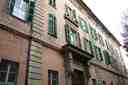
You can easily recognize the Episcopal Seminary of Asti by its long, stately red brick facade with rows of tall windows and striking green shutters, precisely where the sidewalk widens a bit at the small square. Is your nose now pointed towards this mighty baroque facade? Then you're exactly right! Imagine: it's 1574. You smell the wood of the market stalls, the air is filled with the ringing of bells, and suddenly a small procession of young clerics passes by - destination the very first seminary, a few houses down next to the church of Sant’Ilario. That church, by the way, had been there since the 13th century. At that time, the seminary was not much more than a residential house, but with a cookie jar full of patience - and real bishops like Domenico della Rovere and later Paolo Maurizio Caissotti - the building grew into this imposing complex. Around 1762, it was packed with very young seminarians who sometimes made so much noise that even the saints in the stained-glass windows rolled their eyes. Bishop Caissotti thought, “This can't go on,” and promptly enlisted the famous architect Benedetto Alfieri. The plans were ambitious: four sides around an inner courtyard, with high halls, arcades, even an elliptical aula... But alas, the treasury turned out to be as empty as my stomach before lunch. So they only got three wings and half of a third floor. And that beautiful round church on the corner? That remained a dream on paper. Fortunately, everyone got some extra space after they knocked down some adjacent houses and sacrificed the church of San Sisto - though the column with the crucifix in front of you still commemorates that. During the French period, 1798, it became a little less sacred here: soldiers took up residence, and even bakers populated the south wing with a scent of fresh bread that probably made many a seminarian jump out of bed. The number of students quickly dropped, to a mere twelve good souls. No need to panic, because in 1801 the doors were festively reopened, and the chatter of thirty young students filled the corridors again. Now, a little jump to a surprisingly quiet corner on the top floor… There you'll find the beautiful library today, founded in 1730 by Bishop Todone. And wow - what a treasure trove of books! Here lies one of the largest collections in Piedmont. And psst, go a little further: hidden rooms full of dusty old instruments and display cases with 19th-century apparatus for chemical and physical experiments, as if Einstein himself could walk in at any moment. But wait, there's more in the air than just book dust. In the halls, you'll discover paintings from centuries ago, such as the tender “Natività con i santi Bartolomeo e Benedetto” from the sixteenth century - if they could talk, they might reveal secrets from long-gone nights full of prayer and whispers. And then there's the “Adorazione dei Magi” from 1517, and the stately portrait of Monsignor Garberoglio, painted in 1896 - he secretly watches strictly to make sure you behave during this tour. So, listen carefully when the wind whispers here, because every stone of the seminary seems to want to tell its own story - from giggling students to learned bishops, from French soldiers with rumbling stomachs to impressive rows of books that many an Astigiano would envy. What do you think, do you feel history tickling your shoes here too? For a better understanding of the library, the paintings, or the photo gallery, contact me via the chat below.
Open dedicated page →You now see before you the imposing brick building with three round rose windows and a tall bell tower on the right; look at that gigantic facade with arches and columns, because…Read moreShow less
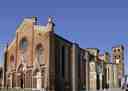
You now see before you the imposing brick building with three round rose windows and a tall bell tower on the right; look at that gigantic facade with arches and columns, because there the Cattedrale di Santa Maria Assunta shines in full glory. Welcome to Asti's most important church, the impressive heart of the city - and believe me, here history is as thick as the walls themselves! Imagine: you are at the beginning of the fifth century. Here, where this Gothic giant now tries to touch the sky, there were only scattered buildings and a small church that was too small and not safe enough for everyone. The city grew, and it was decided to move the bishop's church within the city walls, where hopefully they wouldn't have to search for a new place with every attack. They clearly had no desire to keep moving - you'd lose your map. The first version of this cathedral was built with rubble from collapsed houses. Literally recycling, but medieval style! Between 1070 and 1095, things went wrong: the roof came down after a fire broke out - started by none other than Adelaide of Susa, the mother-in-law of an emperor, who had a quarrel with the local bishops. But don't worry, less than thirty years later, Pope Urban II himself came by and consecrated the new house of God, which was ready to attend even the heaviest mass. Over the centuries, the cathedral grew into a masterpiece. Look closely: the three high arches and impressive rose windows are typical of the Gothic architecture that spread throughout Northern Italy. The tower? That's from 1266, thanks Jacopo Ghigo! He already had it tough enough - the first bell tower threatened to collapse, so he built one with no less than seven floors, plus an octagonal spire on top. Throughout the centuries, the cathedral was repeatedly expanded and rebuilt. Each new era, from Gothic to Baroque, left its mark - sometimes as subtle as an elephant in a china shop. And then the mysterious portal on the side, richly decorated with statues of saints: Here you see, among others, Saint Jerome, Peter, Paul, and Saint Biagio. For centuries, people thought this piece was much younger because of its finesse, but no - the medieval people certainly knew their craft! A small riddle for you: do you see the marble sculpture group with Maria Assunta surrounded by six angel heads? That was stably placed here in 1470 - hopefully, those angels didn't give her vertigo! Still, not everything went smoothly. In later centuries, priests and master builders found it necessary to embellish or rebuild things according to the fashion of their time. So Baroque chapels appeared that sometimes would have fit just as well in a piggy bank. Many old frescoes and details were literally chiseled away to make room for new artworks. Fortunately, the most original capitals from the early fourteenth century have been preserved - as if they clung tightly to their spot with every renovation! Inside, behind the heavy portico, you look up and see that all the vaults are beautifully painted. The Milanese masters Francesco Fabbrica and Pietro Antonio Pozzi, along with Bocca from Bologna, painted the entire Bible as a comic strip on these ceilings. Get your neck muscles ready - you can look at this for hours! The cathedral houses an impressive collection of artworks: from the painting "Lo Sposalizio della Vergine” by Gandolfino da Roreto to woodwork by Salario di Moncalvo and even a unique duo of historic organs that can give a concert together. Yes, you heard right, this cathedral is actually one big instrument room, sometimes it seems like a music store with extra sacred sounds! And every major holiday, such as the day of the patroness, the square in front of this cathedral was transformed into a festival for choir singers, musicians, and singing citizens from the entire region. So breathe deeply, smell the ancient stones, listen to an imaginary organ concert echoing under the vaults, and imagine how many feet, hopes, and secrets this cathedral has received under its roof for centuries. The Cattedrale di Santa Maria Assunta - where stonemasons, believers, bishops, and even rebellious mothers-in-law have left their mark. You see: every church has its stories, and some are even hotter than hell! Intrigued by the description, works, or the photo gallery? Discover more by joining me in the chat section below.
Open dedicated page →To find the Mazzola Palace, look for that large, sturdy brick building with a partially open wooden door and green ivy climbing up the wall-you can hardly miss it on this…Read moreShow less
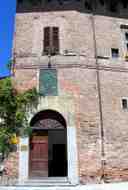
To find the Mazzola Palace, look for that large, sturdy brick building with a partially open wooden door and green ivy climbing up the wall-you can hardly miss it on this street! And now, as you stand before this robust facade, imagine stepping back in time to 13th-century Asti, when rough medieval builders and noble families largely held sway here. You can almost hear the tapping of hammers on stones and the hubbub in the street. Behind these weathered walls-where, by the way, you can still clearly spot the round “a roncola” arches in the old windows on the side-resides one of the city's oldest stories. Once, this palace wasn't even a palace, but primarily a chic little house avant la lettre for a powerful family, the Mazzolas. In 1516, it acquired its elegant Renaissance form, specially commissioned by Francesco Mazzola, a righteous scholar and count who certainly didn't like half-measures. Nevertheless, the exterior has often been renovated. There was once an impressive facade with marble moldings and stone decorations next to the grand gate, but as you can see, these are now almost worn away. Time, rain, and probably a few enthusiastic pigeons have left their mark! Imagine walking through the doors inside… in earlier times, you would encounter two courtyards. The first had a beautiful portico with arches that was bricked up in the last century. The second is next to a garden and has a portico with four round arches on sturdy brick Doric columns; perfect for shady conversations or scheming noblemen. And whoever looks up in the large hall downstairs will see a wooden coffered ceiling-if you're lucky, you'll catch a glimpse of paintings with the Mazzola family's mottos. On the first floor, there are also recessed ceilings, but part of them remains somewhat mysteriously hidden behind 19th-century vaults. Perhaps a forgotten treasure lies behind them, who knows! The Mazzola Palace is not just a piece of architecture-this is also the city's memory. Since 1980, it has been home to Asti's historical archive. It might sound boring, but here you'll find everything: documents about festivals, markets, old laws, and even handwritten charters from the year 947. Yes, really-the average Astigiano doesn't even know where their bicycle key is, but the archive knows exactly who ruled the city during the Napoleonic era! The most famous piece of paper? That's the “Codice Catenato” from the 14th century: Asti's civil code, full of rules and juicy legal details that any contemporary lawyer would envy. Or the “Codex Astensis,” which tells you everything about the families, quarrels, and friendships between Asti and the imperial court. A nice gossip magazine, those medieval archives. In one of the halls, there's a tribute to the city's most famous horse race, the Palio. Here hang old documents and cheerful drawings of the race throughout the centuries, with the oldest piece from 1275, when the Astesians, after a victory over Alba, secretly ran their Palio along the enemy's walls-you might almost say: Asti was already not averse to a bit of mischief back then! And then there are the people who once lived here. The Mazzolas were no ordinary folk. Notaries, advisors, counts… they were even neatly buried in Asti Cathedral. Unfortunately, the name died out after Filippo Mazzola gave the house away in 1710 to the “Buon Pastore” institute, intended to house young people who were having a tough time. Mercy and nobility-you don't see that together every day. One thing is certain: behind these solid brick walls hide hundreds of secret voices, from combative noblemen to stubborn city administrators and festive citizens. So, if you place your hand on the wall for a moment, who knows, you might hear the soft whispers of all those stories… Or it's just the wind, but who knows. Thank you for taking this magical journey through old Asti with me! If you're now hungry from history-remember, even the Mazzolas loved a good lunch after paperwork. Buon viaggio! Fascinated by the historical events, the palace, or the municipal historical archive? Let's talk about it
Open dedicated page →
Frequently asked questions
How do I start the tour?
After purchase, download the AudaTours app and enter your redemption code. The tour will be ready to start immediately - just tap play and follow the GPS-guided route.
Do I need internet during the tour?
No! Download the tour before you start and enjoy it fully offline. Only the chat feature requires internet. We recommend downloading on WiFi to save mobile data.
Is this a guided group tour?
No - this is a self-guided audio tour. You explore independently at your own pace, with audio narration playing through your phone. No tour guide, no group, no schedule.
How long does the tour take?
Most tours take 60–90 minutes to complete, but you control the pace entirely. Pause, skip stops, or take breaks whenever you want.
What if I can't finish the tour today?
No problem! Tours have lifetime access. Pause and resume whenever you like - tomorrow, next week, or next year. Your progress is saved.
What languages are available?
All tours are available in 50+ languages. Select your preferred language when redeeming your code. Note: language cannot be changed after tour generation.
Where do I access the tour after purchase?
Download the free AudaTours app from the App Store or Google Play. Enter your redemption code (sent via email) and the tour will appear in your library, ready to download and start.
If you don't enjoy the tour, we'll refund your purchase. Contact us at [email protected]
Checkout securely with 


