
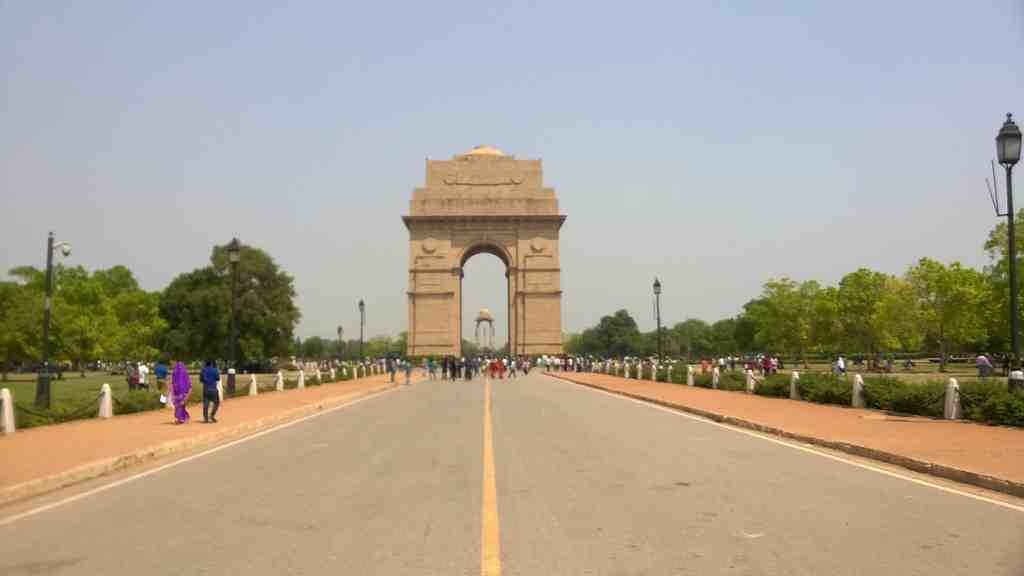
Rajpath holds immense importance as one of the most prominent roads in India. Every year on the 26th of January, it becomes the focal point for the Republic Day parade. This national event showcases India's rich cultural heritage, military prowess, and technological advancements. Crossing Rajpath is Janpath, meaning "People's Way." Rajpath extends in an east-west direction, with roads from Connaught Place, Delhi's financial center, merging into it from the north.
As you ascend Raisina Hill, you will be flanked by the North and South Blocks of the Secretariat Building. These iconic structures house key government offices, such as the offices of the Finance, Home, External Affairs, and Defense ministries. Continuing along Rajpath, you will reach the gates of the magnificent Rashtrapati Bhavan, the official residence of the President of India. The imposing Rashtrapati Bhavan once served as the viceroy's residence during the British Raj.
At Vijay Chowk, Rajpath intersects with Sansad Marg, offering a glimpse of the majestic Parliament House of India. This impressive structure on your right marks the heart of Indian democracy, where important legislative decisions are made.
Rajpath also plays a solemn role in the funeral processions of prominent politicians who have served the nation. Its significance dates back to the early 20th century when the British Imperial Government decided to shift the capital of the British Indian Empire from Calcutta to Delhi. The renowned architect Sir Edwin Lutyens was entrusted with the construction of a new city, New Delhi, centered around a grand boulevard known as the "ceremonial axis" or Rajpath. The panoramic view of Delhi from Raisina Hill, unobstructed by the National Stadium, was an essential aspect of Lutyens' vision.
Most of the esteemed buildings surrounding Rajpath, including the Secretariat Buildings, were designed by Lutyens and Sir Herbert Baker. The rich architectural heritage of these structures further exemplifies the road's significance in the governance of India.
Originally named Kingsway, in honor of Emperor George V's visit and the proclamation of the capital's relocation during the Durbar of 1911, Rajpath eventually received its Hindi name, Rajpath, after India gained independence. This change represented a translation rather than a substantial renaming, as 'Rajpath' in Hindi is akin to 'King's Way' in meaning.
In recent times, under the Central Vista Redevelopment Project, Rajpath has undergone redevelopment and has been renamed Kartavya Path, which translates to 'Path of Duty'.
As you conclude your tour of Rajpath, take a moment to appreciate the significance of the Rashtrapati Bhavan, the North and South Blocks, Vijay Chowk, India Gate, the National War Memorial, and the rich history that unfolds along this monumental boulevard.


