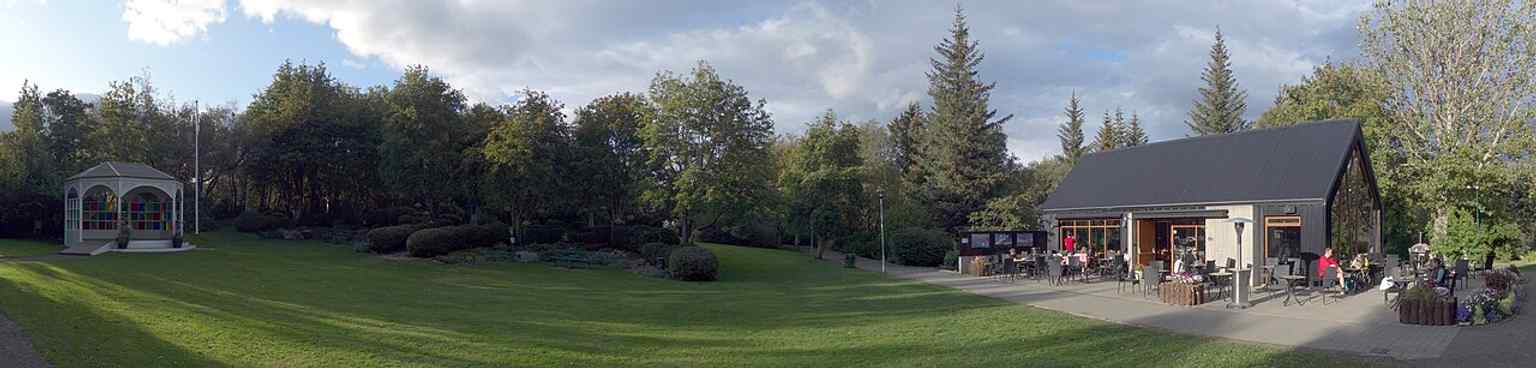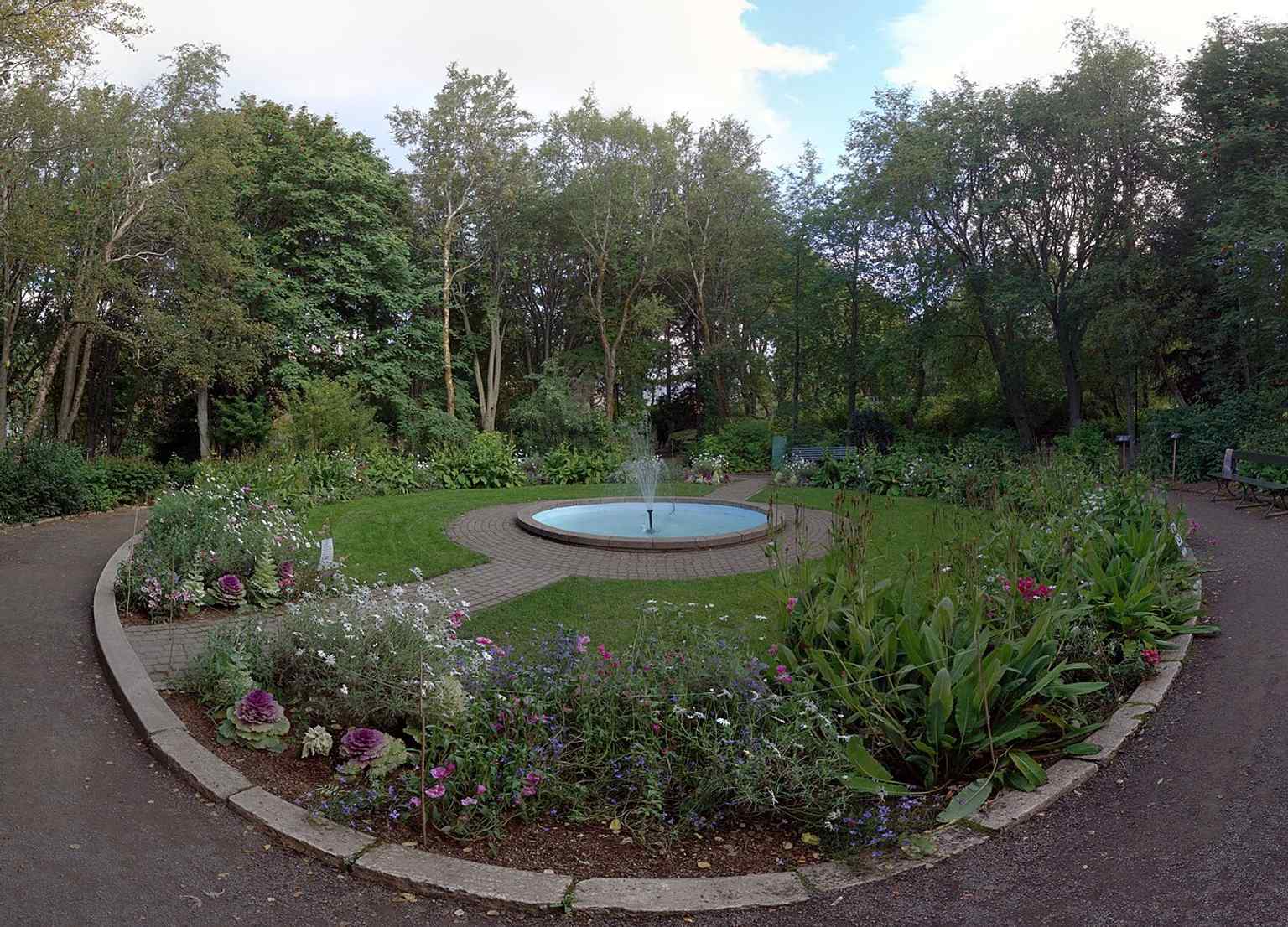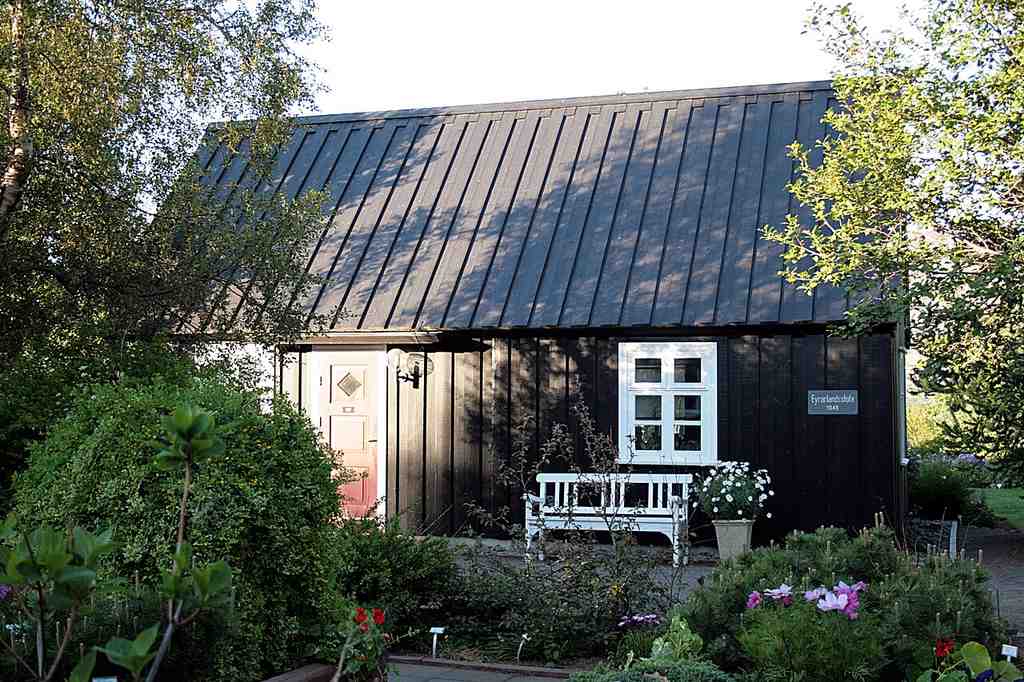
Look for the black wrought-iron gate between stone posts, with curving gravel paths and the old timber house of Eyrarlandsstofa tucked inside.
This garden makes a quiet but stubborn point: even this far north, about eighty-five kilometers south of the Arctic Circle, care can remake a place. Akureyri has relied on quiet caretakers of the city as much as on officials or builders. Patient people planted, weeded, protected, and waited... and over time that kind of work changed not just the land, but the town’s idea of itself.
That story starts with women. In nineteen ten, women in Akureyri formed the Park Association to make the town more beautiful, after the city granted them a hectare of land the year before. That made this the first public park in Iceland. Not a side project, either... more like a civic declaration with flowerbeds.
The person who came to embody that effort was Margrethe Schiöth. She moved here from Denmark in eighteen ninety-nine after marrying the baker Axel Schiöth, then took charge of the park and cared for it for the next thirty years. Her gardening turned into a public legacy. By nineteen twenty-six, when King Christian the Tenth and Queen Alexandrine visited Akureyri, people remembered this garden as one of the sights that impressed them most. Later, on her seventieth birthday, the city council proposed naming her an honorary citizen, saying she had done more than anyone to add lasting beauty to the town. That is a lovely civic compliment, and a fairly high achievement for someone armed mainly with patience.
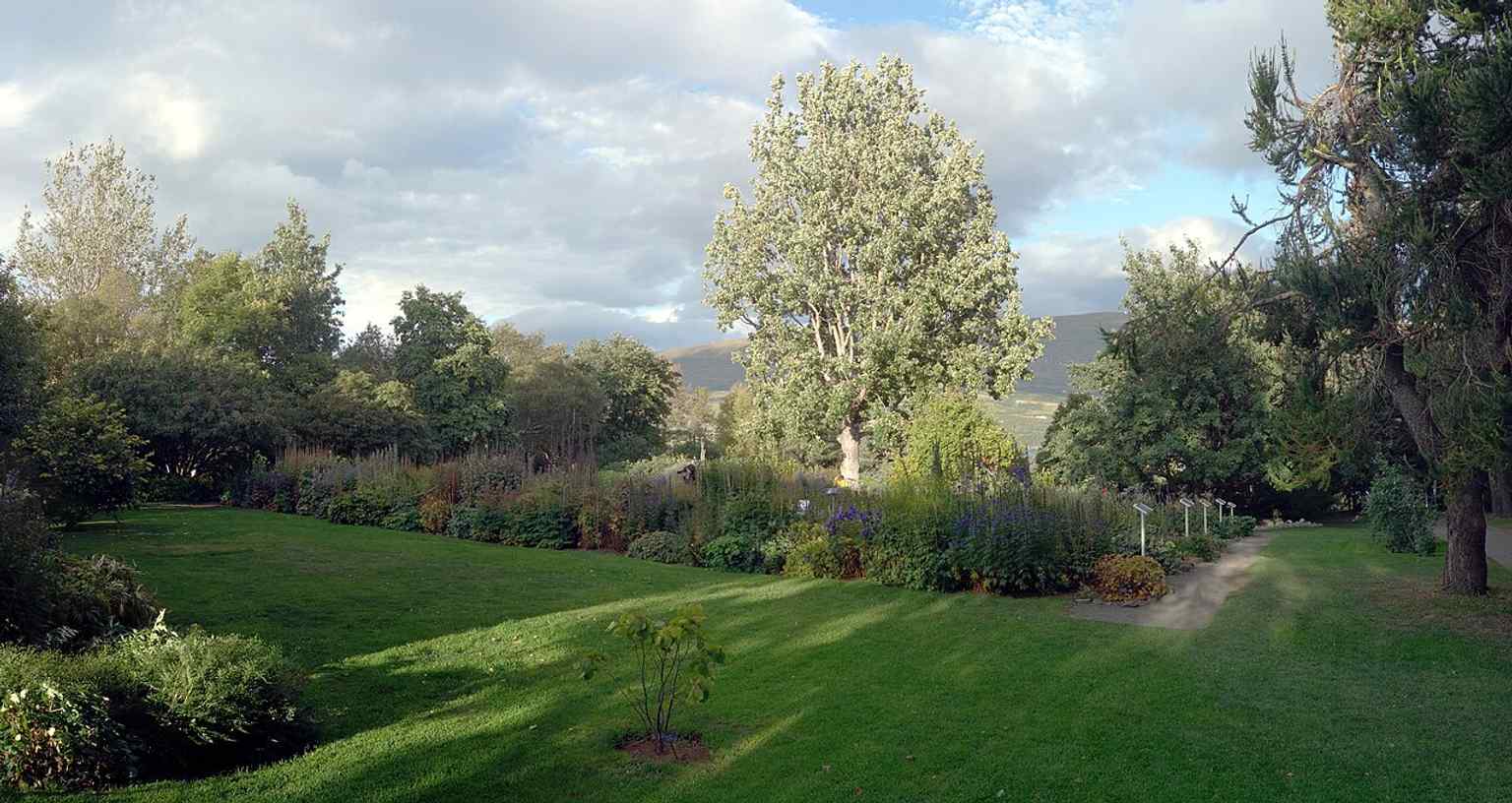
If you glance at your screen, the aerial image shows how the grounds spread into a real landscape, not just a neat patch of municipal greenery. The park society managed it until nineteen fifty-three, and it grew to three point six hectares. Then, in nineteen fifty-seven, the city bought Jón Rögnvaldsson’s plant collection, helping formally turn the park into a botanical garden. Today it holds around seven thousand species, including about four hundred Icelandic plants, proving that the edge of the Arctic is not the edge of possibility.
And if you check the app again, Eyrarlandsstofa, one of Akureyri’s oldest houses, sits inside these grounds too. So this place does double duty with quiet confidence: science, beauty, history, poetry, memorials, and everyday rest all share the same paths.
What leaves the deeper mark on a town: a dramatic building finished in one sweep, or years of careful tending that slowly change how people feel when they stand somewhere? This garden gives one clear answer. Akureyri did not shape itself through plans and monuments alone; it also grew because people kept tending it. The garden is open daily from eight in the morning until ten at night with free entry, and when you’re ready, Akureyri Hospital is about a three-minute walk from here.