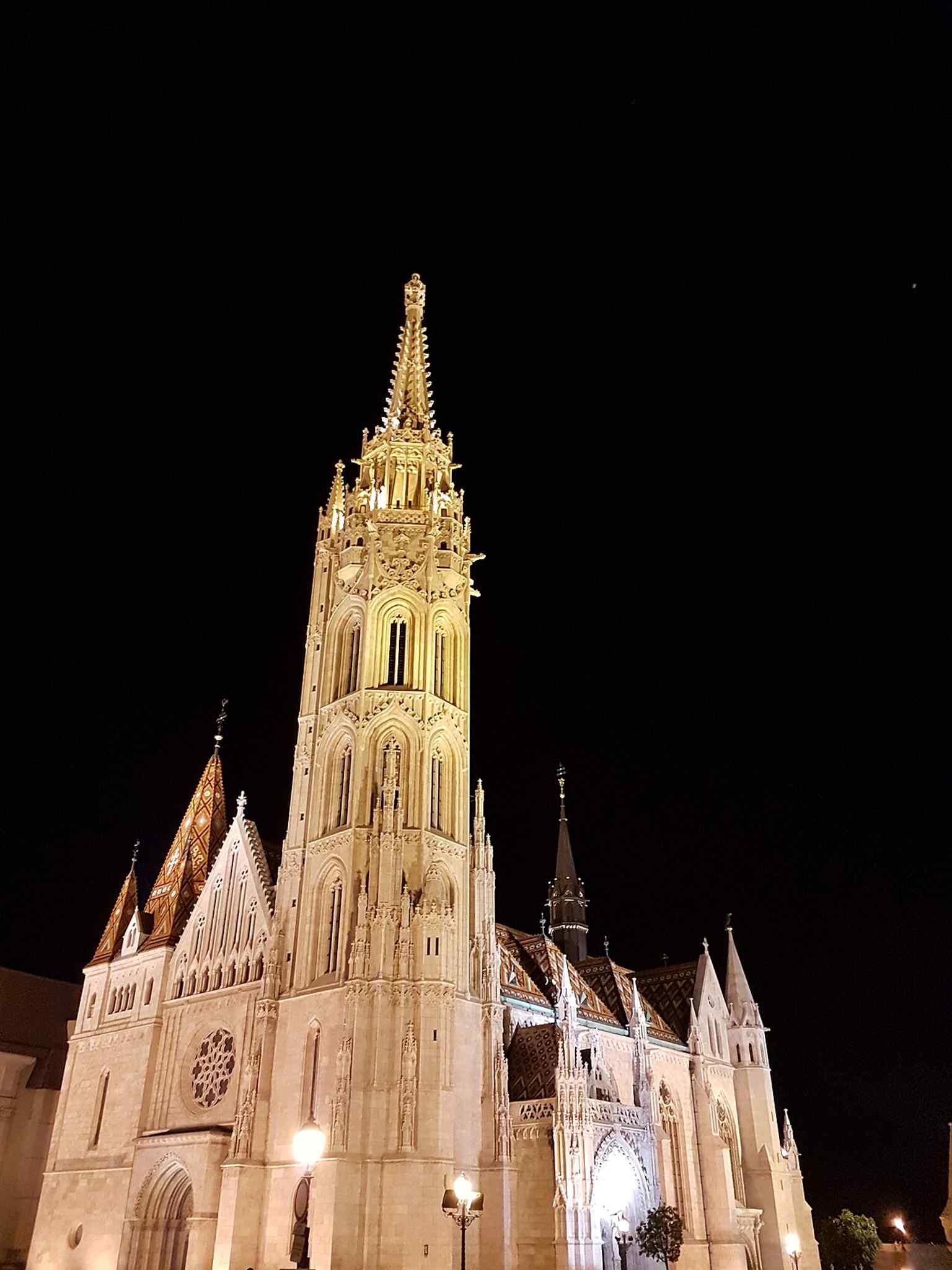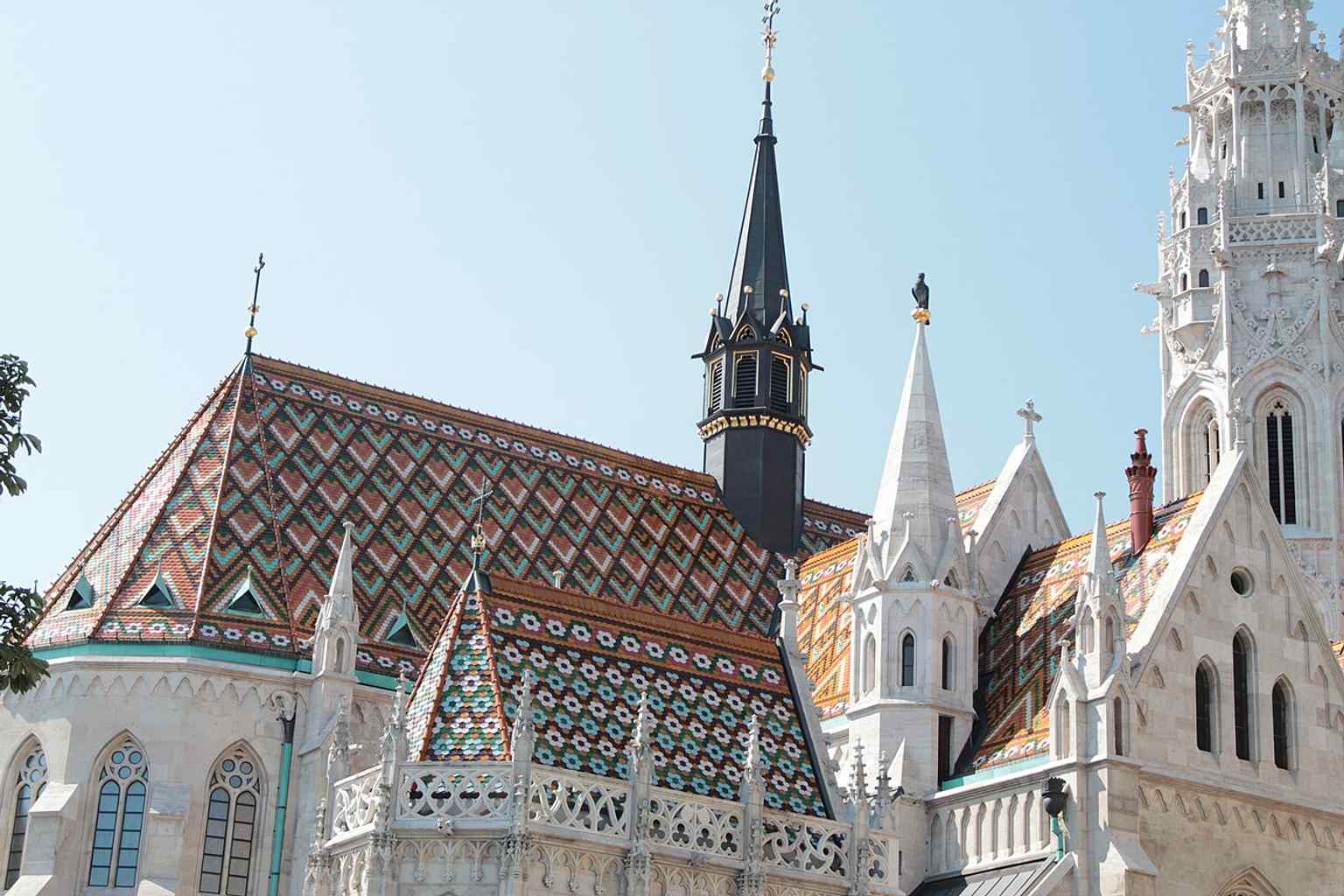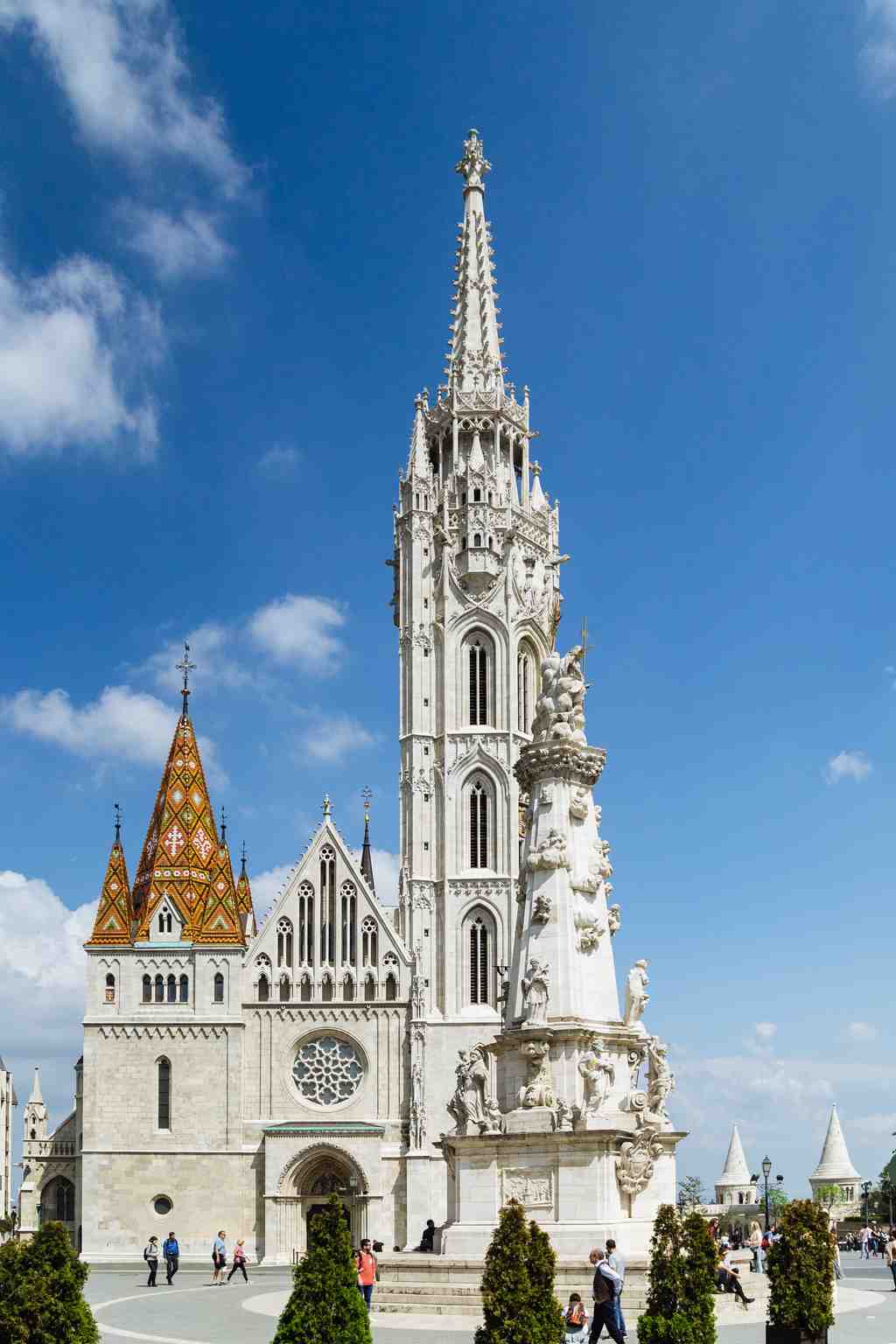
On your right stands a towering white stone church, defined by its soaring Gothic spire and a brilliantly colored roof of diamond-patterned ceramic tiles. This is Matthias Church.
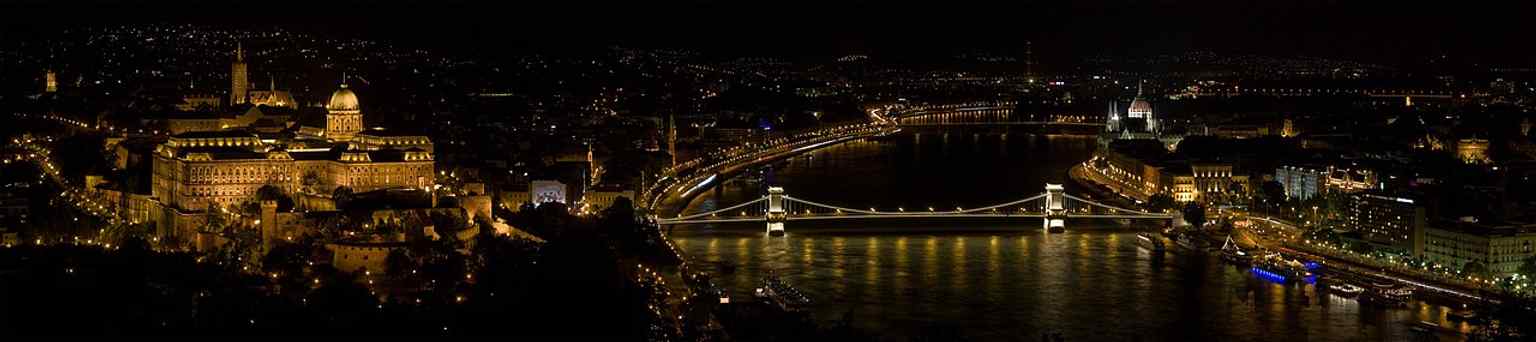
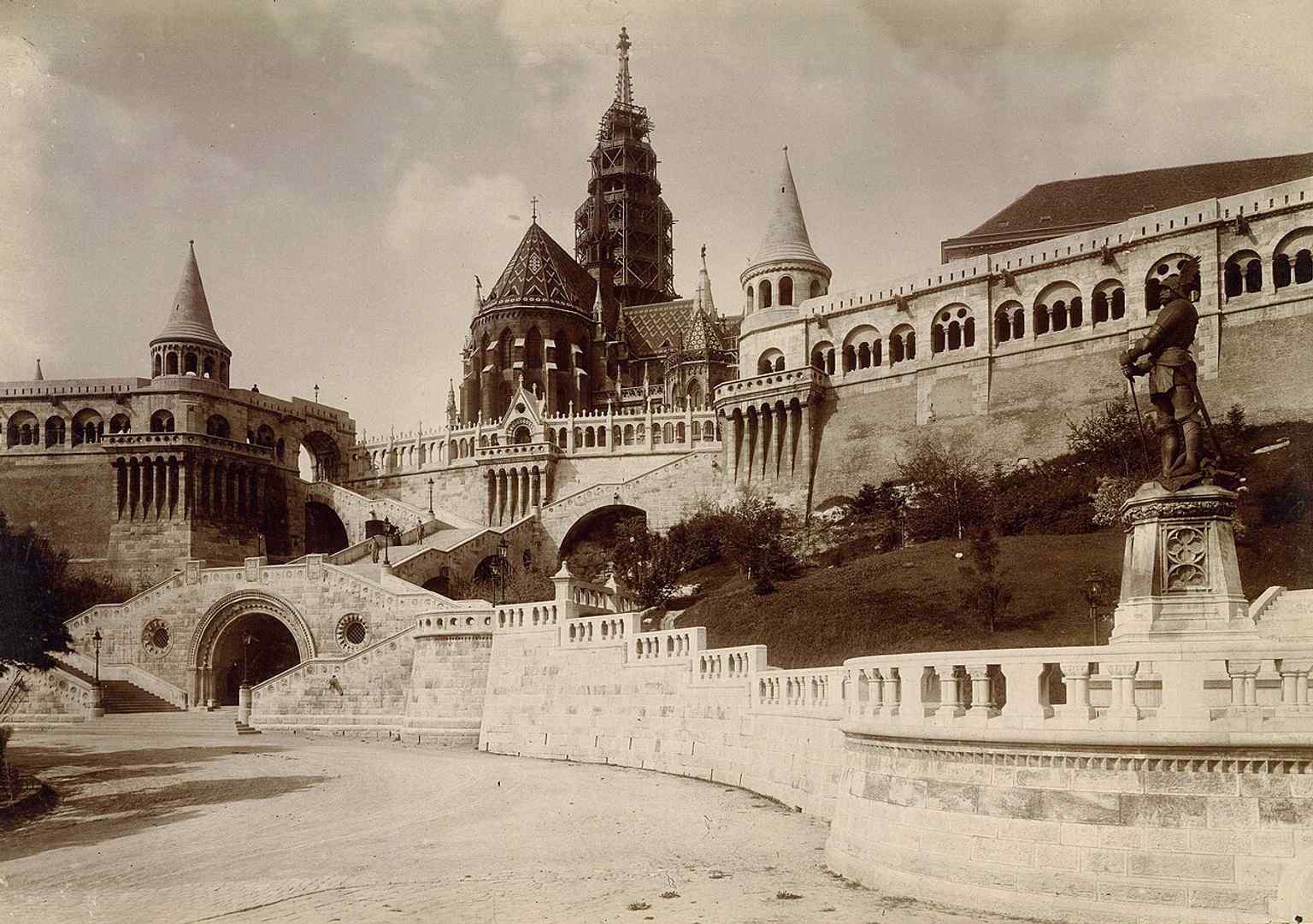
We have spent time looking at the visible landmarks of this district, but here, the most powerful story isn't about what was built for everyone to see. It is about what was deliberately hidden away beneath the surface. But before we dig into that, take a quick look at your screen to see how this area has evolved over the last century, while that spectacular spire has remained a constant.
The defining moment for this church actually begins with a national tragedy. Following the devastating Battle of Mohács in the sixteenth century, the Ottomans eventually seized Buda in fifteen forty-one. Almost immediately, this grand Catholic sanctuary was converted into the city's main mosque. Sultan Suleiman himself gave thanks within these walls, which were quickly plastered over to hide their Christian frescoes.
But right before the takeover, the local faithful committed a desperate act of preservation. Terrified that their sacred objects would be desecrated, they took a beloved votive Madonna... a special statue offered to God to fulfill a religious vow... and placed it inside a small alcove in the wall. Then, they bricked it up completely.
Talk about keeping a secret. For one hundred and forty-five years, the statue sat in total darkness. It was mere inches from the Ottoman garrison, who used the space to pray, completely unaware of the silent guardian waiting just behind the plaster.
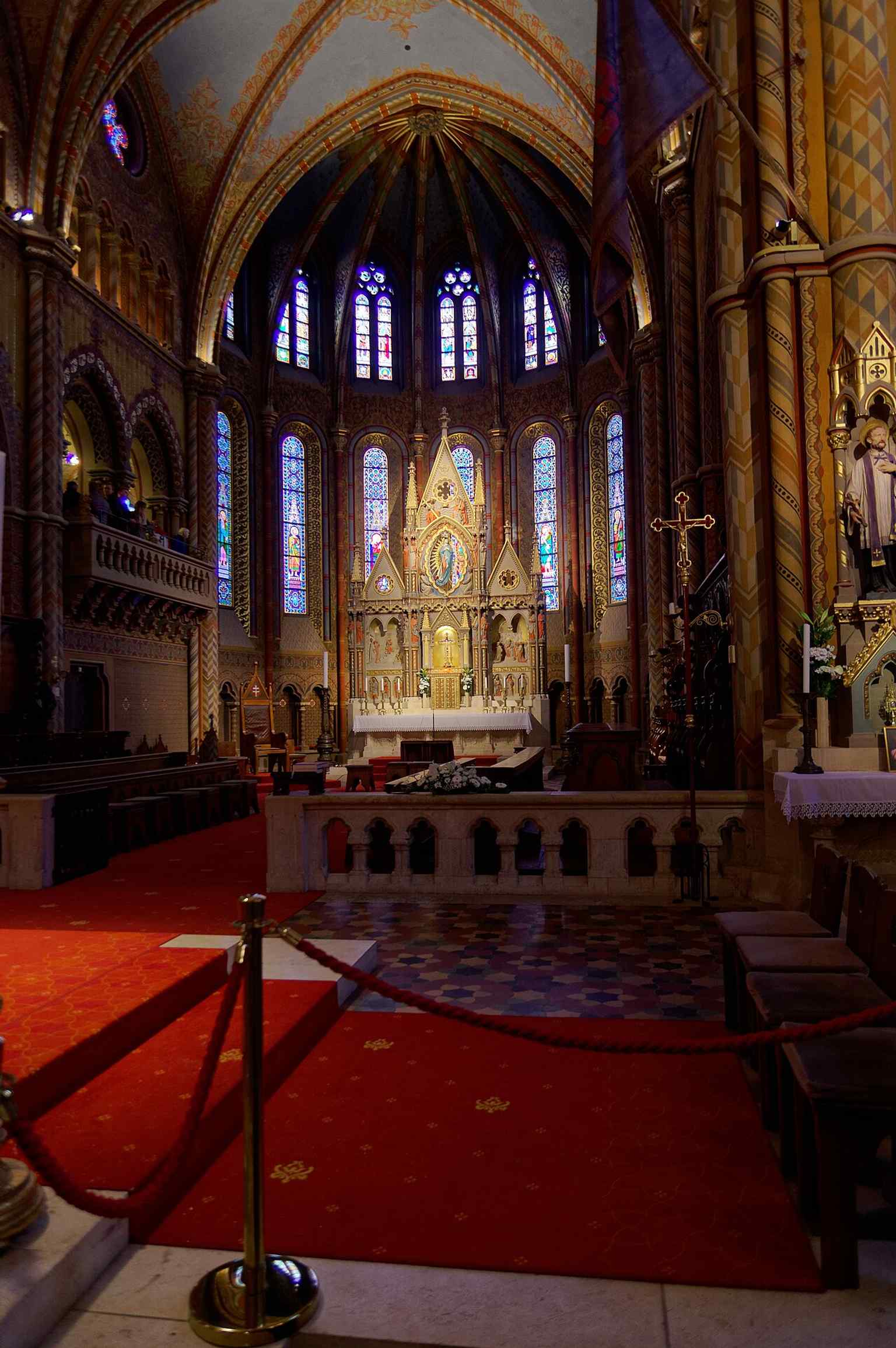
The miraculous payoff to this hidden truth came in sixteen eighty-six, during the siege of Buda by the Holy League. The fighting was fierce, and cannon fire battered the walls of the church. During one massive explosion, a section of the mosque's interior wall simply crumbled away. As the dust settled, the praying Muslim soldiers looked up and saw the long-forgotten sculpture of the Virgin Mary suddenly staring back at them.
You can check your app for a detail of the main altar, the focal point where this very statue re-emerged.
To the Ottoman defenders, this was not just a lucky cannon strike. It was a terrifying omen. The sudden appearance of the Lady of the Hungarians was taken as a sign that she was physically reclaiming her home. It was a psychological blow so severe that the garrison's morale shattered, and the city fell that exact same day.
It is incredible to think about that moment... a violently crumbling wall, a cloud of stone dust, and a hidden face emerging from the darkness to change the course of an entire war.
You can explore the interior yourself if you like, as the church is open to visitors every day from nine in the morning until five in the evening. Whenever you are ready to continue, we will head toward the Fisherman's Bastion, which is just a brief one-minute walk away.