
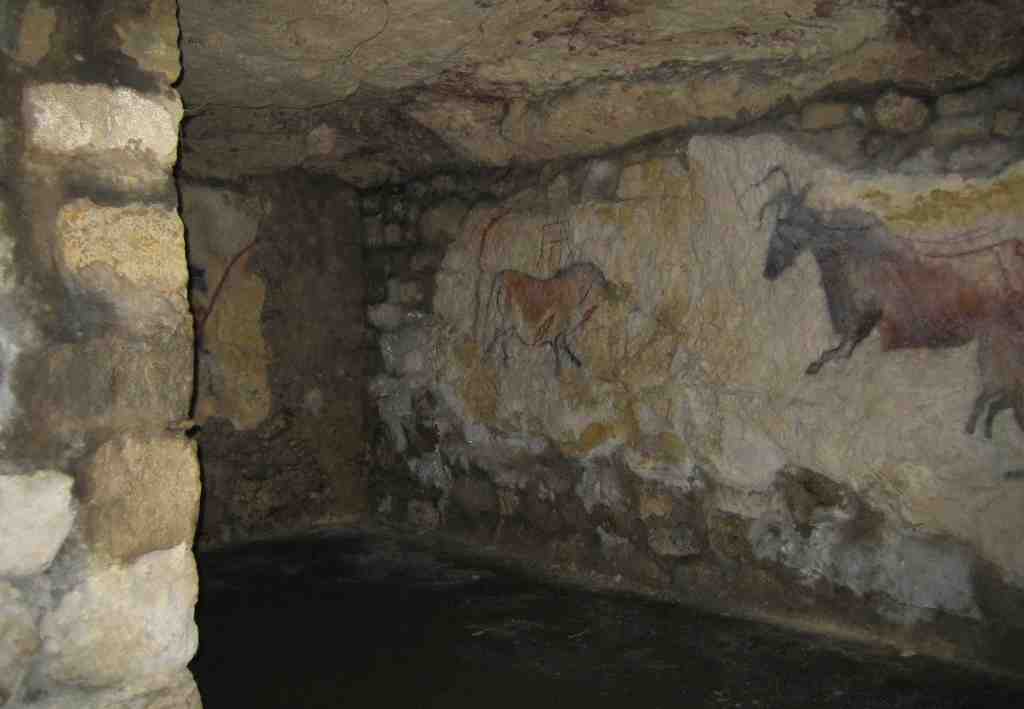
As you look toward the entrance of the Buda Castle Labyrinth, picture the rough-hewn limestone walls dropping away from the street, opening into pale, low-ceilinged chambers decorated with striking, primitive animal paintings.
Up above, we admire the neat architecture and quiet elegance of the castle district, but right beneath our feet lies a completely different, shadowy reality. This is Subterranean Buda, a sprawling three-kilometer network of natural caves originally carved out by ancient thermal springs. At the dawn of time, prehistoric humans sought shelter in these very pockets of limestone and marl, a soft, crumbling sedimentary rock. But over the centuries, medieval residents connected these natural hollows to their own cellars, creating a massive, disorienting maze twelve meters below the cobblestones.
These winding passages are famous for a much darker guest. According to local legend, in fourteen sixty-two, King Matthias imprisoned the notorious ruler of Wallachia, a historical region in modern-day Romania, right here in the freezing dark. His name was Vlad Tepes. You probably know him by his other name, Dracula.
Imagine being sealed beneath the earth, the heavy darkness pressing in from all sides, listening to the endless drip of freezing water. What kind of mind emerges from over a decade in an underground cell?
The myth claims the cruelty of this labyrinth forged the true monster we know from the stories. But the reality is a masterpiece of political spin. King Matthias had embezzled a massive fortune sent by the Pope to fund a military campaign against the Turkish empire. He needed a convenient scapegoat to explain where the funds went, so he arrested his former ally Vlad, locked him away, and actively spread the vicious Dracula legends throughout Europe to justify his betrayal. The monster was, essentially, created for a medieval public relations campaign.
Yet, these caves have always been a repository for hidden histories. In the nineteen thirties, a speleologist, which is a scientist who studies caves, named Ottokar Kadic waded through knee-deep mud in total darkness to properly map the labyrinth. At the bottom of a fifty-foot medieval well, he made a gruesome discovery. He found several female skeletons. Local folklore insists they were members of the local Ottoman Pasha's harem, the private household of a high-ranking Turkish official. They were either thrown to their deaths or jumped to escape capture when the castle was violently retaken in sixteen eighty-six.
The psychological weight of these caverns is heavy, holding centuries of desperation within their stone walls. Let us leave the shadows behind and step back into the comfort of the surface streets. If you feel brave enough to wander the depths yourself, the labyrinth is open every day from eleven in the morning until six in the evening. For now, we will shake off the chill and head toward Dísz Square, which is just a brief two-minute walk away.




