
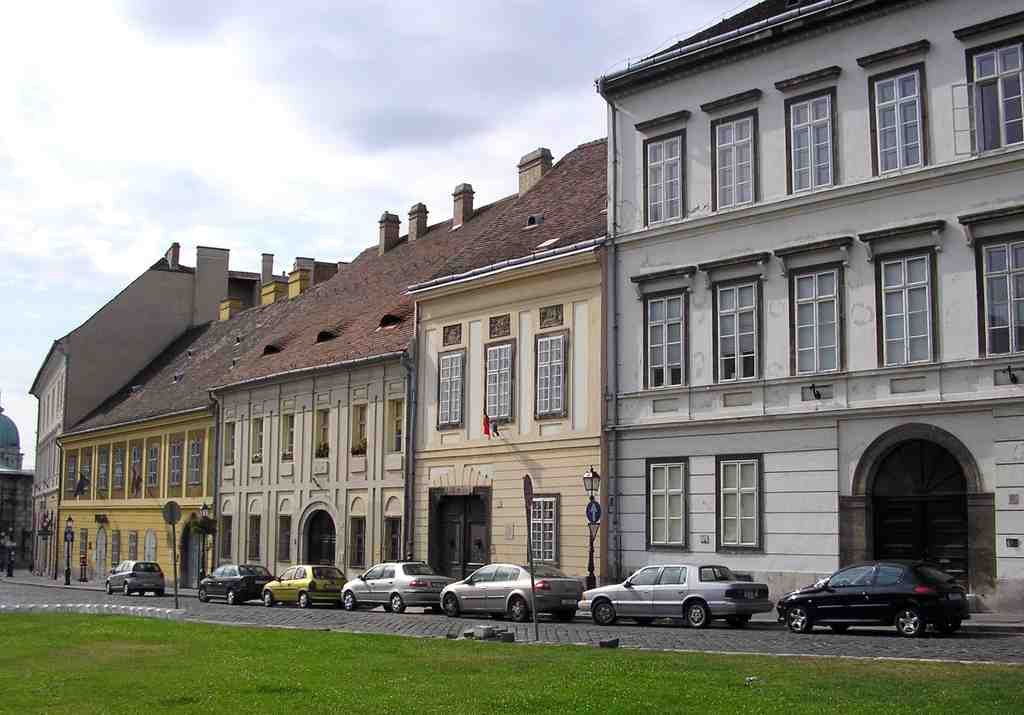
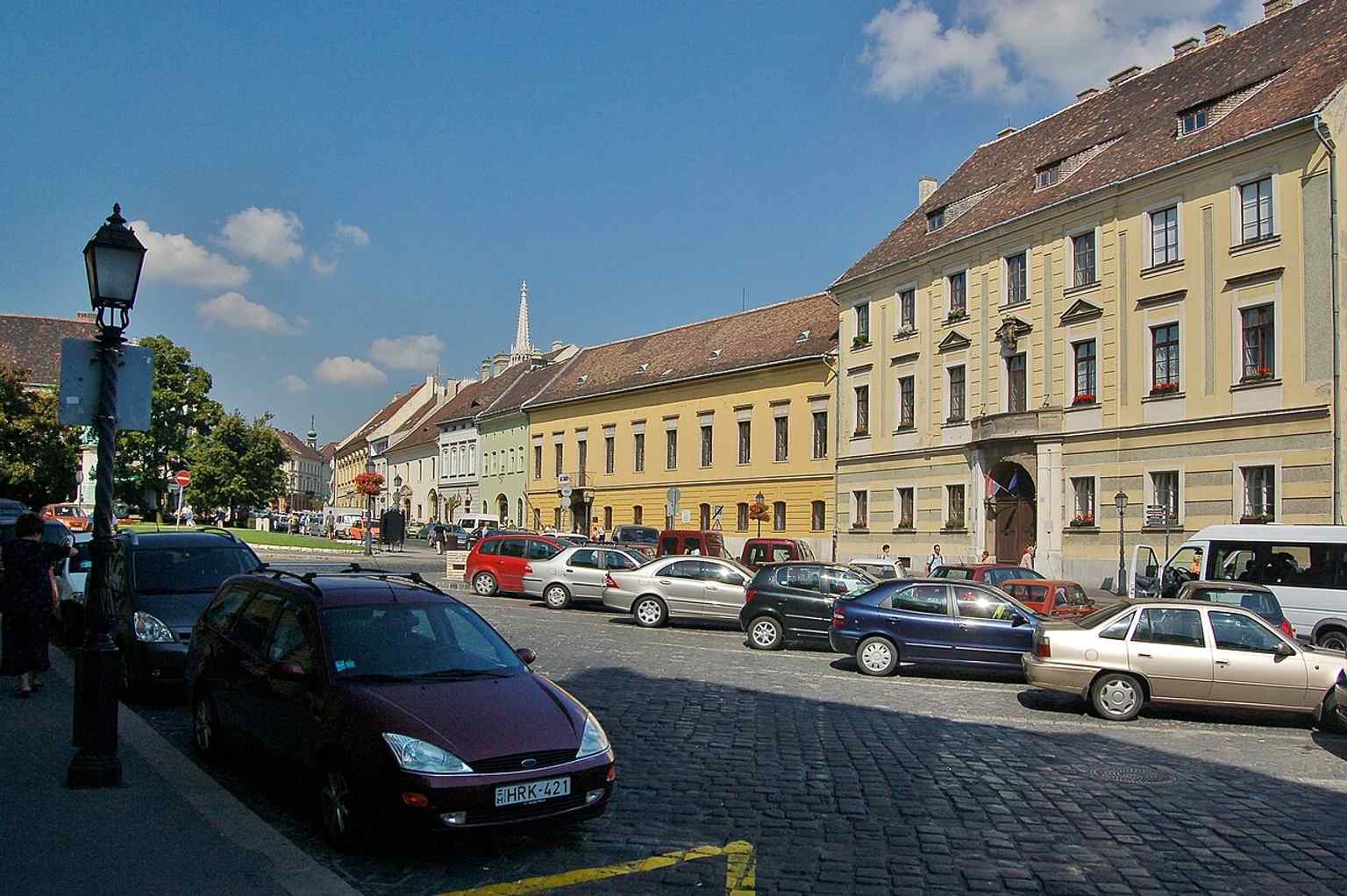
You are looking at a curving row of historic multi-story stucco facades, defined by their steeply pitched clay tile roofs punctuated by small dormer windows and classic, multi-paned rectangular windows. This is Dísz Square, the historic core of the Buda Castle District.
Near the center stands the Honvéd statue, an intricate bronze monument featuring an angel holding a laurel wreath over a soldier. It only took twenty-six years to raise this tribute. It honors the soldiers who retook Buda in 1849, but political friction with the Austrians and a chronic lack of funds stalled the project for decades. Eventually, local theater actors hosted charity performances to crowd-fund the remaining costs, and the sculptor had the monument cast in Brussels from melted-down cannons just to push it over the finish line.
It is fascinating how much time and treasure was spent raising these proud monuments into the light, while some of the square's most gripping history unfolded completely out of sight. During the Second World War, the elegant residences around you became a high-stakes theater of shadows. Over at number twelve, the family of the Regent's daughter-in-law operated a secret radio transmitter down in their cellar, desperately trying to organize an exit from the war. Across the square at number seven, the Gestapo set up a local headquarters, quietly using their own equipment to listen in on those basement broadcasts.
When German forces finally occupied the castle area, the family at number twelve made a frantic escape. They fled through a concealed subterranean passage connecting their home to the Papal Nunciature, the Vatican's diplomatic embassy, at number four. They banked on finding safety under Vatican protection. Instead, German soldiers simply tracked them through the dark subterranean passage and arrested them on the other side.
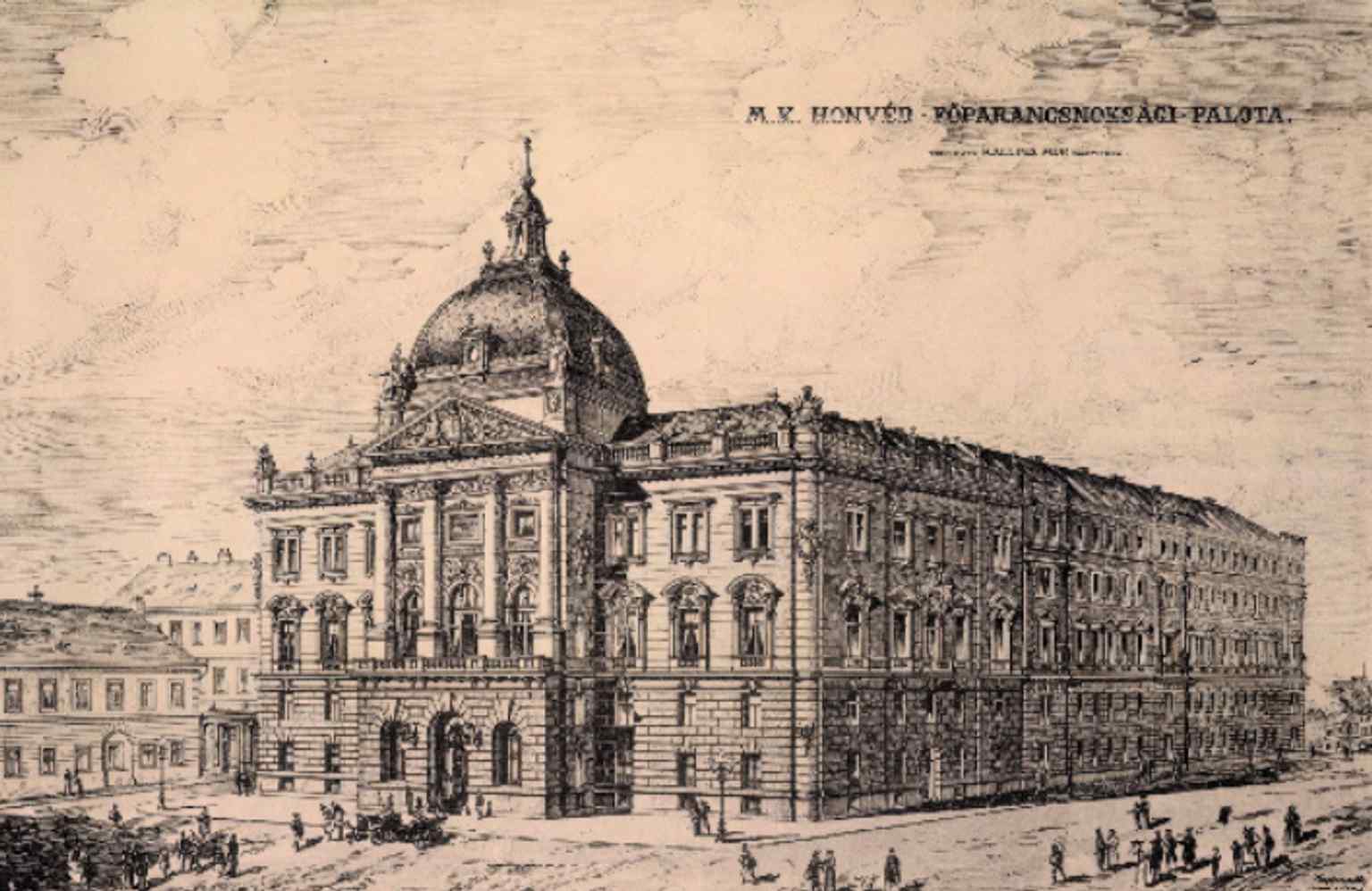
Above ground, the devastation of that conflict was absolute. Take a look at your screen for a glimpse of the Honvéd High Command building as it stood in its original grandeur back in 1890. It was a towering, neo-Renaissance masterpiece crowned with a massive dome. But architecture is tragically fragile. What took years of painstaking labor to construct was shattered in a matter of days during the siege. You can see how drastically the skyline was sheared off if you pull up the before and after comparison on your device. For over half a century, the majestic High Command building sat as a jagged, two-story stump, a raw and visible scar. Only recently have the surviving lower levels been thoughtfully conserved.
It leaves you with a heavy kind of pride. This space holds the memory of both quiet subterranean resistance and the sudden, violent erasure of grand achievements. Let us continue moving toward the palace ruins, carrying this intricate legacy of destruction and memory with us, as we head to the Archduke Palace of Joseph, just a three-minute walk away.






%2C%202006%20(01).jpg)