
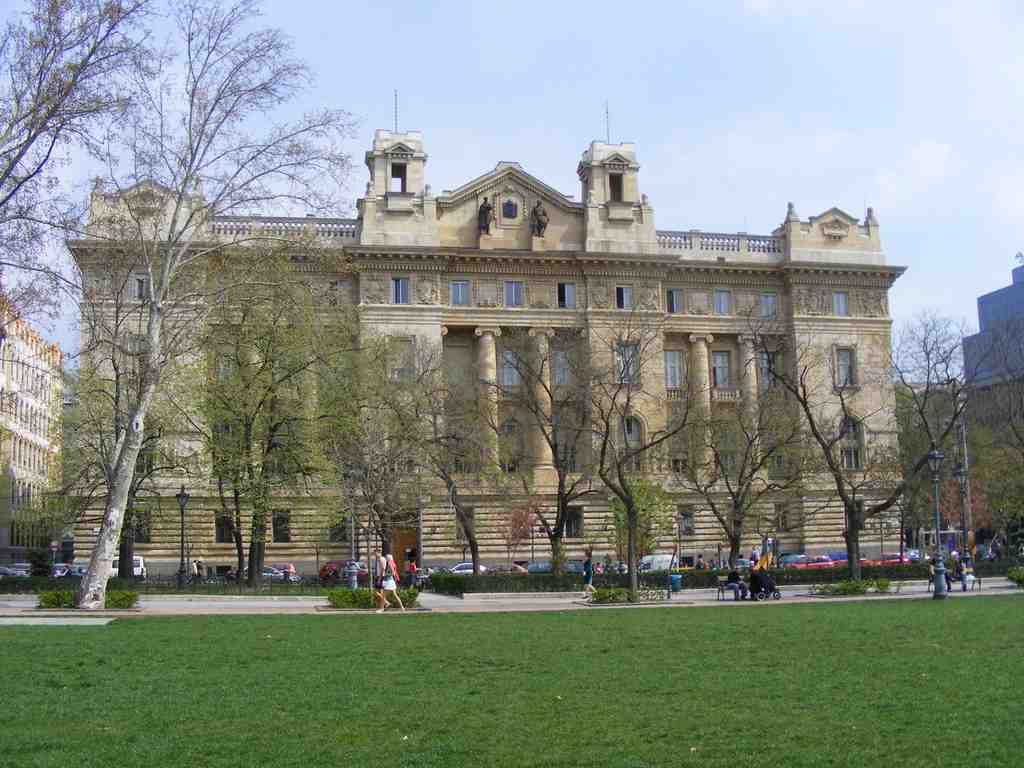
Right ahead of you, look for a grand, stone-faced building with towering columns and intricate statues along its roofline, nestled just behind the trees on Liberty Square-its impressive façade is hard to miss.
As you stand in front of this monumental structure, let’s imagine for a moment the sounds of bustling carriages and hurried footsteps from nearly a century ago. This is the home of the Magyar Nemzeti Bank, or, as we might dare to call it, the Hungarian National Bank-even though the bank itself has a rather strict policy of only using its Hungarian name in English! It’s Hungary’s beating financial heart and has presided over wild swings of fortune, from the searing heights of national pride to the deepest lows of economic chaos.
Picture the year 1924. Europe is still dusting itself off from the wreckage of World War I. Hungary, suddenly without the familiar Austro-Hungarian Empire and its trusty, if a bit fussy, Austro-Hungarian Bank, needs a new financial anchor. Under the guidance and rather stern gaze of the League of Nations and its Economic and Financial Organization, the Magyar Nemzeti Bank is born here-an elegant successor, standing tall where Vienna and Budapest’s dual operations once squabbled for power and recognition.
But let’s rewind even further, to a time of revolution and restless Hungarian spirits back in 1848. Then, a very different sort of bank, the Hungarian Commercial Bank of Pest, briefly managed the nation’s money. It was a post-rebellion era where everyone hoped to get rich quick, but alas, freedom and fortune don't always go hand in hand. Through decades of compromise with Austria, imaginative laws, and even more imaginative bankers, Hungarians waited-impatiently!-for a bank of their own. Finally, this grand building’s predecessor opened its doors in 1905, designed by architect Ignác Alpár. Imagine the grand opening: statues carved by artistic geniuses József Róna and Károly Senyei gazing down, as if daring passersby to guess the secrets held within those walls.
By the early 20th century, things got a bit out of hand. Hyperinflation ran wild, making a loaf of bread cost more than a bicycle some days! After failed attempts to control the economic chaos, the newly independent Hungarian authorities tried something bold-they created the National Bank, and then, in 1927, switched out the old korona currency for the new pengő. The 1930s saw Budapest’s bank become a founding member of the Bank for International Settlements, only for World War II to sweep in and devastate everything all over again. At the war's end, the pengő set a world record for the worst hyperinflation ever. You know things are bad when Hungary changes money so quickly, you could heat your house with old notes!
To restore order (and probably prevent people from using money as wallpaper), the MNB introduced the forint in 1946. But in came the Communists, and the bank's identity changed once more, with strict government control and an expanded role in running the country’s finances. Independence wouldn’t return until after the Iron Curtain fell-much like a magician revealing a dove after years of hiding it in his coat.
By now, the bank anchors the entire financial system. It sets the baseline interest rates, issues the forint, manages reserves of gold that might make even pirates jealous, and keeps Hungary’s economy humming-or at least trying its best to stay in tune with the rest of Europe. About that: though Hungary flirted with joining the eurozone, the Magyar Nemzeti Bank stubbornly held onto its independence, wary of trading homegrown control for Brussels’ spreadsheets.
This story isn’t without its scandals: if recent headlines are to be believed, someone has even accused the current bank leader of pulling off a bank robbery that would make movie villains blush-hundreds of billions of forints, more than Saddam Hussein managed in his infamous heist from the National Bank of Iraq! Now that’s what I call a plot twist.
So, as you look up at the imposing windows, think of all the history that has passed through them-the revolutionary dreams, the currency crashes, the tense meetings and hopeful beginnings. And if you hear the faint jingle of coins on the wind, don’t worry, it’s probably just the next chapter in this building’s long, eventful story.




