
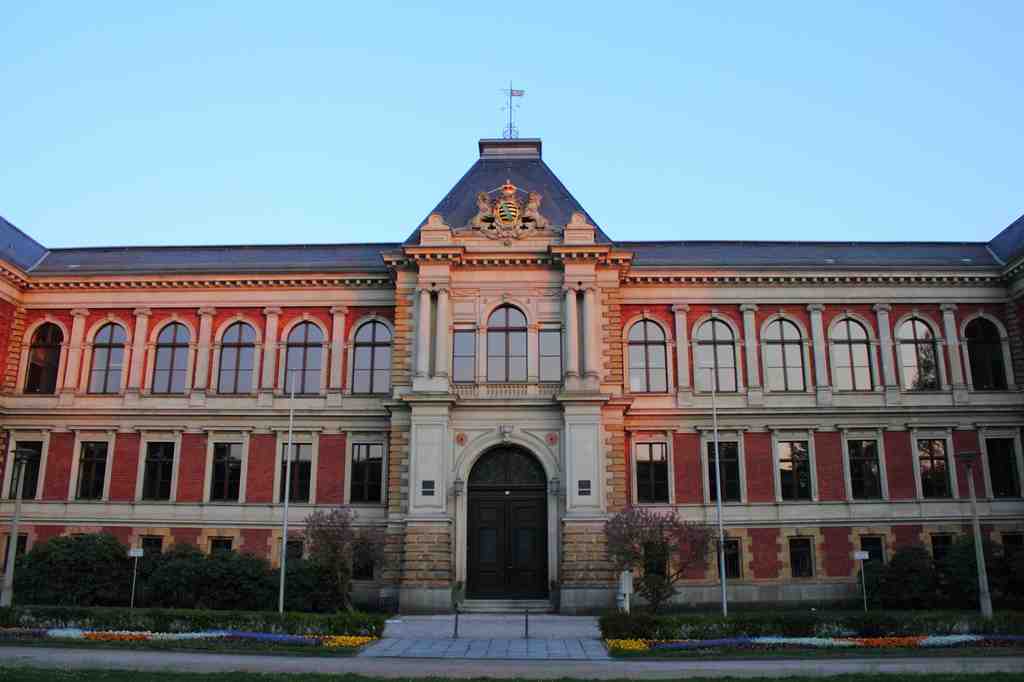
To spot the District Court of Zwickau, look for a grand, symmetrical building with red-brick and stone details, rows of large arched windows, and a crested coat of arms perched on the roof above an impressive entrance.
Alright, so here you stand before the District Court of Zwickau-a building that practically shouts “serious business” before you even step inside! Imagine the buzz around this place in the late 1800s: men in long coats, townsfolk rushing a bit nervously past, and the tense hush before a big verdict. Let’s take a journey through its story-don’t worry, no jury duty required!
Back in the old days-before 1879, in fact-if you wanted justice in Zwickau, you’d head to the so-called “Gerichtsamt.” This was the original place where court matters happened. But then came a huge change: sweeping Reichsjustizgesetze, or justice laws, swept through Saxony in 1879. Suddenly, the Gerichtsamt disappeared, and boom, the Amtsgericht, or District Court, was born. It wasn’t just any old court-it was the busiest in the region, with seven judges dealing with the fates of over 83,000 people around Zwickau and beyond.
The court’s reach spread wide, touching towns with lyrical names: Auerbach, Niederhaßlau, Pölbitz-each sending their minor dramas to these doors. This elegant building, with its precise symmetry and proud coat of arms, watched decades fly by and systems change. Throughout the 20th century-witness to world wars and boundary shifts-its courthouse work didn’t slow down. After World War II, things got shuffled again. In the morass of postwar Germany, district boundaries shifted. Suddenly, the courthouse was out, and the “Kreisgericht” or district court took over in 1952.
But you know Zwickau-never down for long! After German reunification in 1992, the Amtsgericht Zwickau made its return, now stronger than ever. Today, it’s the central execution court for all of Saxony. So whether you’re here for a dry legal case or just to admire the architectural detail, remember: behind these walls, stories have been decided that shaped the whole region. Now, wasn’t that a case worth investigating?


