
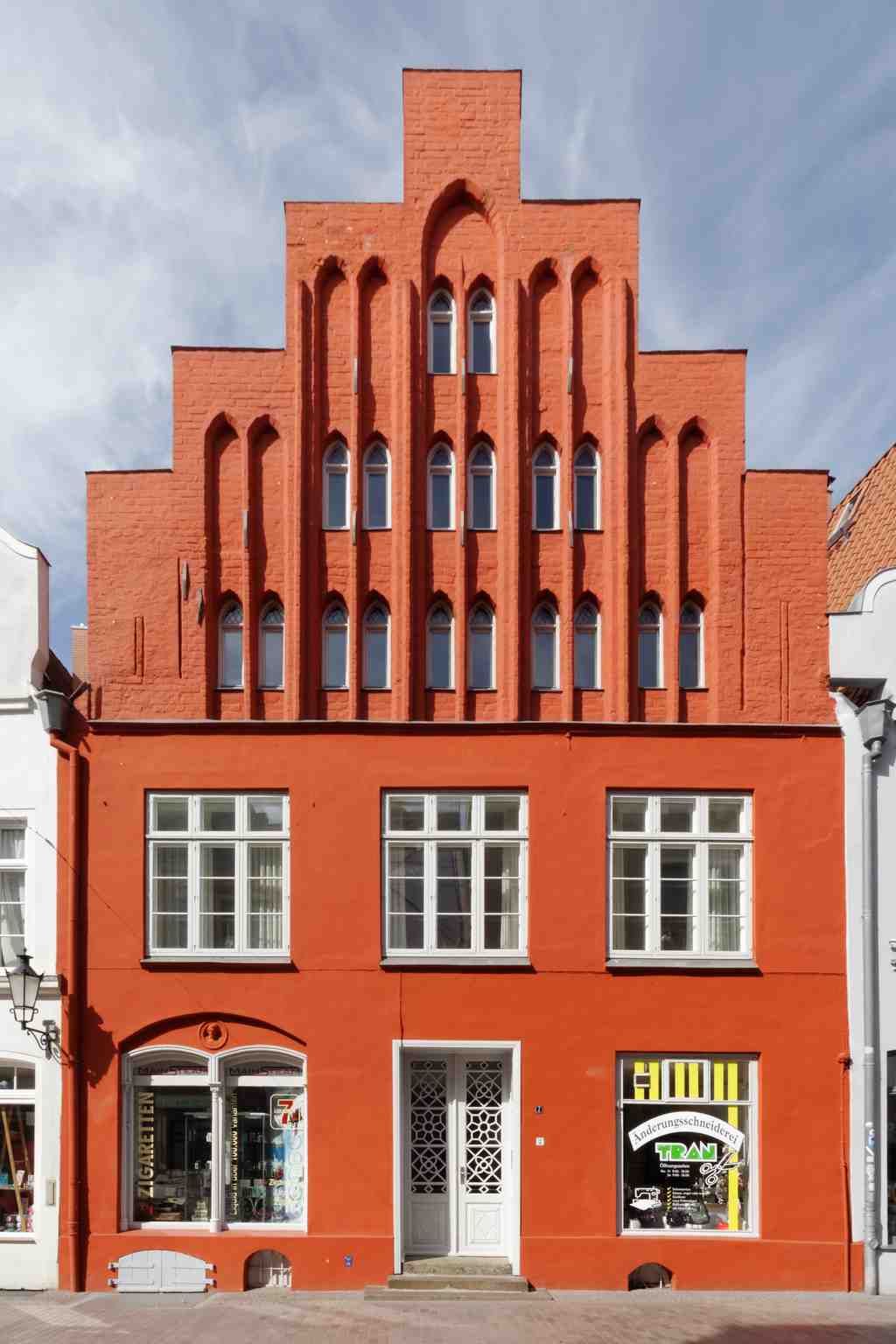
To spot Dankwartstraße, look for a striking, bright red building with a stepped gable and rows of narrow, arched windows rising above two big street-level shopfronts-it’ll stand out on the street almost like someone in the world’s boldest sweater.
Alright, take a deep breath and let your feet rest for a moment-you’re now standing on one of Wismar’s most storied streets, Dankwartstraße, a street that has changed hats more often than a medieval market juggler. Close your eyes for a second and imagine the bustling heart of medieval Wismar, the Old Town streets swirling with merchants, bakers, blacksmiths, and children dashing about-because Dankwartstraße wasn’t always just a quiet, brick-paved pedestrian lane. Oh no, this street was once the main artery beating from the town’s lively market square all the way towards the grand, long-gone Mecklenburger Tor-the city gate that once stood proud at the southern end, with its own drawbridge and all the drama of controlling Wismar’s comings and goings.
And about the name-forget anything as boring as ‘High Street’ or ‘Main Street’. This one’s named after Tangmar the Smith, who set up his forge here in 1250. (I like to imagine Tangmar took his coffee breaks with sparks still flying in his beard.) The street grew around his workshop, and by 1260 it was known as Danckmarstrate, later becoming Dankuartstrate by 1519-a real tongue-twister as the centuries rolled by.
If you look around, you’ll notice buildings that could fill an entire book of stories themselves-gaudy gables, neo-Gothic flourishes, cheerful cafés, and houses where tradespeople once literally hammered out their lives. At number 6, there’s a modern café, but not long ago, a family might have gathered around a wood stove in the evenings. Number 25? That’s no ordinary corner house-its turret and elegant windows once watched over a bakery first recorded all the way back in 1533. Imagine the smell of bread swirling out each morning, blending with the shouts of fishmongers and the clang of the nearby blacksmith.
But let’s not get lost in the dough! As you walk, cobblestones might tap secrets beneath your shoes, secrets of the centuries of trade that made medieval Wismar part of the mighty Hanseatic League. Traders hauled spices, timber, and wool down these very stones on their way to the market, or all the way to Schwerin by way of Dankwartstraße, maybe stopping for a mug of beer or to gossip about the latest town scandal (and who doesn’t love a bit of gossip, especially if it happened 400 years ago?).
Let your eyes wander a little-see those houses with fancy fronts and twirly gables? Many are protected monuments, each with a nickname and a local story. There’s the delicately restored gothic house at number 8-narrow, brick-gabled, with baroque touches added on centuries later, like a medieval house trying out a new haircut. There’s a former copper smithery, a Drogerie, and even buildings that in the DDR era became milk bars or housed meatpacking factories bustling away through the Cold War.
It’s not all good cheer and cinnamon rolls, though; the stones remember sorrow, too. At number 35 lies a ‘Stolperstein’-a stumbling stone-remembering Max Ehrlich, murdered in Treblinka, one of Wismar’s shared sorrows from the darkest chapter of the last century. With each step, remember that these houses, streets, and shops are witnesses: places of hope, trade, family feasts, laughter, invention, resistance-and sometimes heartbreak.
And if you find yourself getting lost in all these centuries, don’t worry! Wismar’s UNESCO listing means streets like this are kept under careful watch, their stories preserved like a hand-woven tapestry. Even the names of the little side streets-Am Markt, Grüne Straße, Baustraße, and Kleinschmiedestraße-hint at ancient hedges, green courtyards, and the clang of tiny hammers.
If Dankwartstraße feels like it’s buzzing with energy beneath your feet, it’s not just the shops or cafés-it’s eight centuries of laughter, loss, reinvention, and resilience. It’s proof that a street doesn’t need a castle or a tower to be the beating heart of a city. Sometimes, all you need is a blacksmith’s spark to light up the ages.




