
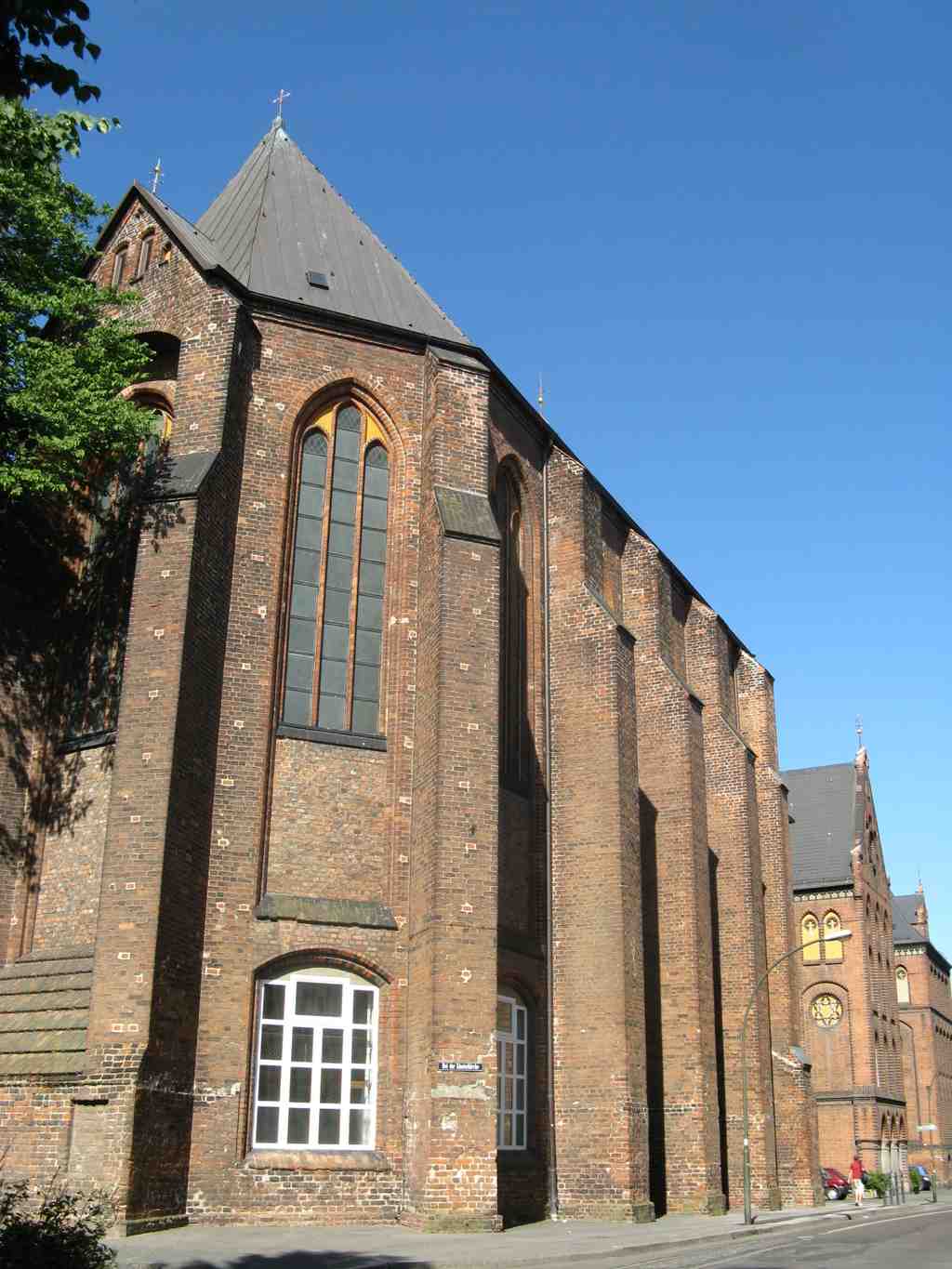
Look for a tall, striking brick church-like building with pointed Gothic windows and a steep roof right ahead of you, its reddish-brown facade standing out powerfully on the corner-yep, that’s the Black Monastery!
Now, close your eyes for just a second and picture yourself walking down this bustling medieval street in Wismar-people chattering in Low German, carts rumbling over cobbles, and suddenly, rising before you, is the epic Black Monastery. It’s 1292, and this place is brand new-built not with gold and marble, but with sturdy brick and the tireless hands of the Dominican monks, known all across town as the “black brothers” for their long, dark robes. (Don’t worry, nothing spooky-just a fashion choice to show they’re not the ‘grey’ Franciscan brothers from across town.)
Believe it or not, this monastery popped up while Duke Heinrich the Pilgrim was still locked up far away in an Arab jail-talk about having to get permission by snail mail! The Dominicans set up shop here with the city’s blessing, winning both land and a fancy church that would eventually become a showcase of high Gothic style. But first, their job was slightly less holy-they had to help fix local streets and bridges! Alas, brewing beer was forbidden to the monks, so Wismar’s bars were safe from ecclesiastical competition.
Before they had their own church, the black brothers preached at St. Mary’s nearby, but soon enough, shovels hit the ground. They even got their own brickworks by 1305. By the mid-1300s, the monastery wasn’t just a religious hotspot; it was the city’s courtroom and meeting hall too, with heated debates echoing off these very walls.
Here’s a weird twist-the grounds kept growing because the monks bought up neighboring plots (it seems “poverty” was a flexible concept). Their grand church rose in the 14th century, its design forced to do a little medieval limbo to fit against Wismar’s city walls. Over time, it became a place where both city kings and commoners wanted to be buried: you’ll literally be standing next to where grand merchants, powerful mayors, and even a duchess, Sophie of Pomerania, found their final rest.
The medieval monastery was also a bit of a classroom. By the late 1300s, Wismar was home to lectures in theology and philosophy, drawing monks from what today would be the Netherlands and the Rhineland. Some students probably hoped for heated debate; others just wanted a warm spot in the winter refectory.
Wismar’s Dominicans enjoyed both power and gifts-fish, wine, even lamp oil-all for the promise of a few prayers and a well-kept soul. Of course, this didn’t always sit well with the town council or the reformers later: there was a brief period of stricter poverty but also stories of monks sneaking treasure to Lübeck for safekeeping. Apparently, even in the Middle Ages, a little extra insurance couldn’t hurt!
The Black Monastery saw the storm of the Reformation sweep through Wismar-but unlike the Franciscans, the Dominicans clung fiercely to their Catholic roots, holding secret gatherings even as city leaders tried to nudge them into the Protestant fold. Eventually, their numbers dwindled, and by 1562, after some serious pressure and failed theological “interventions,” the last monks handed over the keys-promptly cursed by the new superintendent for their stubbornness.
As the centuries rolled on, the Black Monastery changed hats several times: it was a church, then in 1689, its nave morphed into an orphanage, with children’s footsteps echoing where monks once prayed. Its stones tell stories of splendor, strife, and new beginnings. In the 19th century, most of the original building was torn down for a new school, but that glorious high Gothic choir-standing right here-survived.
Today, you’re gazing at the heart of centuries of history, where schoolchildren now gather in an old chapel that once hosted both solemn prayer and fierce city council showdowns. If these bricks could talk, they’d have enough drama, secrets, and laughter to fill a whole library.
Thank you for joining me for this tour in Wismar’s Altstadt. I hope you enjoyed this journey as much as I did-after all, who wouldn’t love following in the footsteps of black-robed monks, city rebels, lost dukes, and a parade of orphans, all in a single afternoon?




